
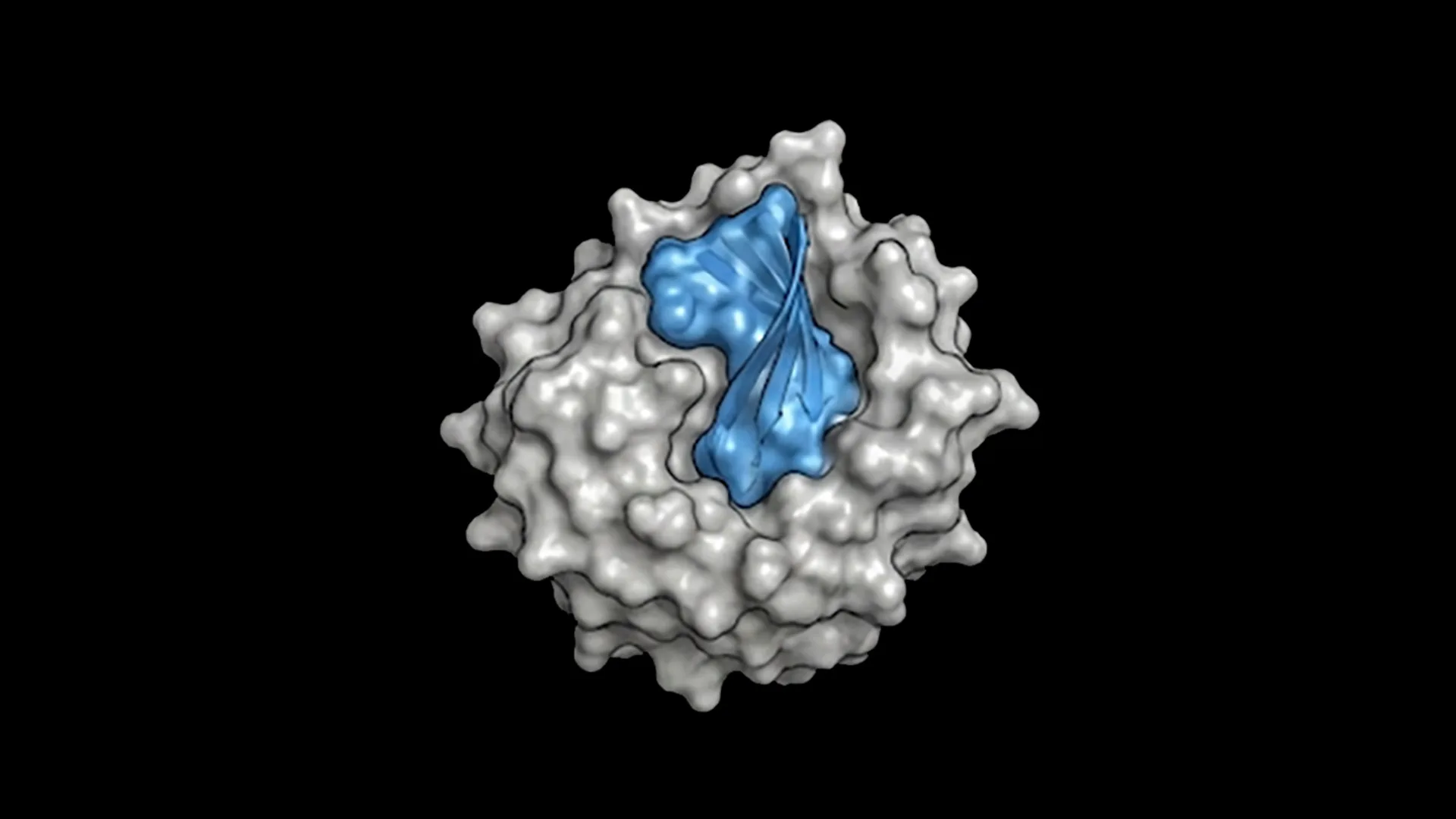
Proteina-Complexa: A Technical Deep Dive into NVIDIA's Unified Protein Binder Co-Design Framework
Executive Summary
- Proteina-Complexa is a generative model for the de novo design of protein binders and enzymes that utilizes a partially latent flow-matching framework to simultaneously co-design atomistic structures and amino acid sequences.
- Unlike traditional fragmented workflows that separate sequence design from structural modeling, this model performs unified co-design, ensuring that chemical identities and 3D geometries are tightly coupled at an atomistic level.
- The system integrates inference-time compute scaling (e.g., Beam Search, Best-of-N), allowing the model to optimize designs through iterative reasoning and reward functions, significantly improving success rates on previously intractable protein surfaces.
- Validation conducted with Manifold Bio and other partners confirms high-affinity binding across oncology, immunology, and neurology targets, as well as the design of functional de novo enzymes.
Technical Architecture
Proteina-Complexa represents a paradigm shift from modular protein design to a unified, end-to-end generative process. It is built upon the La-Proteina base model and introduces a "partially latent" approach to flow matching.
1. Partially Latent Flow-Matching Framework
The core architecture addresses the computational complexity of modeling all atoms in a protein. A protein with $N$ residues has a massive number of degrees of freedom. Proteina-Complexa splits this representation into two components:
- Explicit Representation: The backbone alpha-carbon ($C\alpha$) atoms are modeled explicitly in 3D Cartesian space. This maintains the global topology and fold of the protein.
- Latent Representation: All other atoms—including side-chains and non-alpha-carbon atoms—as well as the amino acid sequence itself, are compressed into a learned latent space via a specialized autoencoder.
By training a flow-matching model in this hybrid space, the system can "push" noise into a structured state that represents both the physical geometry and the chemical identity simultaneously. This "co-design" capability ensures that the generated side-chains are physically compatible with the generated backbone, reducing the need for post-hoc structural relaxation or separate sequence threading (e.g., using tools like ProteinMPNN).
2. Inference-Time Compute Scaling
One of the most significant technical innovations in Proteina-Complexa is the formal integration of search algorithms during the generation phase. While standard diffusion or flow-matching models typically generate a sample in a single pass (or a fixed number of steps), Proteina-Complexa utilizes:
- Best-of-N Sampling: Generating multiple candidates and selecting the best based on internal reward functions.
- Beam Search: A reasoning algorithm that evaluates and refines structural candidates at intermediate steps of the generative process.
This approach allows the model to "invest" more computational power into difficult targets (e.g., polar surfaces or complex interface geometries), mimicking the "thinking" or "reasoning" time seen in recent breakthroughs in large language models.
3. Training and Data Curation
The model was trained on a massive, heterogeneous dataset comprising over 1 million curated structures. Key data sources include:
- Experimental Data: High-quality structures from the Protein Data Bank (PDB).
- Predicted Data: Large-scale structures from the AlphaFold Protein Structure Database.
- Specialized Datasets: The PLINDER dataset (for protein-ligand interactions) and the Teddymer dataset.
The inclusion of PLINDER is particularly notable as it enables the model to reason about small-molecule binding, extending the utility of Proteina-Complexa beyond protein-protein interactions.
Performance Analysis
Proteina-Complexa has been benchmarked against previous de novo design methods. A key focus was its performance on "challenging" targets, such as TNF-alpha and Claudin, which often feature surfaces that lack deep pockets or exhibit complex polarity.
Benchmark Comparison (In Silico and Experimental)
| Metric | Traditional Modular Methods (e.g., RFdiffusion + ProteinMPNN) | Proteina-Complexa |
|---|---|---|
| Design Process | Sequential (Structure then Sequence) | Unified (Co-design) |
| Atomistic Detail | Often limited to backbone at generation | Fully atomistic (Backbone + Side-chains) |
| Success on Polar Surfaces | Low (intractable) | High (Experimental validation confirmed) |
| Training Scale | ~100k - 200k structures | >1 Million structures |
| Optimization | Post-generation filtering | Inference-time search (Beam Search/Best-of-N) |
| Target Versatility | Primarily Protein-Protein | Protein, Small Molecules, Enzymes, Carbohydrates |
Note: Specific numerical success rates (e.g., percentage of designs that bind at <10nM) are described as "surpassing prior methods," but exact aggregate delta values across all PDB targets are not yet disclosed in the provided technical documentation.
Experimental Validation
The collaboration with Manifold Bio utilized multiplexed phage display to test candidates at scale.
- Throughput: "Million-scale" experimental validation.
- Affinity: Direct kinetic measurements confirmed high-affinity binders for targets in oncology and immunology.
- Enzymatic Activity: The model successfully designed de novo enzymes, demonstrating its ability to reason about catalytic sites, not just binding interfaces.
Technical Implications
1. Collapse of the Design Pipeline
Historically, protein design required a "hand-off" between models: one to generate a backbone "scaffold" and another to "design" the sequence. Proteina-Complexa eliminates this fragmentation. For senior developers, this means the API surface for drug discovery workflows becomes much simpler. You provide a target structure, and the model returns a complete, synthesizable sequence with its predicted 3D conformation in a single call.
2. Generalization to Small Molecules and Enzymes
By incorporating datasets like PLINDER and training on carbohydrate-binding proteins, Proteina-Complexa serves as a multi-modal foundation model for biology. It moves beyond "binder design" and into "functional protein design," allowing researchers to target specific chemical reactions or small molecule interactions within the same architectural framework.
3. Hardware Requirements
Given the scale of 1 million structures and the use of flow-matching with inference-time scaling, the computational overhead is significant. While inference is "computationally efficient" relative to experimental trial-and-error, the use of Beam Search and Best-of-N suggests a high demand for high-bandwidth memory (HBM) and GPU clusters (typically NVIDIA H100 or A100 environments) to achieve low-latency generation.
Limitations and Trade-offs
- Latent Space Compression: While the autoencoder allows for atomistic reasoning, the "compression" of side-chains into a latent space may introduce subtle artifacts in extremely dense or unusual amino acid environments. The fidelity of the reconstructed side-chains depends entirely on the autoencoder’s training distribution.
- Compute-Intensity of Scaling: While inference-time scaling improves quality, it increases the cost per successful design. Users must balance the "N" in Best-of-N sampling against their available GPU budget.
- Data Dependency: The model relies heavily on predicted structures (AlphaFold DB). While this increases the training set to 1M+, any systematic biases in AlphaFold's predictions could theoretically be inherited by Proteina-Complexa.
- Parameter Count: The specific parameter count of the flow-matching model is not yet disclosed, making it difficult to estimate the exact VRAM requirements for local deployment versus cloud-based API usage.
Expert Perspective
Proteina-Complexa represents the "LLM moment" for protein engineering. By adopting Flow Matching over traditional Diffusion, NVIDIA is moving toward more deterministic and computationally efficient generative paths. However, the true breakthrough is the inference-time compute scaling. Just as OpenAI's o1 model demonstrated that "thinking longer" improves logic in language, Proteina-Complexa demonstrates that "searching longer" during the generative process allows an AI to find viable binding configurations in the vast, high-dimensional search space of protein-protein interfaces.
The shift toward co-design is essential. Proteins are not static backbones that then "choose" an identity; the chemical nature of the side-chains dictates the backbone's stability. By modeling them together, NVIDIA has created a more biologically "honest" model.
Technical FAQ
How does flow matching in Proteina-Complexa differ from traditional Diffusion models like RFdiffusion?
Flow matching is a more generalized framework that learns a vector field to transform a simple probability distribution (noise) into a complex one (protein structure). Unlike diffusion, which often relies on a specific stochastic differential equation (SDE), flow matching allows for straight-line paths (probability flows) which can be more stable and require fewer steps during inference to reach high-quality results.
Is the model backwards-compatible with standard BioPython or PDB formats?
Yes. Although the model uses a latent space internally, the command-line interface and API are designed to output fully atomistic structures (including side-chains) in standard .pdb or .cif formats, and sequences in .fasta format. This allows for direct integration into existing downstream simulation pipelines like GROMACS or Rosetta.
What reward functions are used during inference-time compute scaling?
While the specific weights are proprietary, the system uses reward functions that evaluate interface energy, hydrogen bond optimization, and "foldability" (the likelihood that the sequence will actually fold into the designed structure). The system can also be guided by "fold class-guided" constraints to steer generation toward specific structural motifs.
Can it handle non-protein ligands?
Yes. Proteina-Complexa was trained on the PLINDER dataset, which focuses on protein-ligand interactions. This allows the model to design binders not only for other proteins but also for small molecule targets, a critical requirement for many therapeutic applications.
References
- NVIDIA Research: Proteina-Complexa: A Generative Model for Protein Complex Design.
- NVIDIA Digital Bio GitHub:
NVIDIA-Digital-Bio/proteina-complexa. - La-Proteina Base Architecture Documentation.
- PLINDER: The Protein-Ligand Interface Dataset.
- Teddymer Dataset for Protein Structural Diversity.
Sources
- NVIDIA Technical Blog
- NVIDIA Research - Proteina-Complexa
- Manifold Bio Press Release
- GitHub Repository
All technical specifications, pricing, and benchmark data in this article are sourced directly from official announcements. Competitor comparisons use publicly available data at time of publication. We update our coverage as new information becomes available.