
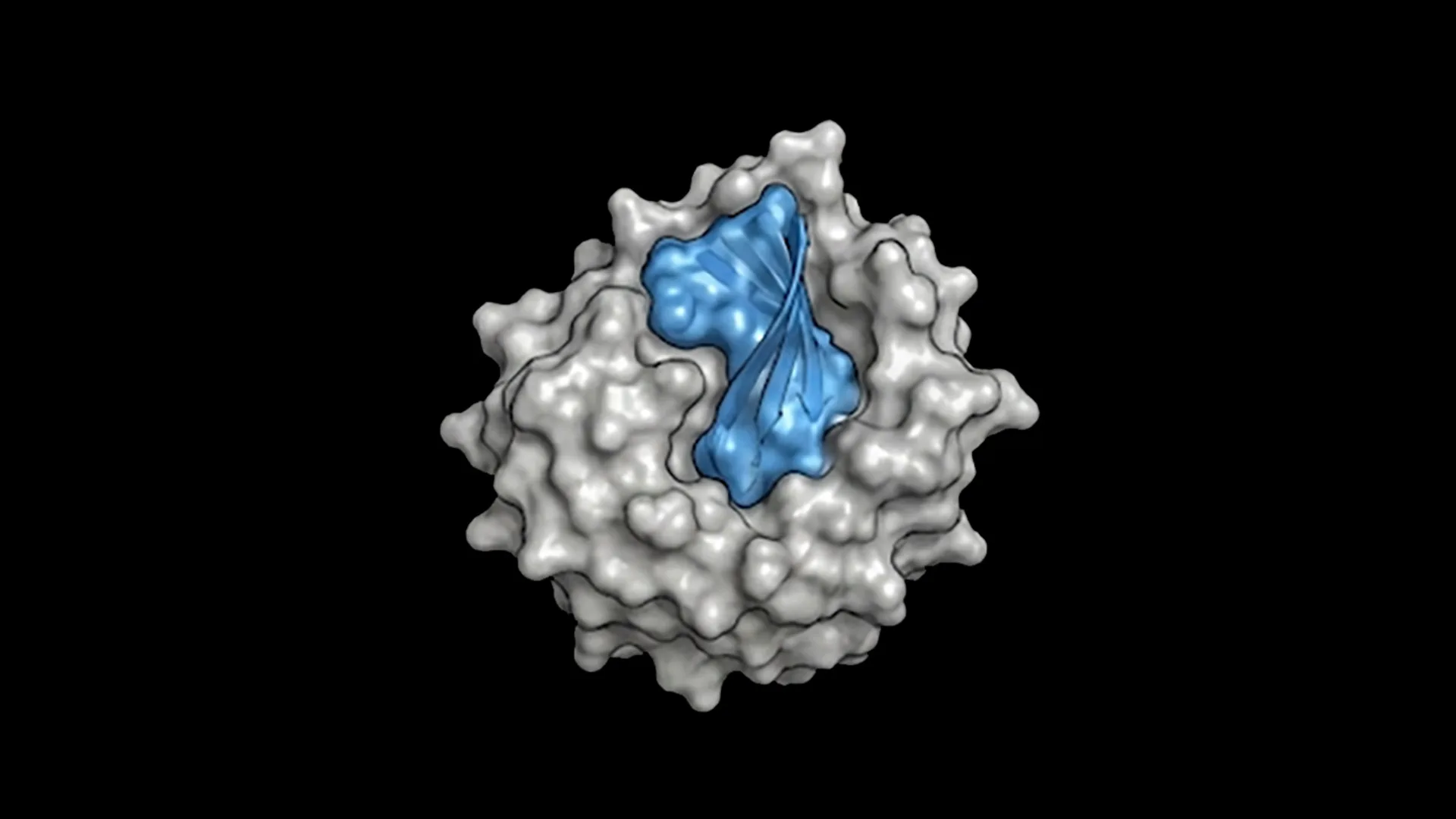
Our Honest Take on Proteina-Complexa: A Technical Masterclass in Efficiency, but the "Latent" Shortcut Demands Scrutiny
Verdict at a glance
- The Breakthrough: Proteina-Complexa successfully moves beyond the fragmented "backbone-first, sequence-second" workflow. Its "co-design" approach ensures that 3D geometry and chemical identity are synchronized from step one, which significantly reduces the "hallucination" of proteins that look good on screen but won’t fold in a test tube.
- The Disappointment: While NVIDIA markets this as a "fully atomistic" reasoned process, the model actually hides side-chain atoms in a "latent space" during generation. This is a clever engineering trade-off for speed, but it’s an abstraction that may miss subtle steric clashes or hydrogen-bonding nuances that a truly explicit atomistic model would catch.
- Who it’s for: Biopharma R&D teams and synthetic biologists who need to move from target to lead candidate at industrial scale. It is particularly valuable for those targeting "undruggable" surfaces where standard rigid docking fails.
- Price/Performance: By leveraging inference-time compute scaling (more "thinking" time for harder targets), NVIDIA has created a model that is computationally efficient for easy tasks but can "grind" through complex targets like TNF-alpha. It’s a pragmatic use of GPU resources.
What’s actually new
The real innovation in Proteina-Complexa isn't just "more data" (though 1 million structures is a massive training set); it is the architectural marriage of Partially Latent Flow-Matching and Inference-Time Scaling.
- Unified Co-Design: Historically, researchers used one model (like RFdiffusion) to build a backbone and another (like ProteinMPNN) to "paint" it with amino acids. Proteina-Complexa treats sequence and structure as a single probability distribution. By optimizing both simultaneously, it avoids the "mismatch" problem where a generated backbone has no viable sequence that can actually support it.
- Partially Latent Architecture: This is a sophisticated compromise. Explicitly modeling every atom in a protein complex is computationally ruinous. NVIDIA keeps only the Alpha Carbon (the "spine" of the protein) in 3D Cartesian space. All other atoms and the amino acid sequence are compressed into a latent space via an autoencoder. This allows the model to "reason" about the chemical environment without the overhead of tracking thousands of individual atomic coordinates during the diffusion process.
- The "o1" Approach for Biology: Borrowing from recent advances in Large Language Models (LLMs), Proteina-Complexa introduces "reasoning" at inference. Using Beam Search and Best-of-N sampling, the model evaluates its own intermediate designs. If a binder looks weak, it discards that path and tries another, effectively spending more FLOPs on difficult targets.
The hype check
NVIDIA’s marketing claims that the model "ensures that the chemical identities and 3D geometry are tightly coupled." While the co-design framework makes this more likely than older methods, the word "ensures" is an overstatement common in AI PR.
The claim that it enables "direct handoff to experimental testing without intermediate modeling steps" is the most audacious. In practice, most wet labs will still run these designs through AlphaFold-Multimer or Rosetta to verify stability before spending thousands of dollars on synthesis. The "zero-step" handoff is a goal, not yet a guaranteed reality for every target.
Finally, while the "fully atomistic" label is technically true (the model outputs all atoms), the generative process happens in a compressed latent space. Calling it "atomistically reasoned" is a bit like saying a JPEG is "pixel-perfectly reasoned"—it ignores the fact that much of that reasoning happened in a compressed, lossy mathematical representation.
Real-world implications
The collaboration with Manifold Bio is the most grounded part of this announcement. Manifold Bio is known for "protein barcoding," which allows them to test thousands of binders simultaneously in a single experiment.
The successful validation against TNF-alpha (a notoriously difficult trimeric target) and Claudin-18.2 (a complex membrane protein) suggests this model isn't just good at "easy" globular proteins. For oncology and immunology, this could shave months off the lead optimization phase. By generating binders that already have side-chains optimized for the target interface, researchers can bypass the tedious "re-packing" and "point mutation" cycles that usually follow initial design.
Limitations they’re not talking about
The source material glosses over a few critical hurdles:
- The Latent "Black Box": Because the side-chains are generated in a latent space, it is difficult for a human scientist to troubleshoot why a specific residue was chosen until the final structure is decoded. We lose the "explainability" of classical physics-based modeling.
- Dependence on Training Data Diversity: While 1 million structures sounds like a lot, the Protein Data Bank (PDB) is heavily biased toward certain "popular" protein families. The model’s performance on truly "de novo" folds—shapes that don't exist in nature—remains to be seen.
- Target Flexibility: The announcement focuses on the binder. However, many drug targets change shape (conformational flexibility). It’s unclear if Proteina-Complexa treats the target as a rigid "statue" or if it can account for the target’s own movement, which is a common cause of failure in the lab.
How it stacks up
Compared to RFdiffusion, Proteina-Complexa is significantly more "aware" of chemistry during the design phase. RFdiffusion is a master of geometry but often requires heavy lifting from secondary models to find a sequence that works.
Compared to AlphaFold 3, which is primarily a prediction model, Proteina-Complexa is a generative tool. While AF3 can show you how two things might bind, Proteina-Complexa is built to invent the binder from scratch. This makes it a more direct tool for de novo drug design.
Constructive suggestions
To make Proteina-Complexa a true industry standard, NVIDIA and its partners should:
- Release Reconstruction Metrics: Publish the "loss" or error rate of the autoencoder used for the latent space. Users need to know how much atomic precision is lost during the compression/decompression cycle.
- Integrate Explicit Physics Constraints: Allow users to "pin" specific hydrogen bonds or salt bridges that must exist. Purely generative models sometimes ignore basic electrostatic common sense in favor of "looking" like the training data.
- Standardize the Benchmark: Provide a head-to-head comparison on a standardized "Binder Bench" against RosettaDL and RFdiffusion, specifically measuring the "success rate" (the percentage of generated proteins that actually bind in vitro).
Our verdict
Biotech Startups: Adopt Now. The ability to co-design sequence and structure will save you significant computational overhead and likely improve your wet-lab hit rates. Academic Researchers: Adopt with Caution. The latent-space approach is a "black box" that might make it harder to publish papers focused on the fundamental physics of protein folding. Big Pharma: Pilot and Validate. Use this for your "tough" targets (like GPCRs or ion channels) where traditional docking has failed, but keep your validation pipelines (AlphaFold/Rosetta) in place for now.
FAQ
Should we switch from RFdiffusion to Proteina-Complexa?
If you are currently struggling with "sequence-structure mismatch"—where your diffusion backbones won't fold when you try to assign amino acids—then yes. The co-design architecture is a superior way to ensure your designs are "biologically plausible." However, if you have a custom pipeline that is already working, the "latent" nature of Proteina-Complexa may introduce new variables that require re-calibration.
Is it worth the price premium of NVIDIA hardware?
The model relies heavily on "inference-time compute scaling." This means to get the best results on hard targets, you need to run the model longer and more intensely. This is specifically designed to run on NVIDIA’s high-end H100/B200 stacks. If you have the hardware, the efficiency gains in the "co-design" process will likely pay for themselves in reduced laboratory "wet" failures.
Does "fully atomistic" mean it replaces traditional MD simulations?
No. Molecular Dynamics (MD) simulates how a protein moves over time in water. Proteina-Complexa provides a "snapshot" of a finished binder. You should still use MD or similar tools to check if your binder stays attached to the target when things start "wiggling" in a physiological environment.
Sources
- Designing Protein Binders Using the Generative Model Proteina-Complexa | NVIDIA Technical Blog
- NVIDIA Digital Bio | GitHub - Proteina-Complexa
- Manifold Bio News | Validation of Proteina-Complexa
All technical specifications, pricing, and benchmark data in this article are sourced directly from official announcements. Competitor comparisons use publicly available data at time of publication. We update our coverage as new information becomes available.