
NVIDIA Reveals Proteina-Complexa: A New Powerhouse in Generative Protein Design
- What: A generative AI model for the de novo design of protein binders and enzymes.
- Key Technology: Partially latent flow-matching framework for simultaneous "co-design" of protein structure and sequence.
- Data Scale: Trained on over 1 million experimental and predicted protein structures.
- Validation: Million-scale experimental testing conducted in partnership with Manifold Bio.
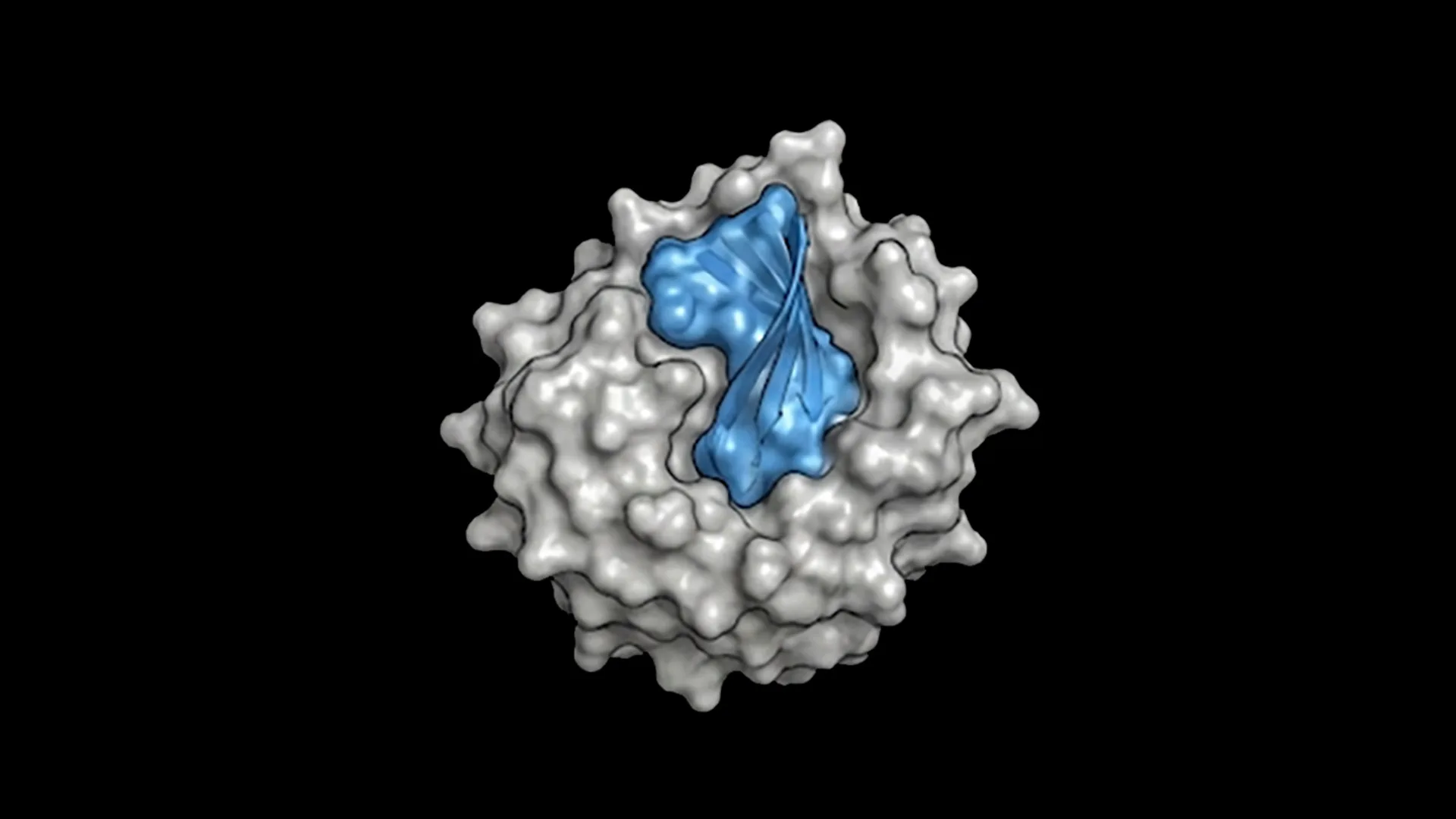
NVIDIA has officially released Proteina-Complexa, a generative model designed to revolutionize the creation of protein binders and enzymes through a unified, atomistically reasoned process. Developed to address the vast search space of amino acid sequences, the model integrates a partially latent flow-matching framework that enables the simultaneous co-design of protein backbones, side-chain structures, and sequences. This launch, supported by large-scale experimental validation from Manifold Bio, aims to accelerate the development of new protein-based therapies and catalysts by overcoming the limitations of previous modular AI methods.
Rethinking Protein Design with Atomistic Co-Design
Historically, the computational workflow for designing protein binders—proteins that bind to specific targets like other proteins or small molecules—has been fragmented. Most legacy methods rely on separate, modular models: one to generate the protein backbone and another to determine the amino acid sequence. According to NVIDIA’s technical blog, Proteina-Complexa breaks this mold by employing "co-design."
By generating the amino acid sequence and the fully atomistic structure (including backbones and side-chains) simultaneously, the model ensures that chemical identities and 3D geometry are tightly coupled. This approach allows for the design of precise, high-affinity interfaces that are inherently optimized for both folding and synthesis.
Technically, the model is built upon the La-Proteina architecture. It utilizes a partially latent flow-matching framework where backbone alpha carbon atoms are explicitly modeled in 3D Cartesian space. Meanwhile, all other atoms and the sequence information are compressed into a learned latent space via an autoencoder. This hybrid approach balances atomic fidelity with the computational efficiency required for complex biological simulations.
Massive Scale: Training and Inference Optimization
The performance of Proteina-Complexa is rooted in its massive training foundation and a novel approach to inference-time compute. The model was trained on a curated dataset of more than 1 million high-quality structures sourced from the Protein Data Bank (PDB), the AlphaFold Protein Structure Database, PLINDER, and the recently published Teddymer dataset.
Beyond its training data, Proteina-Complexa introduces "reasoning" search algorithms into the generation process. By using techniques like Beam Search and Best-of-N sampling, the model can iteratively evaluate and refine candidates at intermediate steps. This allows the system to invest additional computational power into difficult targets while maintaining efficiency for simpler tasks.
"Proteina-Complexa was built to generate protein binders at the speed and scale that drug discovery demands, powered by a novel architecture that redefines generative design," said Anthony Costa, Director of Digital Biology at NVIDIA, in a statement regarding the release.
Experimental Validation with Manifold Bio
To prove the model's efficacy, NVIDIA partnered with Manifold Bio, a platform therapeutics company specializing in "direct-to-vivo" drug discovery. The collaboration involved a joint study to validate the binders generated by Proteina-Complexa at an unprecedented scale.
Using Manifold Bio’s proprietary multiplexed phage display and direct kinetic measurements, the teams demonstrated that Proteina-Complexa could generate high-affinity binders for challenging protein targets and small molecules. Notably, the model demonstrated the ability to create de novo enzymes and carbohydrate-binding proteins, surpassing previous AI methods particularly when dealing with polar and previously "intractable" protein surfaces.
The study showcased million-scale experimental validation, providing a level of empirical evidence rarely seen in the initial launch of generative biological models. This real-world testing confirms that the model's designs are not just computationally plausible but biologically active and effective.
Industry Impact
For developers and researchers in the biotechnology sector, Proteina-Complexa represents a shift from "guess-and-check" modular design to a more integrated, "reasoned" generation process. By unifying sequence and structure, NVIDIA is providing a tool that could significantly reduce the time and cost associated with early-stage drug discovery.
The model’s success on polar and intractable surfaces is particularly significant for the pharmaceutical industry. Many high-value therapeutic targets have historically been labeled "undruggable" because existing tools could not design binders that could effectively interact with their complex surfaces. Proteina-Complexa’s ability to navigate these surfaces opens new doors for treating diseases that have remained resistant to traditional protein engineering.
This changes how developers will approach therapeutic design by unifying sequence and structure into a single, atomistically reasoned step for the first time.
What’s Next
NVIDIA has announced that the code, models, and new data for Proteina-Complexa will be publicly released, allowing the broader scientific community to build upon this framework. The model card for Proteina-Complexa is already available via GitHub, providing technical documentation for implementation.
The future of the project includes extending the framework to more complex enzyme design tasks and further optimizing interface hydrogen bond configurations. As generative AI continues to merge with structural biology, the integration of inference-time scaling—a trend already dominant in Large Language Models—is expected to become the new standard for computational protein design.
Sources
- NVIDIA Technical Blog
- NVIDIA Research
- Manifold Bio Press Release
- GitHub - NVIDIA-Digital-Bio/Proteina-Complexa
All technical specifications, pricing, and benchmark data in this article are sourced directly from official announcements. Competitor comparisons use publicly available data at time of publication. We update our coverage as new information becomes available.