
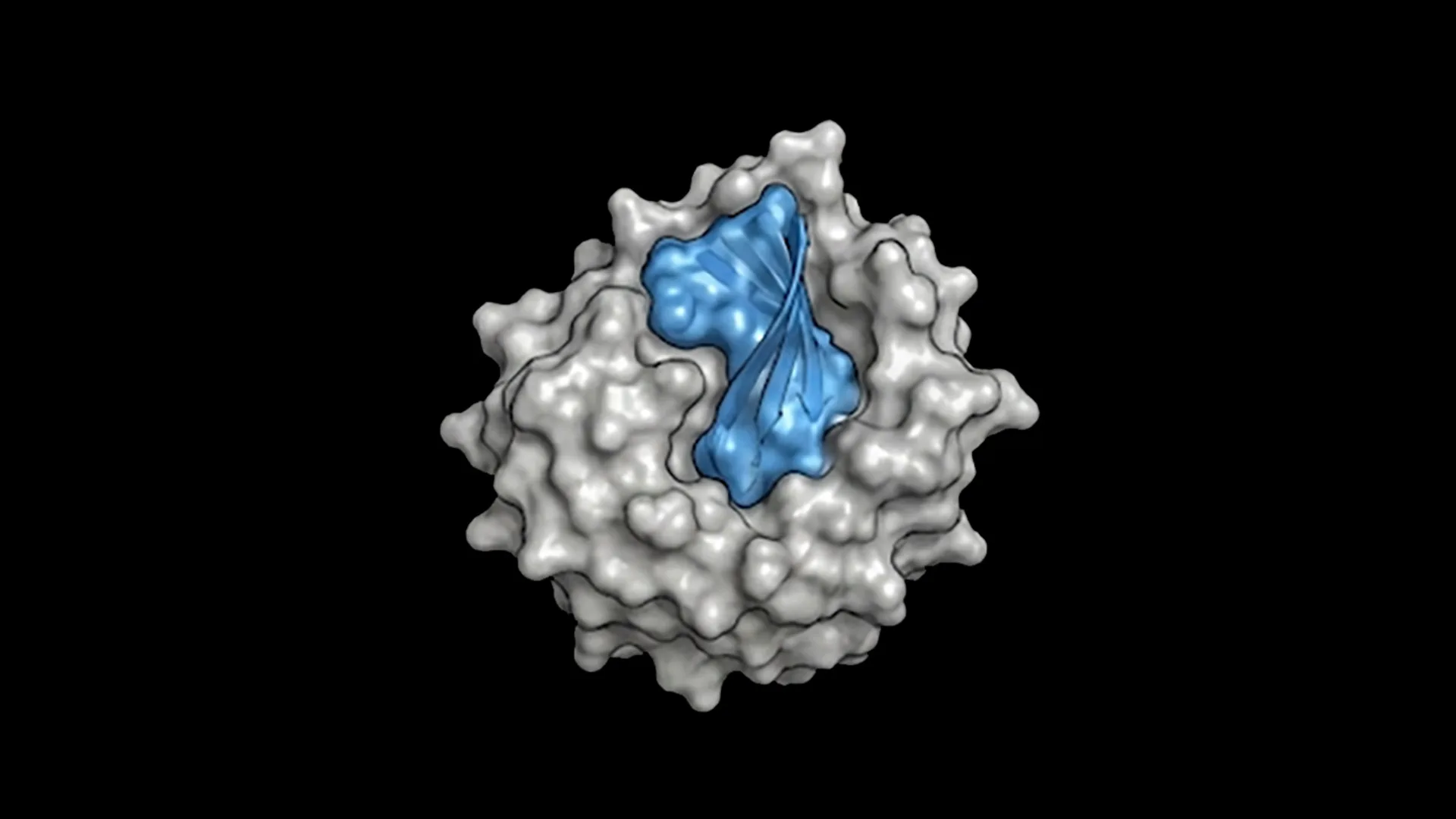
Proteina-Complexa: A New Era for Faster Drug Discovery
The short version
Proteina-Complexa is a new AI tool developed by NVIDIA and Manifold Bio that acts as a super-powered digital architect for designing proteins. It helps scientists create "protein binders"—tiny molecules that can attach to specific targets in the body—which are the building blocks for new medicines and therapies. By using this AI, researchers can design these life-saving molecules much faster and more accurately than ever before.
What happened?
Think of designing a new medicine like trying to find a specific key to open a locked door. In the human body, the "lock" is often a disease-causing molecule, and the "key" is a protein binder that needs to fit that lock perfectly.
In the past, finding or creating these "keys" was a slow, trial-and-error process. Scientists had to test thousands of variations in a lab, which took months or even years. NVIDIA’s new AI, Proteina-Complexa, changes the game by "reasoning" through the design process. It doesn't just guess; it uses information from over a million known protein structures to virtually build and test potential "keys" in seconds, ensuring they have the right shape and chemical properties before a scientist ever steps into a physical lab.
Why should you care?
For the average person, this doesn't mean you'll be downloading an app to design proteins, but it does mean a major shift in how the medicine you take is created.
- Faster cures: If researchers can use AI to design potential drugs in days instead of years, the time it takes for new, life-saving treatments to reach patients could drop significantly.
- Tackling "untreatable" diseases: The AI is specifically good at creating binders for targets that were previously too difficult or "intractable" for human scientists to solve. This could open doors for treatments for diseases that we currently have no medicine for.
What changes for you
You won't see a change in your daily life immediately, but this is a massive step forward for the medical industry. As this technology becomes the standard for drug discovery, you can expect:
- More precise treatments: Drugs designed by AI can be more specific to your body's needs, potentially leading to fewer side effects.
- Better access: By lowering the cost and time required for research, we may see more affordable and effective medical options entering the market over the coming years.
Frequently Asked Questions
Is Proteina-Complexa a medicine?
No, it is a piece of software (a "generative model") used by scientists and researchers to help design the building blocks of medicine. It’s like a specialized CAD program for biology that helps create the blueprints for potential drugs.
Does this mean AI is making all our medicine now?
Not entirely. While the AI does the heavy lifting of designing the structures, these designs must still be tested in labs and undergo the same rigorous safety and clinical trials required for any new medication. AI is a powerful tool to speed up the process, but human experts remain in control of the safety and validation steps.
When will I see the benefits of this technology?
Drug development is a slow process that involves many stages of testing, so it will take time for AI-designed drugs to make it through clinical trials and into hospitals. However, this technology is already being used in real-world research studies today to fast-track that timeline.
The bottom line
Proteina-Complexa is a powerful new tool that uses AI to accelerate the discovery of new medicines. By making the complex process of designing protein binders faster and more accurate, it brings us closer to a future where we can treat previously "untreatable" diseases with greater speed and precision.
Sources
All technical specifications, pricing, and benchmark data in this article are sourced directly from official announcements. Competitor comparisons use publicly available data at time of publication. We update our coverage as new information becomes available.