
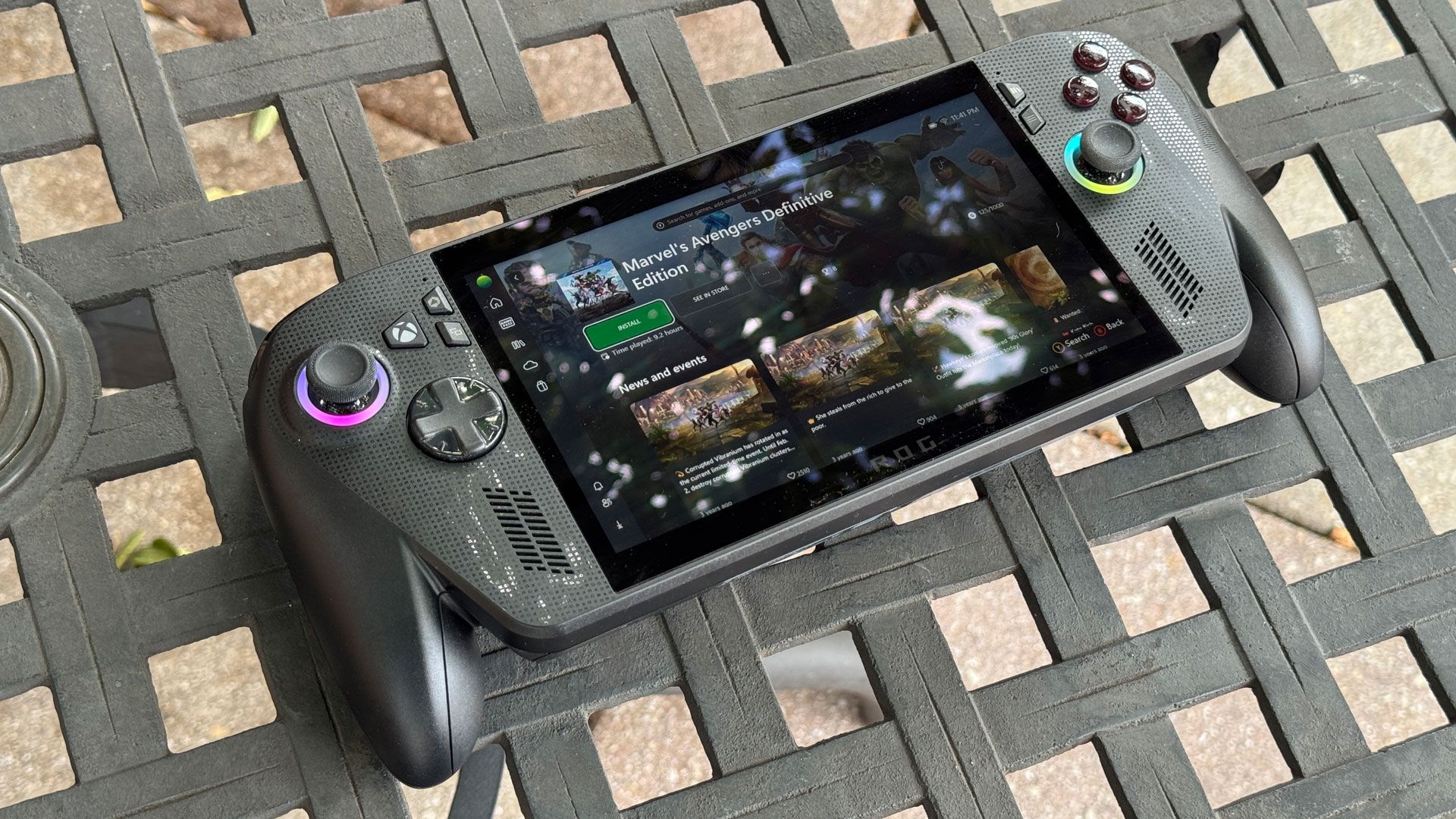
ROG Xbox Ally X Auto SR vs Competitors: Which Should You Choose?
The ROG Xbox Ally X with Auto Super Resolution (Auto SR) is the best choice for Windows handheld gamers who prioritize cutting-edge AI performance and high frame rates, while the Steam Deck remains the preferred option for users seeking a streamlined, Linux-based "plug-and-play" experience without AI-specific hardware requirements.
In a major announcement at the Game Developers Conference (GDC) 2026, Microsoft and ASUS revealed that the ROG Xbox Ally X will receive a significant performance update in April 2026. This update integrates Auto Super Resolution (Auto SR) directly into the operating system, leveraging the device's specialized AI hardware to boost frame rates by up to 30%.
Feature Comparison: Handheld AI Upscaling
| Feature | ROG Xbox Ally X (April Update) | Steam Deck (OLED/LCD) | Lenovo Legion Go |
|---|---|---|---|
| Primary Chipset | Ryzen Z2 AI Extreme | Custom AMD "Sephiroth/Aerith" | Ryzen Z1 Extreme |
| Upscaling Tech | Auto SR (AI-Powered NPU) | FSR (Spatial/Temporal) | FSR / RSR |
| OS Integration | Windows (Native OS-level) | SteamOS (Game-level/Global) | Windows (Driver-level) |
| Performance Gain | Up to 30% (touts 51 FPS vs 35 FPS) | Variable (FSR dependent) | Variable (Driver dependent) |
| Key Specs | Ryzen Z2 AI Extreme w/ NPU | Custom AMD APU | 8.8" QHD+ Screen |
| Best For | Windows power users & AI enthusiasts | Efficiency and UX | Large-screen portable gaming |
Detailed Analysis: The Impact of Auto SR
The Shift to NPU-Based Upscaling
The most significant shift with the ROG Xbox Ally X is the utilization of the Ryzen Z2 AI Extreme chip’s NPU (Neural Processing Unit). Unlike traditional upscaling methods like AMD’s FSR or basic RSR, which often put additional load on the GPU, Auto SR offloads the image processing to the NPU.
Microsoft's demonstration showed Forza Horizon 5 jumping from an average of 35 FPS to 51 FPS when Auto SR was enabled. This 45% jump in the specific demo (exceeding the generalized "30%" claim) suggests that offloading tasks to the NPU allows the GPU to focus entirely on core rendering, leading to smoother gameplay and potentially improved battery life as the main processor works less.
OS-Level vs. Game-Level Support
Auto SR operates at the Windows OS level. This distinguishes it from DLSS or FSR, which often require developers to manually integrate the technology into each game. According to Microsoft, Auto SR "fills in the gaps" left by existing tools. While currently limited to DirectX 11 and DirectX 12 titles, the promise is a more universal performance boost across a wider library of games without waiting for developer patches.
Latency and Visual Trade-offs
A critical factor for handheld gamers is input lag. Microsoft has acknowledged that enabling Auto SR can introduce a small amount of latency. While the visual quality is touted as "nearly equivalent" to native resolution, the impact of this latency on fast-paced competitive shooters remains to be seen. In the current preview state, the feature is positioned more for demanding AAA titles where higher frame rates are more beneficial than frame-perfect responsiveness.
Pricing and Value Comparison
The ROG Xbox Ally X is currently positioned as a premium Windows handheld, but recent price adjustments make the upcoming April update even more compelling.
| Model | Launch Price | Current/Sale Price | Update Cost |
|---|---|---|---|
| ROG Xbox Ally X | Check latest MSRP | ~$100-$110 Off (Record Low) | Free (via Update) |
| Steam Deck OLED | $549+ | Check latest official pricing | N/A |
| Lenovo Legion Go | $699+ | Check latest official pricing | N/A |
Note: Competitive pricing varies by region; check latest official retailers for current stickers.
Use Case Recommendations
Best for AAA Gaming: ROG Xbox Ally X
With the 30% performance boost from Auto SR, the Ally X is the clear winner for players who want to run the latest titles (like Forza Horizon 5 or Cyberpunk 2077) at higher frame rates on a handheld. The AI-powered upscaling provides a "free" performance overhead that competitors using non-AI chips cannot match.
Best for Battery Longevity: Steam Deck
While the Ally X is gaining efficiency through the NPU, the Steam Deck’s custom APU and SteamOS are designed from the ground up for low-power handheld play. If you prioritize 4–6 hours of indie gaming over 50 FPS in AAA titles, the Steam Deck remains the gold standard.
Best for Media & Multitasking: Lenovo Legion Go
If you need a large 8.8-inch screen and the ability to use your handheld as a tablet or desktop replacement, the Legion Go is superior. However, it lacks the dedicated NPU-driven Auto SR found in the Ally X, meaning it must rely on standard FSR which can be more taxing on the battery.
Verdict: Is it Worth the Upgrade?
Worth Upgrading?
- From Original ROG Ally (Z1/Z1 Extreme): Yes. The leap to the Ryzen Z2 AI Extreme and the inclusion of Auto SR provides a tangible performance gap that makes older models feel significantly dated.
- From Steam Deck: Maybe. Only if you are frustrated by the performance limits of SteamOS and want a more powerful Windows-based machine for high-end games.
Competition Verdict
The ROG Xbox Ally X is currently the only handheld in its class leveraging a dedicated NPU for OS-level upscaling. While Valve and Lenovo utilize FSR, Microsoft’s Auto SR is a "must-watch" feature that could define the next generation of handheld gaming.
Migration Effort
Switching to the ROG Xbox Ally X from a competitor is a standard Windows setup process. For current Ally X owners, the migration to Auto SR is zero-effort, as it arrives via an April 2026 software update.
Final Recommendation: If you own an Ally X, this is a "must-upgrade" software update. If you are in the market for a new handheld, the Ally X's new AI capabilities make it the strongest Windows contender for 2026.
Sources
All technical specifications, pricing, and benchmark data in this article are sourced directly from official announcements. Competitor comparisons use publicly available data at time of publication. We update our coverage as new information becomes available.