
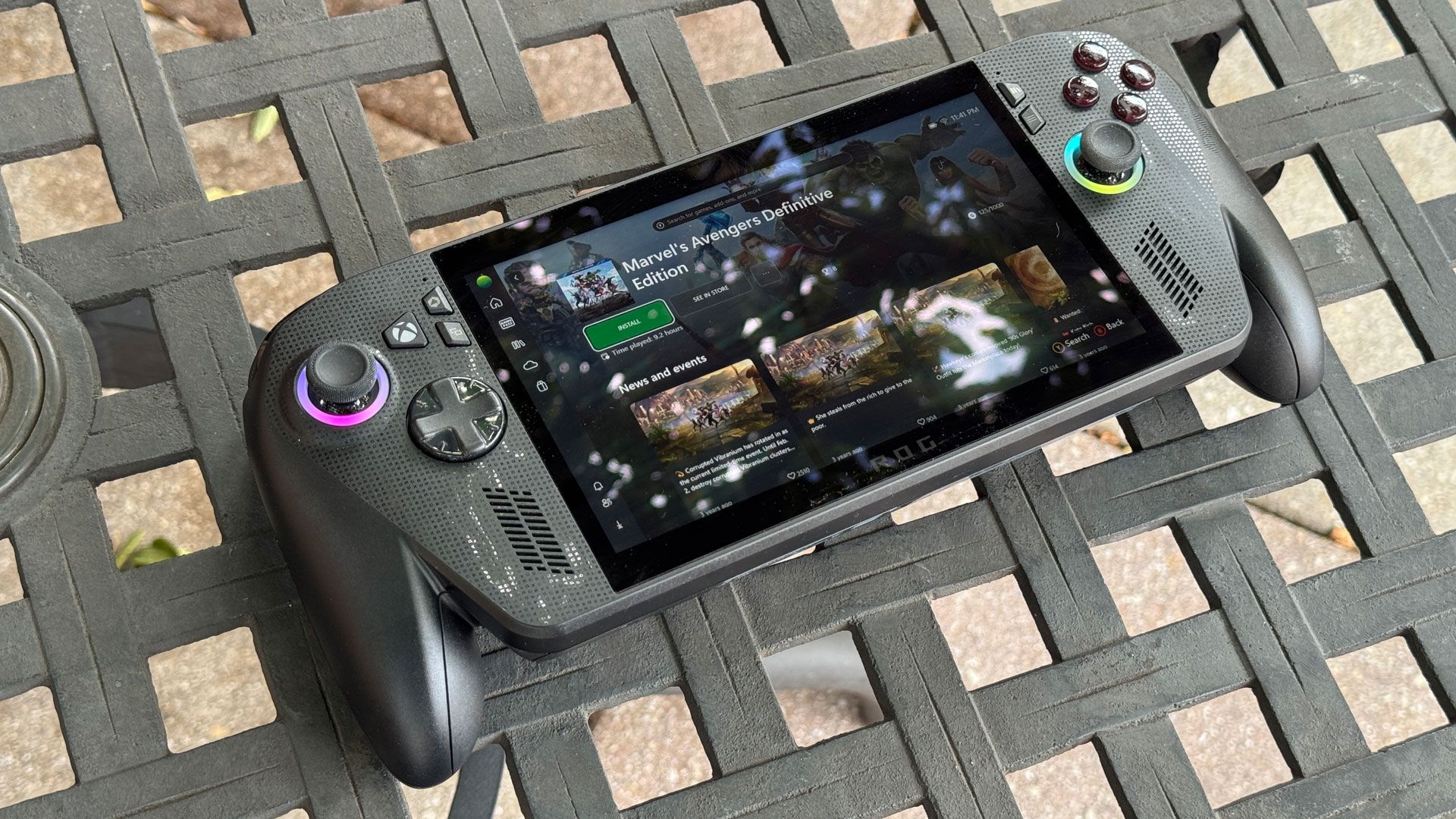
Microsoft Reveals 30% AI Performance Boost for ROG Xbox Ally X
- What: Microsoft is bringing Auto Super Resolution (Auto SR) to the ASUS ROG Xbox Ally X.
- Performance: The AI-powered upscaling provides an estimated 30% boost in gaming frame rates.
- Technology: The feature leverages the Ryzen Z2 AI Extreme chip’s dedicated Neural Processing Unit (NPU).
- Timeline: A public preview is scheduled to begin in April 2026.
Microsoft announced at the Game Developers Conference (GDC) 2026 that its AI-driven Auto Super Resolution (Auto SR) technology will launch for the ROG Xbox Ally X handheld this April. The update marks a significant expansion of Microsoft’s AI gaming features, promising to deliver up to a 30% performance increase by offloading image upscaling tasks to the device's dedicated hardware.
AI-Powered Upscaling at the OS Level
Unlike traditional upscaling methods that rely heavily on the Graphics Processing Unit (GPU), Auto SR operates at the operating system level. According to Microsoft, the feature is designed to run directly on the Neural Processing Unit (NPU) found within the Ryzen Z2 AI Extreme chip that powers the Asus ROG Xbox Ally X.
By utilizing the NPU for real-time image scaling, the system reduces the workload on the primary GPU. This shift is intended not only to increase frame rates but also to potentially improve battery life—a critical metric for handheld gaming devices. During a demonstration at GDC 2026, Microsoft showcased the technology running Forza Horizon 5. With Auto SR disabled, the game averaged 35 frames per second (FPS); however, with the AI feature enabled, performance jumped to an average of 51 FPS, representing a substantial gain in fluid gameplay.
Technical Specifications and Compatibility
Auto SR was originally introduced as an exclusive feature for Copilot+ PCs equipped with Snapdragon X processors. Its migration to the ROG Xbox Ally X represents the first time the technology has been optimized for handheld Xbox hardware.
According to official Microsoft documentation, the feature "fills in the gaps" left by existing upscaling tools like NVIDIA’s DLSS or AMD’s FSR. However, there are technical limitations to the current implementation. Auto SR is presently supported only for games running on DirectX 11 or DirectX 12. Additionally, while the performance gains are notable, Microsoft noted that enabling the feature can introduce a marginal amount of latency, which may vary in impact depending on the specific gaming title.
Impact on the Handheld Market
This update changes how developers and users approach performance on mobile hardware. For the first time, a mainstream handheld is using a dedicated AI engine to bypass the thermal and power constraints of traditional silicon. For gamers, this means "nearly equivalent visuals" at significantly higher frame rates without needing to upgrade hardware.
The move intensifies the competition between Microsoft, AMD, and NVIDIA in the upscaling space. By integrating the feature at the OS level, Microsoft provides a "blanket" solution that could eventually apply to a wider library of games without requiring individual patches from game developers.
What’s Next
The ROG Xbox Ally X will serve as the flagship device for this rollout. Microsoft expects to begin the initial public preview in April 2026. While the current focus is on the Ryzen Z2 AI Extreme chipset, industry analysts are watching to see if Auto SR will eventually expand to other Windows-based handhelds or the rumored "Project Helix" next-gen Xbox console.
Sources
All technical specifications, pricing, and benchmark data in this article are sourced directly from official announcements. Competitor comparisons use publicly available data at time of publication. We update our coverage as new information becomes available.