
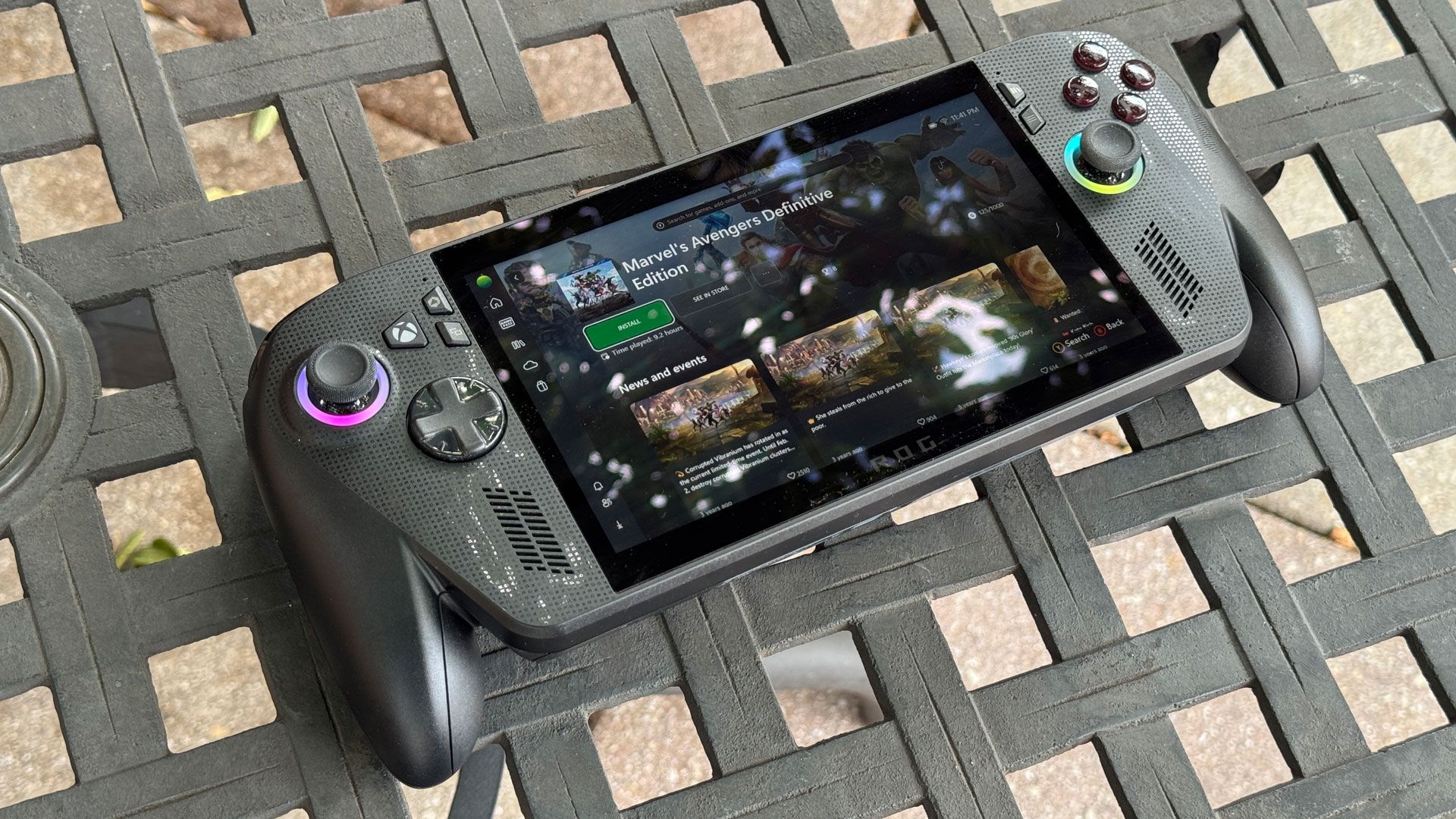
Our Honest Take on the ROG Xbox Ally X Auto SR Update: A Strategic NPU Win with a Latency Tax
Verdict at a glance
- The Win: Offloading upscaling to the Ryzen Z2 AI Extreme’s NPU is a brilliant move that preserves GPU cycles for raw frame production and, theoretically, extends handheld battery life.
- The Catch: The inevitable introduction of latency and the current restriction to DirectX 11/12 titles mean this isn't a "magic button" for all games—especially competitive ones.
- Who it’s for: ROG Xbox Ally X owners who prioritize visual stability and battery longevity over frame-perfect input response.
- Price/Performance: As a free firmware/OS update, the value is unbeatable, though the "30% boost" is a marketing average that will vary wildly by title.
What’s actually new
The transition of Microsoft’s Auto Super Resolution (Auto SR) from Snapdragon-based Copilot+ PCs to the x86 architecture of the Ryzen Z2 AI Extreme is the real story here.
Unlike traditional upscaling methods (like basic FSR) that often eat into the same GPU resources they are trying to save, Auto SR operates at the OS level. By leveraging the dedicated NPU (Neural Processing Unit) on the Asus ROG Xbox Ally X, the system can "fill in the gaps" of a lower-resolution image without taxing the graphics cores. This is a fundamental shift in handheld resource management: using the silicon that usually sits idle during gaming to boost the silicon that is perpetually at its limit.
The hype check
Microsoft is touting a 30% performance boost. In a leaked GDC 2026 demo of Forza Horizon 5, we saw frame rates jump from 35 FPS to 51 FPS—a roughly 45% increase.
However, we need to be careful with the "30%" figure. Marketing teams love to aggregate results. While Forza might see a massive jump, more CPU-bound or older DX11 titles may see significantly less. Furthermore, the claim of "nearly equivalent visuals" must be viewed with skepticism. AI upscaling at the OS level lacks the motion vector data that per-game integrations (like DLSS 3 or FSR 3) utilize, which often results in "shimmering" or ghosting on thin objects and UI elements.
Real-world implications
For the handheld market, the most significant impact isn't actually the frame rate—it's thermal and power management.
- Battery Life: If the GPU can render at 720p while the NPU handles the heavy lifting to output at 1080p, the total power draw should drop. For a device like the Ally X, an extra 15–20 minutes of play is more valuable than a 5 FPS increase.
- Accessibility: Because this is an OS-level feature, it potentially brings "AI-enhanced" graphics to games that were never officially patched by their developers. This breathes new life into a user's existing library without waiting for a "Remastered" edition.
Limitations they’re not talking about
The source material mentions two major red flags that Microsoft is understandably downplaying:
- The Latency Tax: The documentation explicitly warns that Auto SR can introduce latency. On a handheld, where input lag is already a challenge compared to desktop monitors, adding an AI processing layer could make fast-paced shooters or Soulslikes feel "heavy" or unresponsive.
- API Lock-in: Currently, Auto SR only supports DirectX 11 and 12. This excludes a vast sea of emulated titles and OpenGL/Vulkan games (like many indie hits and Doom Eternal). For a device marketed on its versatility, this is a significant "asterisk" on the 30% boost claim.
How it stacks up
Compared to AMD’s FSR (which runs on the GPU) or Nvidia’s DLSS (which requires proprietary Tensor cores), Auto SR is the "middle path." It doesn't require the developer to bake it into the game code (advantage over DLSS/FSR), but it likely won't match the visual fidelity of DLSS because it doesn't have deep engine-level access. It is essentially a smarter, AI-driven version of a spatial upscaler, sitting somewhere between FSR 1.0 and FSR 2.0 in terms of visual logic, but with the efficiency of NPU hardware.
Constructive suggestions
To make Auto SR a definitive industry standard for handhelds, we suggest Microsoft and ASUS prioritize the following:
- User-Adjustable Latency Modes: Give users a toggle to prioritize "Minimal Latency" (less aggressive upscaling) vs. "Max Visuals."
- Vulkan/OpenGL Support: Expanding beyond DirectX is essential for the handheld community, which frequently relies on alternative APIs for emulation and indie gaming.
- NPU Monitoring in Overlay: Add a "NPU Load" metric to the Command Center overlay so users can see exactly how much work is being offloaded and justify the battery savings.
Our verdict
Wait until the April rollout. While the technical achievement of moving Auto SR to x86 NPUs is impressive, the real-world cost—specifically input latency—remains a mystery. If you primarily play RPGs, racing games, or cinematic adventures, this update will be a "set and forget" win. If you are a competitive esports player or highly sensitive to "floaty" controls, you may find yourself keeping this feature turned off.
FAQ
Should we switch from the original ROG Ally to the Ally X for this feature?
If performance is your only metric, perhaps not yet. While the Ryzen Z2 AI Extreme's NPU makes Auto SR possible, the "30% boost" is relative to the device's native performance. Wait for independent benchmarks to see if the visual trade-off is worth the hardware upgrade cost.
Is it worth the price premium of the Ally X?
The Ally X's value proposition is increasingly tied to its "AI Ready" status. With Microsoft confirming that its next-gen console ("Project Helix") will lean heavily on "FSR Diamond" and AI upscaling, the Ally X is currently the best-positioned handheld to survive the transition into an AI-driven gaming era.
Will Auto SR work on all my Steam games?
No. Based on current documentation, it is limited to DirectX 11 and 12 titles. If your library consists of older titles or games using the Vulkan API, you will likely see no benefit from this specific update.
Sources
All technical specifications, pricing, and benchmark data in this article are sourced directly from official announcements. Competitor comparisons use publicly available data at time of publication. We update our coverage as new information becomes available.