
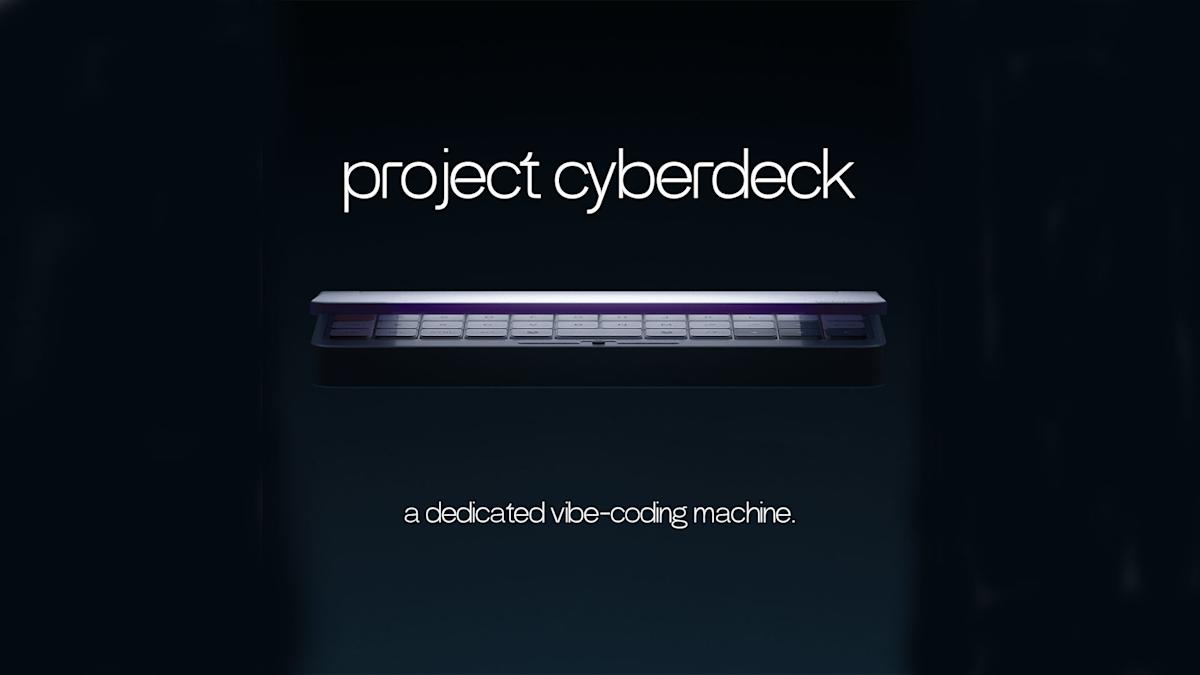
Headline: Rabbit Preps $500 Cyberdeck for On-the-Go AI Coding
Key Facts
- What: Rabbit is developing Project Cyberdeck, a compact Linux-powered netbook-style device optimized for "vibe coding" with command-line access to AI models.
- When: Expected release later in 2026, though supply chain issues could cause delays.
- Target Price: Approximately $500, significantly lower than high-end AI PCs like NVIDIA's $3,999 DGX Spark.
- Key Specs (Target): Performance comparable to Raspberry Pi 5, support for two external monitors, 40% hot-swappable mechanical keyboard, 7-inch OLED touchscreen.
- Software: Runs Linux with full customization; includes RabbitOS tools accessible via command line and native support for AI agents and models from Anthropic and OpenAI.
Lead paragraph
Rabbit is developing a compact, keyboard-equipped portable computer designed specifically for AI-assisted "vibe coding" using cloud-based large language models. The device, called Project Cyberdeck, draws inspiration from early netbooks like the Sony Vaio P and aims to deliver an enjoyable typing experience in a small form factor priced around $500. According to an exclusive Engadget preview, the company hopes to ship the Linux-based device later this year, though component shortages could push availability into 2026.
Company Background and Motivation
Rabbit, best known for its R1 AI companion device, began work on Project Cyberdeck after CEO Jesse Lyu observed how heavily his software engineers relied on Anthropic's Claude Code. Lyu envisioned a lightweight, portable machine with a proper keyboard and command-line interface that developers could use for coding on the go without being tethered to a full laptop.
Lyu was disappointed by the quality of existing low-cost portable computers, particularly their "shitty rubber dome keyboards" found in many modern Chromebooks. This led Rabbit to design its own device, taking visual and functional cues from the short-lived Sony Vaio P — an ultra-light 8-inch netbook released in 2009 that weighed just 1.4 pounds but carried a premium price tag of around $900 at launch.
Design and Hardware Targets
Early design renders of the Cyberdeck, which Rabbit has not yet released publicly, depict a cute, clamshell device that blends elements of the Rabbit R1, the Sony Vaio P, and even the original Nintendo DS. The prototype plans include four USB-C ports for connecting external monitors and peripherals, though final I/O specifications remain undecided as the company continues sourcing components.
A key differentiator is the keyboard. Rabbit intends to equip the Cyberdeck with a 40 percent layout featuring low-profile mechanical switches and a fully hot-swappable PCB. This would allow users to customize the typing experience — a significant upgrade over typical low-cost portables. The company is also targeting a 7-inch OLED touchscreen with features such as touch input, a 165Hz refresh rate, and high brightness around 815 nits. OLED's power efficiency, achieved by turning off individual pixels for true blacks, supports Rabbit's plan to ship with a dark mode interface from day one to maximize battery life.
On the performance side, Rabbit is aiming for capabilities similar to the Raspberry Pi 5, which uses a Broadcom BCM2712 quad-core Arm Cortex-A76 processor running at 2.4GHz. With 16GB of RAM, the Pi 5 can drive two external monitors — a feature Rabbit hopes to replicate. The goal is a machine responsive enough for seamless interaction with cloud AI services from Anthropic and OpenAI without requiring expensive local compute hardware.
Software and Customization Focus
The Cyberdeck will run Linux, giving users complete freedom to modify the operating system and install any third-party development tools they prefer. All software features originally developed for RabbitOS will be accessible through command-line prompts. The device is expected to include native AI agents and support for tools like Claude Code, while allowing users to select their preferred models from providers including OpenAI and Anthropic.
This approach positions the Cyberdeck as a specialized tool rather than a general-purpose computer. It leverages the fact that modern AI coding primarily requires a good screen, keyboard, and reliable internet connection to cloud models, rather than massive local processing power.
Challenges and Timeline
One major uncertainty is memory. The industry-wide shortage of high-bandwidth memory (HBM) driven by datacenter AI demand has increased costs across consumer electronics. While Lyu believes Rabbit can still launch in 2026, he did not entirely rule out delays. However, the company's track record — shipping the first R1 device just 93 days after finalizing its design — suggests it can move quickly if component availability improves.
Rabbit has not yet finalized the chipset or exact RAM configuration, and no complete prototype was available during Engadget's visit. The company is still in the component sourcing and design refinement phase, meaning specifications could change before release.
Industry Context and Competition
The Cyberdeck arrives as the broader AI PC market expands in multiple directions. NVIDIA has positioned high-end solutions like the $3,999 DGX Spark for users who want to run large language models entirely locally. In contrast, Rabbit is betting that most developers simply need an efficient, comfortable interface to cloud-based AI coding tools.
The concept echoes the Chromebook philosophy pioneered by Google: minimize local hardware requirements and rely on internet-connected services to keep costs low. Companies like Apple have also begun integrating AI coding assistance directly into their development environments, raising questions about whether users will embrace a dedicated second device solely for coding.
Impact
For developers and "vibe coders," the Cyberdeck could offer a more ergonomic and enjoyable alternative to using tablets or low-quality Chromebooks for AI-assisted programming sessions. The mechanical keyboard and compact form factor may appeal to those who want a dedicated device optimized for command-line workflows and quick access to models like Claude or GPT.
At a projected $500 price point, the device would be far more accessible than premium AI hardware while still delivering the portability that netbooks once promised. Its open Linux foundation and hot-swappable keyboard could also attract tinkerers and enthusiasts within the cyberdeck community.
What's Next
Rabbit continues to refine the design and secure components for Project Cyberdeck. While the company hopes to release the device later in 2026, final specifications, exact RAM configuration, and confirmed chipset details will likely emerge in the coming months as development progresses. The company has not yet shared public renders or a firm shipping timeline.
Success will depend on whether developers see value in carrying a specialized second device when cloud AI tools are increasingly integrated into mainstream laptops and development environments. If Rabbit can deliver on its promises of a quality keyboard, solid performance, and competitive pricing, the Cyberdeck could carve out a niche in the growing AI hardware ecosystem.
Sources
- Engadget: Rabbit's Cyberdeck is a modern take on a netbook
- Gizmodo: Rabbit’s Next AI Gadget Is a ‘Cyberdeck’ for Vibe Coding
- Inc.: Rabbit Founder Wants Redemption With a Cyberdeck for Vibe Coding
- Technetbook: Rabbit Project Cyberdeck mini laptop for AI coding
- LetsDataScience: Rabbit Designs Portable Cyberdeck For AI Coding