
Our Honest Take on NVIDIA Nemotron 3: A Masterclass in Hardware-Software Vertical Integration
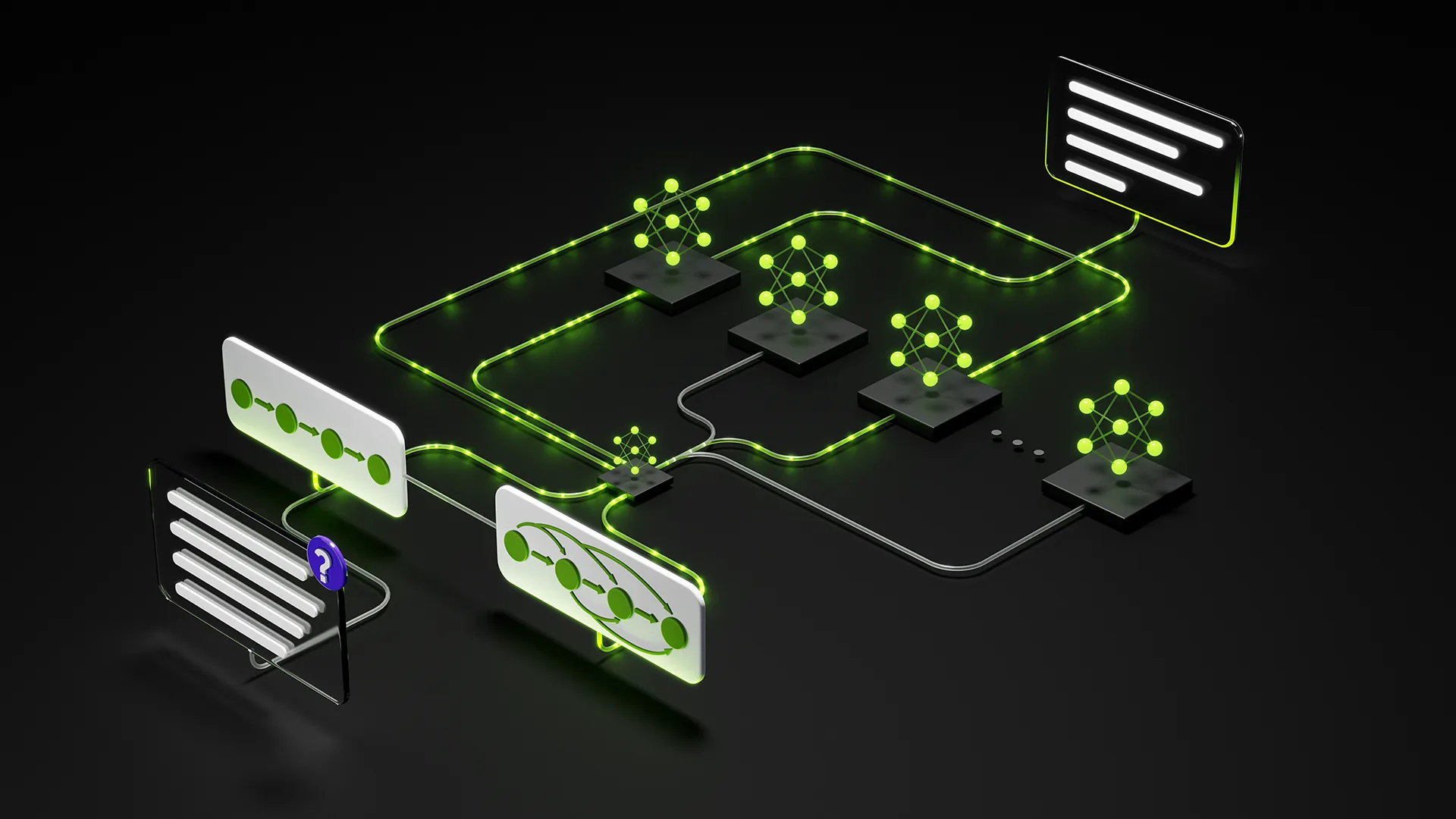
At GTC 2026, NVIDIA didn't just drop a new model; they unveiled a modular, agent-centric ecosystem designed to prove that the future of AI isn't one giant model, but a "unified stack" of specialized ones. The Nemotron 3 family represents NVIDIA’s most aggressive move yet to tighten the loop between their Blackwell hardware and the software that runs on it.
By blending architectural innovations like Mamba-Transformer hybrids with aggressive quantization (NVFP4), NVIDIA is attempting to solve the "agent tax"—the massive latency and cost overhead that occurs when AI agents start "thinking" through multi-step tasks.
Verdict at a glance
- What’s genuinely impressive: The hybrid Mamba-Transformer MoE architecture effectively tackles the efficiency bottleneck of long-context reasoning. The inclusion of a configurable "thinking budget" is a much-needed practical tool for developers managing inference costs.
- What’s disappointing: Significant portions of the stack—specifically Nemotron 3 Ultra and Nano Omni—remain "upcoming" or in "early access." We are being sold a vision that is partially pre-release.
- Who it’s for: Enterprise teams already committed to the NVIDIA Blackwell ecosystem who need to deploy high-throughput, low-latency agents at scale.
- Price/Performance verdict: Likely unbeatable on a per-token basis if you own Blackwell GPUs, but the "hardware tax" to reach these performance heights is steep.
What’s actually new
Strip away the GTC marketing, and three technical advancements stand out as genuine progress:
- Hybrid Mamba-Transformer MoE: Standard Transformers struggle with "context explosion"—as the conversation grows, the compute cost grows quadratically. By integrating Mamba (a State Space Model) with Transformer layers in a Mixture-of-Experts (MoE) setup, Nemotron 3 Super achieves a 1M-token context window while activating only 12B parameters per pass. This is a sophisticated way to get "big model" reasoning with "small model" latency.
- The "Thinking Budget": This is a rare, developer-first feature. It allows engineers to bound the Chain-of-Thought (CoT) reasoning. In production, you don't always need a model to ponder for 30 seconds; sometimes you need a quick decision. This level of granular control over the "reasoning vs. latency" trade-off is a significant win for agentic reliability.
- NVFP4 Precision: NVIDIA is pushing its new 4-bit floating-point format (FP4) hard. By optimizing Nemotron 3 specifically for NVFP4 on Blackwell, they are claiming a 5x throughput increase. This isn't just a software update; it’s a hardware-software co-design that makes 1M-context reasoning financially viable for enterprise.
The hype check
NVIDIA claims Nemotron 3 Super ranks in the "most attractive efficiency quadrant" of the Artificial Analysis Intelligence Index. While the data supports its efficiency, we need to be careful with the "intelligence" claims.
- Claim: "Highest reasoning accuracy and efficiency among open frontier models."
- The Reality: This claim is attached to the Nemotron 3 Ultra, which is currently "coming soon." It is impossible to verify if it actually beats current leaders like Llama 3 or Claude 3.5 Sonnet in real-world reasoning.
- Claim: "5x higher throughput than the previous generation."
- The Reality: This 5x figure relies heavily on the jump to Blackwell GPUs and NVFP4. If you are running this on older H100s or A100s, you will not see that 5x delta. The gains are as much about the silicon as they are about the weights.
Real-world implications
The biggest winner here is the Multimodal RAG pipeline. By releasing specific models for embedding and reranking (Nemotron RAG) that handle both text and images, NVIDIA is solving the "visual context" problem.
Imagine a customer service agent for an appliance company. A user uploads a photo of a broken dishwasher part. Previous systems might struggle to link that image to a technical manual's text. Nemotron 3’s unified multimodal stack allows the agent to "see" the part, "read" the manual, and "reason" through a fix in a single, low-latency loop. This moves agents from "chatbots that can see" to "operational tools that can act."
Limitations they’re not talking about
While the technical achievement is high, there are three clear gaps:
- The "Coming Soon" Gap: A significant portion of the "unified stack" (Ultra and Nano Omni) is vaporware at the time of announcement. Relying on an incomplete stack for production-grade agentic AI is a risky bet for CTOs today.
- Hardware Lock-in: The most impressive performance metrics are gated behind Blackwell. This creates a "gold-plated cage." If you want the efficiency NVIDIA promises, you have to buy their most expensive, newest chips. Porting these models to alternative hardware (like AMD or custom ASICs) will likely result in a significant performance degradation because they won't benefit from the NVFP4 optimizations.
- MoE Complexity: While activating 12B parameters is efficient for inference, managing a Mixture-of-Experts model in production is notoriously difficult. Developers will need to utilize the full NeMo toolkit to ensure the "experts" are being routed correctly, adding a layer of operational overhead.
How it stacks up
Compared to Llama 3 (Meta), Nemotron 3 Super appears to prioritize "throughput per dollar" for long-context tasks. While Llama 3 is a fantastic generalist, it lacks the native Mamba-hybrid architecture that makes Nemotron 3 so efficient at 1M tokens.
Compared to GPT-4o (OpenAI), NVIDIA’s play is local control and "open" weights. For industries like finance or cybersecurity (which NVIDIA specifically mentions), the ability to run a high-intelligence model on-premise with a 1M context window is a massive advantage over sending sensitive data to a closed API.
Constructive suggestions
- Close the "Ultra" Gap: NVIDIA should provide a firm release date for the Ultra and Nano Omni models. The "coming soon" label is the biggest hurdle to enterprise adoption.
- Open-Source the Quantization Recipes: To truly support the "open model" claim, NVIDIA should release the exact recipes used to achieve the NVFP4 performance, allowing the community to optimize these models for a wider range of hardware, even if it's less efficient than Blackwell.
- Focus on the "VoiceChat" Latency: "Early access" for VoiceChat suggests the full-duplex interaction isn't quite ready for primetime. Prioritizing the stability of this multimodal bridge is essential for the "Digital Assistant" use case they are pitching.
Our verdict
Who should adopt now: Enterprises already invested in NVIDIA Blackwell infrastructure who are hitting latency walls with long-context agents. The efficiency gains here are real and measurable.
Who should wait: Teams running on older hardware (A100/H100) or those who need the "highest reasoning" (Ultra) which isn't out yet.
Who should skip: Small startups looking for the simplest API integration. The Nemotron/NeMo ecosystem is powerful but has a steep learning curve compared to simple "Model-as-a-Service" providers.
FAQ
Should we switch from Llama 3 to Nemotron 3 Super?
Only if your primary bottleneck is inference cost at long context. If you are doing short-form RAG or basic chat, the transition might not be worth the re-tooling. However, if you are building complex agents that need to remember 100k+ tokens of history, the Mamba-Transformer hybrid in Nemotron 3 Super will offer significantly better ROI.
Is it worth the price premium of Blackwell GPUs?
If your business model depends on high-volume AI agents, yes. The 5x throughput claim, even if slightly optimistic, suggests that you could consolidate five racks of older hardware into one Blackwell rack running Nemotron 3, drastically reducing power and cooling costs.
Can Nemotron 3 Content Safety replace my existing guardrails?
It is a strong contender, particularly because it is multimodal. If your current guardrail system only checks text but misses unsafe content in images, Nemotron 3 Content Safety is a necessary upgrade. Being only 4B parameters, it is small enough to run as a "pre-filter" without tanking your total system latency.
Sources
All technical specifications, pricing, and benchmark data in this article are sourced directly from official announcements. Competitor comparisons use publicly available data at time of publication. We update our coverage as new information becomes available.