
- What: NVIDIA and Emerald AI showcased "power-flexible" AI factories that autonomously adjust energy consumption to stabilize the power grid.
- Technology: Demonstrated using 96 NVIDIA Blackwell Ultra GPUs, the NVIDIA Quantum-X800 InfiniBand platform, and Emerald AI’s Conductor Platform.
- Key Partners: Collaboration includes National Grid, EPRI, Nebius, NextEra Energy, and Nscale.
- Impact: AI factories achieved 100% alignment with over 200 power targets, proving they can act as "shock absorbers" for the grid while maintaining high-priority workloads.
NVIDIA and Emerald AI have unveiled a breakthrough in energy management that transforms power-hungry AI factories into stabilizing "shock absorbers" for the global electricity grid. In a series of successful trials, including a major demonstration at a Nebius AI factory in London, the companies proved that high-performance AI clusters can autonomously ramp down power usage during peak demand spikes without disrupting critical workloads. This shift allows AI data centers to be treated as helpful grid assets rather than mere energy drains, potentially slashing years off the timeline required to connect new facilities to the power grid.
Balancing the "Tea Kettle" Surge
The challenge of grid management was famously illustrated during the UEFA EURO 2020 match between England and Germany. At half-time, millions of viewers in the U.K. simultaneously turned on their electric kettles, causing a massive 1-gigawatt demand spike—the equivalent output of a nuclear reactor—in just minutes. Traditionally, grid operators must maintain expensive, overbuilt infrastructure to handle these "TV pickup" surges.
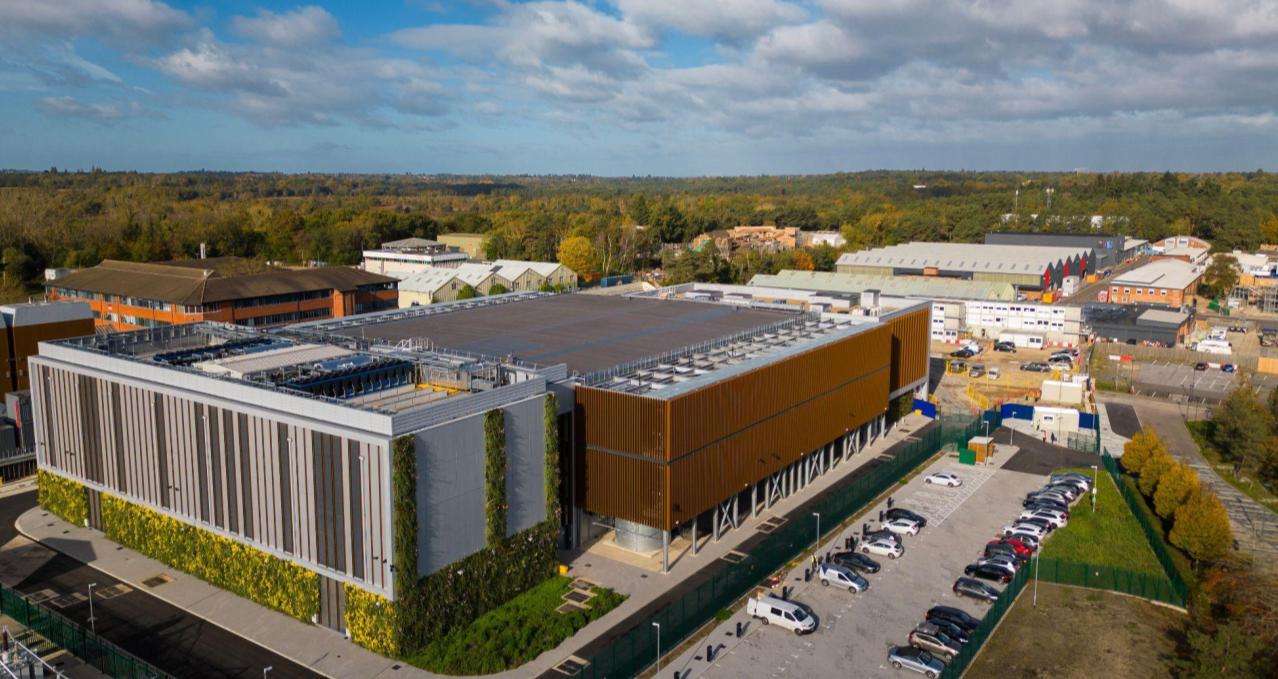
In the London demonstration, Emerald AI and NVIDIA reenacted this specific scenario. Using the Emerald AI Conductor Platform and NVIDIA infrastructure at a Nebius AI factory, the team simulated the same energy surge. As the simulated tea kettles were switched on, the AI cluster—powered by 96 NVIDIA Blackwell Ultra GPUs—automatically throttled its power consumption. The system successfully absorbed the shock of the surge, protecting the grid's stability while ensuring that the highest-priority AI tasks remained at peak throughput.
According to National Grid, the experiment recorded 100% alignment with over 200 specific power targets. "We’ve proved the value that this technology brings," said Steve Smith, group chief strategy officer of National Grid. Smith noted that the tests went beyond typical GPU-only trials, measuring the total power consumption of all IT equipment, including CPUs and networking hardware.
Technical Architecture of the Power-Flexible Factory
The solution relies on a sophisticated stack of hardware and software to provide real-time telemetry and control. At the heart of the London trial was the NVIDIA Quantum-X800 InfiniBand platform, providing the high-speed connectivity required for Blackwell-generation workloads.
The system utilizes the NVIDIA System Management Interface (SMI) to retrieve precise, second-level power telemetry. This data allows the Emerald AI Conductor Platform to make split-second decisions about which workloads to slow down and which to maintain. While flexible, lower-priority jobs were temporarily throttled during grid stress, high-priority "production-grade" workloads continued to perform at maximum capacity.
Beyond the U.K., Emerald AI has conducted similar proof-of-concept trials in Arizona, Virginia, and Illinois. The initiative has expanded to include major energy players like NextEra Energy and Nscale. According to NVIDIA's announcement at CERAWeek 2026, the company is also introducing the Vera Rubin DSX AI Factory reference design, which includes the DSX Flex software library specifically designed to connect these factories to power-grid services.
Impact: Faster Deployment and Lower Rates
For developers and AI companies, the most immediate benefit is speed. Currently, the primary bottleneck for new AI data centers is the multi-year wait for massive grid infrastructure upgrades. By proving they can be flexible, these "power-flexible" factories can tap into existing grid capacity immediately.
"With this technology, AI factories become friendly and helpful grid assets," said Varun Sivaram, founder and CEO of Emerald AI. "Simultaneously, the AI factories get connected much faster to the grid because they can tap into existing power grids."
For the general public, this technology offers a path to more affordable electricity. By curbing the peak loads that the system needs to serve, grid operators can limit the need for costly new power plants and transmission lines, the expenses of which are typically passed on to everyday bill payers.
The shift transforms the AI industry's biggest liability—its massive power appetite—into its most valuable bargaining chip for rapid expansion.
Future Implications for the AI Landscape
The collaboration signals a major shift in how the tech industry views energy. As hyperscalers continue to announce multi-billion dollar data center investments, the ability to coexist with fragile municipal grids will be a competitive necessity.
National Grid’s Steve Smith highlighted that while the U.K. may not match the sheer scale of U.S. data center deployments, the use of flexible grid assets allows the country to play a significant role in the global AI economy. He noted that interest from hyperscalers is already surging due to the potential for optimized grid use.
Looking ahead, the partnership aims to integrate co-located energy generation and storage into these hybrid AI factories. This would allow facilities to use bridge power during initial deployment and later harness those resources to supply the broader grid during emergencies. With four successful demonstrations completed, NVIDIA and Emerald AI are now gearing up to scale this "grid-responsive" infrastructure globally, potentially setting a new standard for how the AI era powers itself.