
OpenAI, Oracle Cancel Abilene Stargate Expansion Over Financing, Capacity Disputes
Oracle and OpenAI have abandoned plans to expand their flagship AI data center campus in Abilene, Texas, after negotiations collapsed over financing arrangements and OpenAI’s shifting capacity projections, according to Bloomberg. The Abilene site forms a core part of the high-profile Stargate project announced at the White House last year. Crusoe, the site operator, is now seeking alternative tenants for the excess capacity, with Meta reportedly emerging as a potential customer following Nvidia’s intervention.
The cancellation marks a significant setback for one of the largest AI data center initiatives publicly disclosed to date. Discussions since mid-2025 had focused on scaling the campus power capacity from approximately 1.2 gigawatts (GW) to 2.0 GW. One gigawatt roughly equals the output of a nuclear reactor and can supply electricity to hundreds of thousands of homes at peak usage. Local resistance to the increased power demands had already complicated matters, with concerns centered on the use of coal or gas generation rather than nuclear options.
Negotiations Break Down
According to the Bloomberg report cited by Tom’s Hardware, lengthy talks between Oracle, Crusoe, and OpenAI unraveled due to difficult financing terms and OpenAI’s frequently changing forecasts for required compute capacity. Preliminary agreements to lease substantial additional space were ultimately dropped, even as development of the original 1,000-acre campus continues.
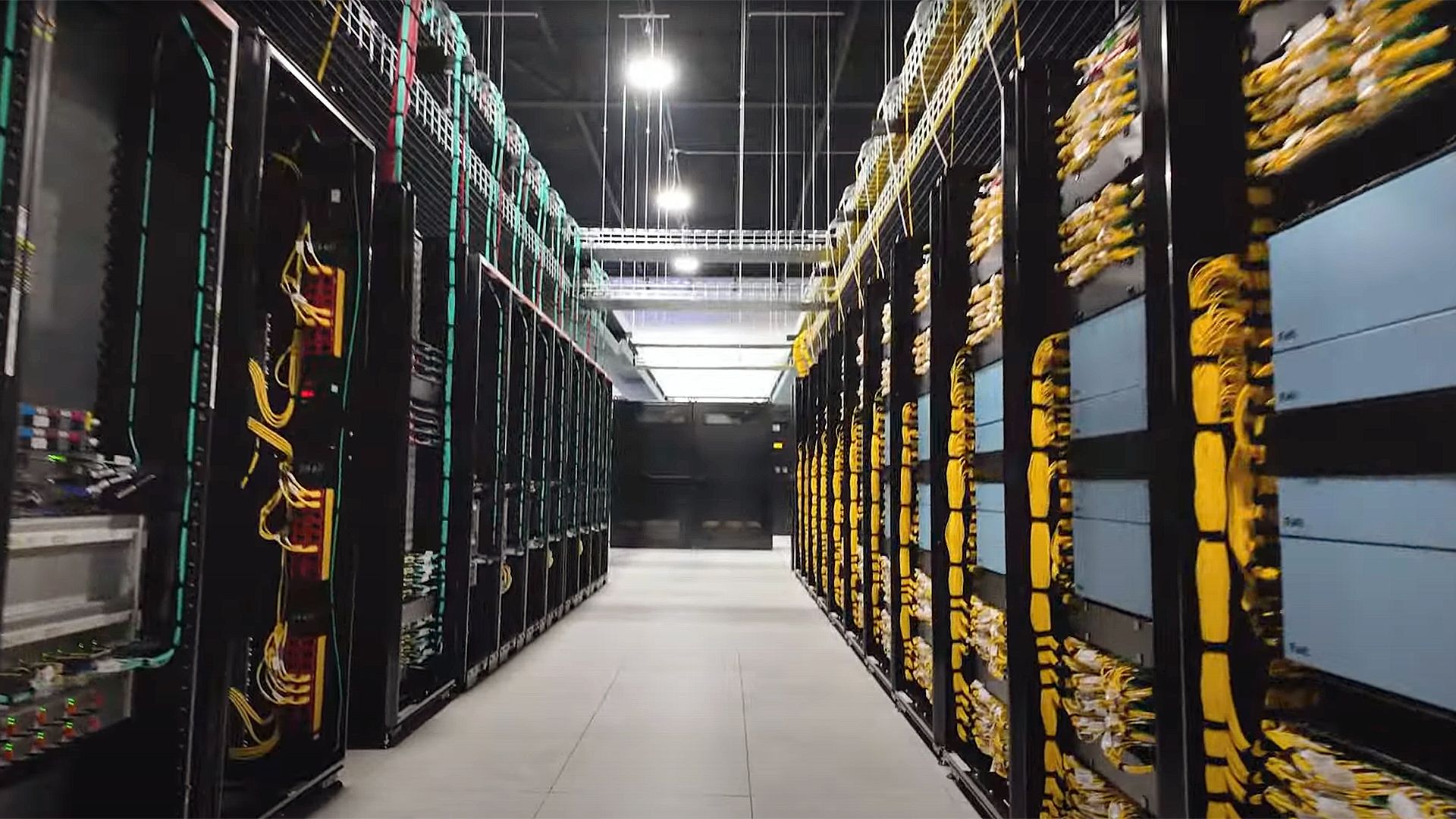
Multiple facilities on the site are already operational and host Nvidia-based servers used by OpenAI for training and deploying AI models. However, the broader expansion — intended to support the ambitious Stargate vision of massive hyperscale AI infrastructure — has been shelved for this location.
Oracle’s partnership with OpenAI remains intact despite the Abilene setback. In July of last year, the companies agreed to develop a total of 4.5 GW of data center capacity for OpenAI across multiple sites. Projects in other locations, including a facility near Detroit owned by Related Digital, are still proceeding. The Abilene cancellation therefore appears isolated to this particular expansion rather than a full rupture in the Oracle-OpenAI relationship.
Reliability Issues Plague Crusoe Operations
Relations between Oracle and Crusoe have been strained by operational challenges at the Abilene campus. Earlier this year, winter weather disrupted the liquid-cooling infrastructure, forcing several buildings offline for multiple days. Such reliability problems have added friction to an already complex multi-party project.
Despite public statements from both Oracle and Crusoe affirming that cooperation remains strong and development continues swiftly, sources described to Bloomberg indicate ongoing tensions. These reliability concerns appear to have contributed to Crusoe’s decision to seek new tenants for the unclaimed expansion capacity.
Nvidia Steps In, Meta Eyes Excess Capacity
As Crusoe began shopping the additional capacity to other potential customers, Nvidia reportedly intervened to protect its hardware deployment footprint at the site. The company provided Crusoe with a $150 million deposit and assisted in efforts to attract Meta — which is not part of the original Stargate consortium — as a tenant for the extra power and space.
Meta has not yet confirmed any plans to expand at the Abilene campus. However, the prospect of Meta absorbing capacity originally intended for OpenAI highlights the intense competition for scarce AI infrastructure resources across the industry.
This development occurs against a backdrop of broader challenges facing the Stargate project. Previous reporting from Tom’s Hardware noted that Stargate has faced delays due to disagreements among stakeholders — including OpenAI, Oracle, and SoftBank — over site ownership and ultimate system control.
Competitive Landscape and Industry Context
The Abilene cancellation arrives as major tech companies continue racing to secure massive amounts of compute capacity for next-generation AI training. Data center power has become one of the most constrained resources in the industry, with hyperscalers and AI startups competing for gigawatts of capacity that can take years to bring online.
Oracle has positioned itself as a key cloud and infrastructure partner for OpenAI, rapidly deploying Nvidia GPU clusters at multiple sites. The 4.5 GW total commitment between Oracle and OpenAI remains one of the largest publicly disclosed AI infrastructure deals. For context, a single gigawatt represents enormous scale — equivalent to the output of a large nuclear power plant.
Meta, meanwhile, has pursued an aggressive internal infrastructure buildout to support its own AI ambitions, particularly around large language models and generative applications. The company’s interest in the Crusoe-operated Abilene capacity, facilitated by Nvidia, underscores how fluid the AI infrastructure market has become. Providers and operators are increasingly willing to pivot between customers as original plans shift.
The involvement of Nvidia in securing the site’s future with a substantial $150 million deposit also illustrates the graphics giant’s strategic interest in ensuring its hardware continues to be deployed at scale, even if the primary customer changes. This intervention prevented the possibility of the site shifting toward AMD-based systems.
Impact on Developers, Users, and the AI Industry
For AI developers and enterprises relying on OpenAI’s models, the immediate impact of the Abilene cancellation appears limited. OpenAI’s access to existing capacity at the site continues, and the company maintains its broader 4.5 GW pipeline with Oracle. However, the episode highlights growing pains in the race to build out sufficient infrastructure for ever-larger AI models.
The reliability issues experienced at Abilene — particularly the liquid-cooling failures during winter weather — point to ongoing technical challenges in operating hyperscale AI facilities. Liquid cooling has become essential for high-density GPU deployments, but maintaining uptime through extreme weather events remains difficult. These operational hiccups could influence how other operators design and harden future facilities.
The potential shift of capacity to Meta could benefit the broader AI ecosystem by ensuring the infrastructure is ultimately utilized rather than left idle. Meta’s open-source approach to certain models has historically provided valuable resources to the developer community, though details of any potential Abilene deployment remain unknown.
Local communities in Abilene and similar areas face continued uncertainty around power infrastructure expansion. The original resistance to increasing capacity from 1.2 GW to 2.0 GW reflected legitimate concerns about energy sourcing and grid strain. The scaled-back plans may ease some of that pressure, though the underlying tension between AI growth and energy availability persists across the industry.
What’s Next
Development of the original Abilene campus continues, with multiple facilities already in service. Crusoe’s search for new tenants for the unbuilt expansion capacity is ongoing, with Meta as the leading reported prospect. Whether Meta ultimately commits remains to be seen, and no timeline for a potential decision has been disclosed.
The broader Stargate project faces headwinds, including earlier-reported disputes over control and ownership. While this specific Abilene expansion has been canceled, Oracle and OpenAI continue working together on other sites. The 4.5 GW total capacity agreement suggests substantial AI infrastructure will still come online in the coming years, albeit potentially on a different timeline and configuration than originally envisioned.
Industry observers will watch closely to see whether this cancellation represents an isolated negotiation failure or signals deeper challenges in coordinating the massive capital investments required for AI-scale data centers. Financing complexity, rapidly evolving capacity requirements from AI companies, and technical reliability issues are likely to remain central themes as more projects reach advanced negotiation stages.
For now, the Abilene campus will continue operating at its current scale while Crusoe and its partners explore alternative paths forward for the additional 0.8 GW of planned capacity.
Sources
- Tom's Hardware
- Bloomberg (as cited in Tom's Hardware reporting)
- The Register
- Data Center Dynamics
- Times of India