
OpenAI, Oracle Scrap Stargate Expansion in Abilene Over Financing, Capacity Disputes
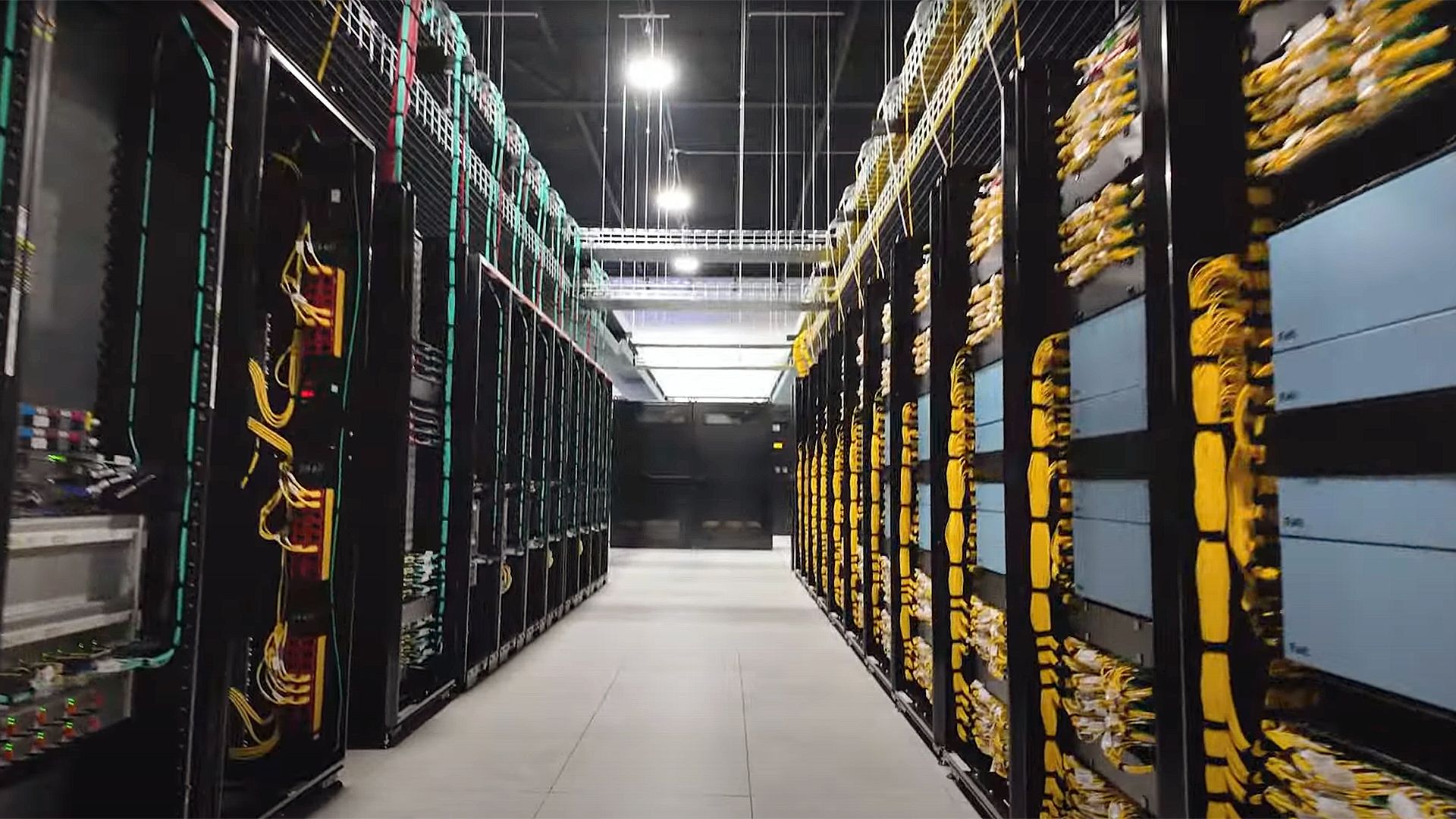
Abilene, Texas — Oracle and OpenAI have canceled plans to expand their flagship AI data center campus in Abilene, Texas, from 1.2 GW to roughly 2.0 GW after negotiations collapsed over financing arrangements and OpenAI's shifting capacity projections, according to Bloomberg. The decision affects a key site within the high-profile Stargate project announced at the White House last year. Data center operator Crusoe is now seeking alternative tenants for the excess capacity, with Meta reportedly interested and Nvidia stepping in to support the transition.
The cancellation highlights growing pains in the AI infrastructure boom as hyperscalers and cloud providers grapple with skyrocketing power demands, complex financing, and local opposition. Development of the original 1,000-acre Abilene campus continues, with multiple facilities already in service and Oracle rapidly installing Nvidia-based servers for OpenAI's AI training and inference workloads. However, strained relations between Oracle and Crusoe due to reliability issues have added pressure to find new occupants for planned expansions.
Negotiations Break Down
Discussions to increase the Abilene campus power capacity from about 1.2 GW to 2.0 GW began in mid-2025 among Oracle, Crusoe, and OpenAI. One gigawatt is comparable to the output of a nuclear reactor and can supply electricity to hundreds of thousands of homes at peak usage. The talks ultimately failed due to difficult financing terms and OpenAI’s changing capacity forecasts, Bloomberg reported.
Preliminary agreements to rent substantial additional capacity were dropped, even as physical development of the campus proceeds. Local reluctance over the massive power increase — potentially requiring coal or gas generation given the absence of reported nuclear options — further complicated matters, though specific local objections were not detailed in the report.
This Abilene site has been positioned as one of the largest AI data center projects announced to date and a cornerstone of the Stargate initiative. The project's broader challenges were previously reported, including disagreements among Stargate partners over site ownership and system control.
Reliability Issues Strain Oracle-Crusoe Partnership
Relations between Oracle and Crusoe have been strained by operational problems at the existing facilities. Earlier this year, winter weather disrupted the liquid-cooling infrastructure, forcing several buildings offline for multiple days. Such hiccups are particularly problematic for AI workloads that require consistent, high-availability compute resources for training large language models.
Despite the issues, both companies maintain that cooperation remains strong and development continues swiftly. Oracle has been aggressively deploying Nvidia-based servers at the site to support OpenAI's needs. The reliability concerns, however, appear to have accelerated Crusoe's search for alternative tenants for the unbuilt expansion capacity.
Nvidia reportedly intervened to ensure the site would continue deploying its hardware rather than shifting to AMD systems. The company provided Crusoe with a $150 million deposit and assisted in attracting Meta — which is not part of the Stargate project — as a potential tenant for the additional power capacity, according to Bloomberg.
Meta has not confirmed any plans to expand at the Abilene campus. The social media giant has been aggressively building its own AI infrastructure to support Llama model development and deployment, making it a logical candidate for high-capacity data center space.
Stargate Project Context and Ongoing Partnership
The Stargate project was announced with significant fanfare at the White House last year as a major collaboration involving OpenAI, Oracle, and other partners to build massive AI computing capacity. The Abilene campus represented a flagship element of these ambitions.
Despite shelving the Abilene expansion, Oracle's overall partnership with OpenAI remains intact. In July of last year, Oracle agreed to develop 4.5 GW of data center capacity for OpenAI across multiple sites, and that program continues. The companies have also announced projects in other locations, including a site near Detroit owned by Related Digital.
This latest development follows earlier reports of delays to Stargate due to squabbles between stakeholders over site ownership and system control, involving OpenAI, Oracle, and SoftBank. Industry observers have questioned whether these setbacks signal deeper challenges for the project amid the AI industry's rapid growth.
The cancellation comes as the broader AI sector faces mounting pressure to secure power, land, and cooling resources. Photonics and high-speed data movement have emerged as critical bottlenecks alongside power supply, with massive buildouts squeezing energy grids across the United States.
Industry Impact
For OpenAI, the decision reflects the practical challenges of scaling infrastructure at the pace required to support increasingly large AI models. CEO Sam Altman has been vocal about the need for massive compute resources, but changing capacity forecasts appear to have strained negotiations with partners.
Oracle continues to position itself as a major player in AI cloud infrastructure, leveraging its existing relationships and ability to deploy Nvidia hardware rapidly. The company's broader 4.5 GW commitment to OpenAI suggests the Abilene setback is isolated rather than indicative of a wider split.
Meta's potential involvement highlights the intense competition for data center capacity. As one of the largest AI investors outside the OpenAI-Microsoft ecosystem, Meta has pursued aggressive infrastructure expansion to maintain competitiveness in open-source model development.
For Crusoe, securing a new tenant like Meta would help mitigate financial risks from the stalled expansion while keeping the site relevant in the AI buildout. Nvidia's $150 million deposit and involvement underscore the chipmaker's interest in ensuring its hardware dominates these massive installations.
The incident also illustrates the growing tension between AI growth ambitions and local infrastructure realities. Power capacity increases on the scale of 0.8 GW — equivalent to a large nuclear reactor's output — often face significant regulatory and community hurdles, particularly when relying on fossil fuel generation.
Technical and Competitive Landscape
The Abilene campus uses advanced liquid-cooling infrastructure to support dense Nvidia GPU deployments required for modern AI training. Winter weather disruptions to this cooling system highlight the vulnerability of these specialized facilities to environmental factors, a growing concern as more data centers adopt liquid cooling for high-power AI servers.
Current facilities at the site already host multiple buildings with operational Nvidia-based servers. The canceled expansion would have nearly doubled the power capacity, enabling significantly more GPU clusters for large-scale model training and inference.
In the broader competitive landscape, Microsoft continues as OpenAI's primary partner, while Oracle has carved out a significant secondary role. The Stargate project's challenges contrast with smoother expansions by other hyperscalers, though nearly all face similar power and cooling constraints.
The involvement of Crusoe as operator adds another layer of complexity, as independent data center operators increasingly partner with cloud providers and AI companies to build specialized AI facilities. Reliability issues at such sites can quickly impact tenant relationships and expansion plans.
What's Next
Development of the existing 1,000-acre Abilene campus continues despite the expansion cancellation. Multiple facilities are already in service, and Oracle is expected to keep deploying Nvidia servers for OpenAI workloads at the current 1.2 GW capacity.
Meta's potential tenancy remains unconfirmed, and negotiations could still evolve. Should Meta move forward, it would represent a significant win for Crusoe and Nvidia while providing the social media company with additional AI compute capacity outside its own data center builds.
The broader Stargate project faces an uncertain future given repeated delays and partner disagreements. However, Oracle's commitment to delivering 4.5 GW total capacity for OpenAI across various sites suggests core elements of the partnership remain viable.
For the AI industry, this episode underscores the need for more flexible financing models, more accurate capacity planning, and potentially new approaches to power generation that can overcome local opposition. As model sizes continue growing, securing reliable gigawatt-scale infrastructure will remain one of the sector's greatest challenges.
Industry watchers will closely monitor whether this cancellation represents an isolated setback or part of a broader pattern of scaling difficulties for massive AI data center projects.