
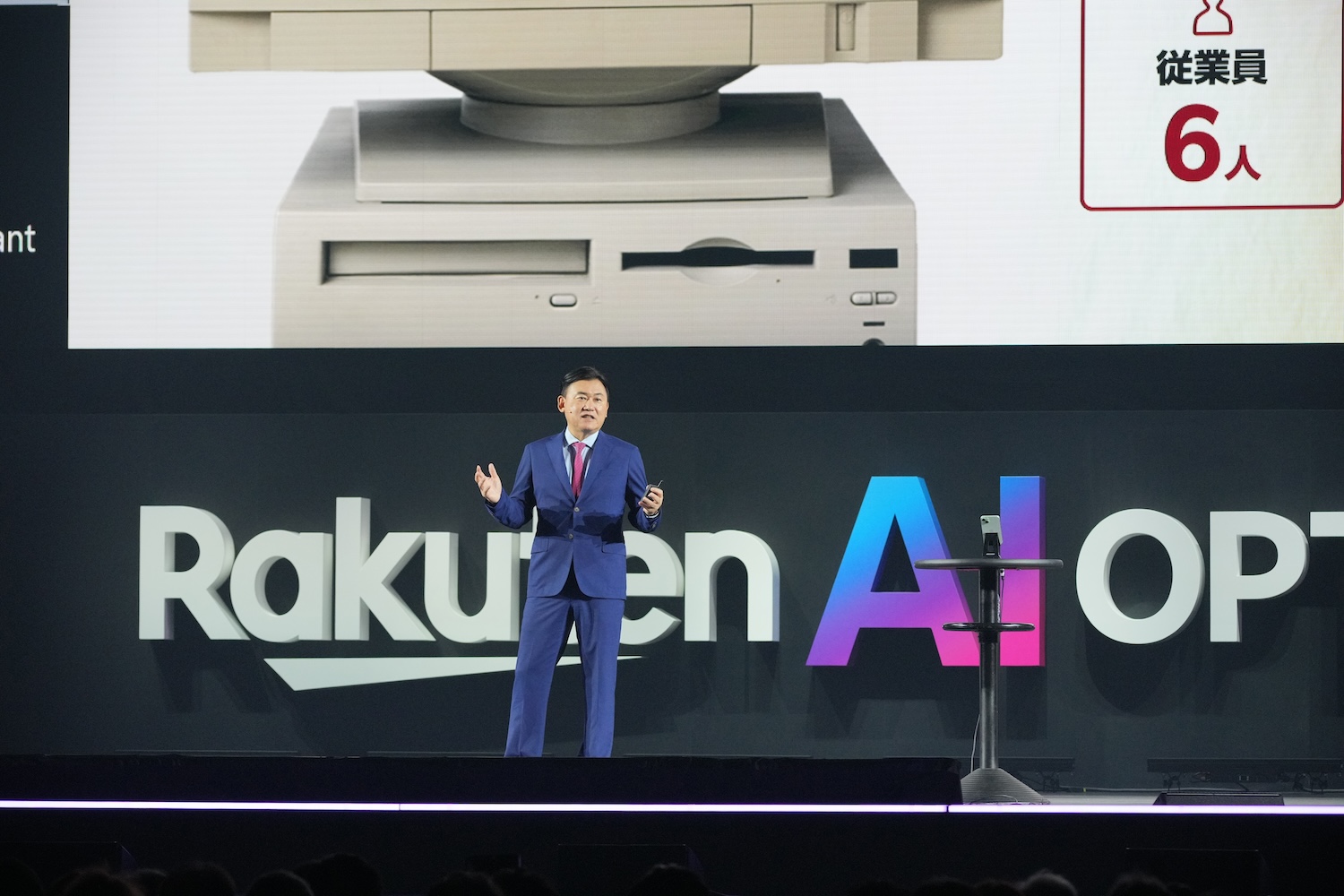
Mickey Mikitani Declares Arrival of Agentic AI Era
Key Facts
- Rakuten Group CEO Mickey Mikitani announced that the age of agentic AI has arrived during a keynote address.
- The company unveiled Rakuten AI as the next step in developing agentic AI systems.
- Mikitani is challenging every business unit across the Rakuten ecosystem to build their own internal or external AI agents.
- Rakuten AI is described as more than a tool — it represents a “digital version of yourself” that can autonomously handle tasks.
- Agentic AI is positioned as a major growth engine with potential to empower small businesses and assist consumers with everyday decisions.
Lead paragraph
Rakuten Group CEO Mickey Mikitani has declared that the era of agentic AI is here, unveiling the company’s new Rakuten AI initiative as a pivotal step toward autonomous AI systems that can act on behalf of users. In a keynote address, Mikitani emphasized that these AI agents go beyond traditional generative tools by performing real-world tasks, from customer service to complex operations, within the company’s vast ecosystem. The announcement signals Rakuten’s strategic push to integrate agentic AI across its businesses, including travel, golf reservations, and insurance, positioning the Japanese technology conglomerate at the forefront of what Mikitani calls the next technological revolution.
What is Agentic AI?
Agentic AI refers to artificial intelligence systems that can not only generate content or answer questions but also take autonomous action to complete goals. Unlike current large language models that primarily “think,” agentic systems are designed to plan, make decisions, and execute tasks with minimal human intervention.
According to Rakuten’s announcements, the company has already begun deploying such AI agents internally, achieving results in hours that previously required weeks of human effort. Mikitani highlighted a key limitation of today’s AI — “brilliant systems that can think but can’t act” — and positioned Rakuten AI as the solution that bridges this gap.
Rakuten’s Vision and Strategy
In his keynote, Mikitani told attendees that “The new Rakuten AI is more than just a logo; it symbolizes co-creation and evolution.” He described the technology as creating “a digital version of yourself handling tasks for you,” suggesting a future where individuals and businesses have AI counterparts managing routine and complex operations.
Mikitani is directing every business unit within Rakuten’s ecosystem to develop their own AI agents. This includes major services such as Rakuten Travel, the company’s golf reservation business, and its insurance operations. The directive reflects a company-wide mandate to embed agentic capabilities deeply into Rakuten’s diverse portfolio, which spans e-commerce, fintech, digital content, and telecommunications.
The company views agentic AI not merely as an efficiency tool but as a fundamental growth engine. Mikitani stressed its potential global impact, particularly in empowering small businesses and helping consumers navigate everyday choices more effectively.
Competitive Context in the AI Industry
Rakuten’s announcement comes as major technology companies accelerate development of autonomous AI systems. While OpenAI, Anthropic, Google, and others focus heavily on foundation models and reasoning capabilities, several organizations are now shifting attention toward “agentic” architectures that can interact with tools, APIs, and real-world environments.
Rakuten’s approach is distinctive because of its broad ecosystem. With businesses ranging from online retail and banking to professional sports and media, the company has numerous domains where autonomous agents can be deployed at scale. This internal focus may allow Rakuten to gather real-world operational data that pure AI research labs lack.
The emphasis on co-creation also suggests Rakuten intends to work closely with partners and customers to develop specialized agents, rather than offering only general-purpose tools.
Impact on Developers, Businesses, and Consumers
For developers and businesses within the Rakuten ecosystem, the push toward agentic AI could dramatically change workflows. Tasks currently requiring coordination across teams — such as processing customer requests, managing inventory, or handling reservations — may increasingly be delegated to specialized AI agents.
Small businesses that rely on Rakuten’s platforms could benefit from AI assistance in areas like marketing, customer support, and operations management. Mikitani’s vision suggests these agents will eventually help level the playing field by giving smaller players access to sophisticated automation previously available only to large enterprises.
For consumers, agentic AI could mean more personalized and proactive services. Instead of simply recommending products, Rakuten’s systems might autonomously handle bookings, compare options, complete purchases, or manage subscriptions based on user preferences and instructions.
Challenges and Considerations
While Mikitani’s announcement is optimistic, widespread deployment of agentic AI also raises important questions about reliability, accountability, and oversight. Autonomous systems that can act independently require robust guardrails to prevent errors, ensure compliance with regulations, and maintain user trust.
Rakuten has not yet released detailed technical specifications, benchmarks, or timelines for the public availability of its Rakuten AI platform. It remains unclear whether these agentic capabilities will be offered as a standalone service to external developers or will remain primarily internal to the Rakuten ecosystem in the near term.
What’s Next
Rakuten is expected to provide more details about its agentic AI roadmap throughout 2025. The company has published additional content under the theme “Rakuten AI in 2025: Embracing Agentic AI,” suggesting a year-long focus on rolling out these capabilities across its businesses.
Mikitani’s challenge to every business unit indicates that multiple agent deployments are already in progress or planned for the coming months. External observers will be watching to see whether Rakuten can successfully translate its ambitious vision into measurable operational improvements and new customer-facing services.
As the broader industry races toward more autonomous AI systems, Rakuten’s moves will be closely monitored as an example of how large ecosystem players are attempting to turn agentic AI from concept into practical business advantage.