
Our Honest Take on Rakuten AI: A Massive Ecosystem Moat with Unproven Autonomy
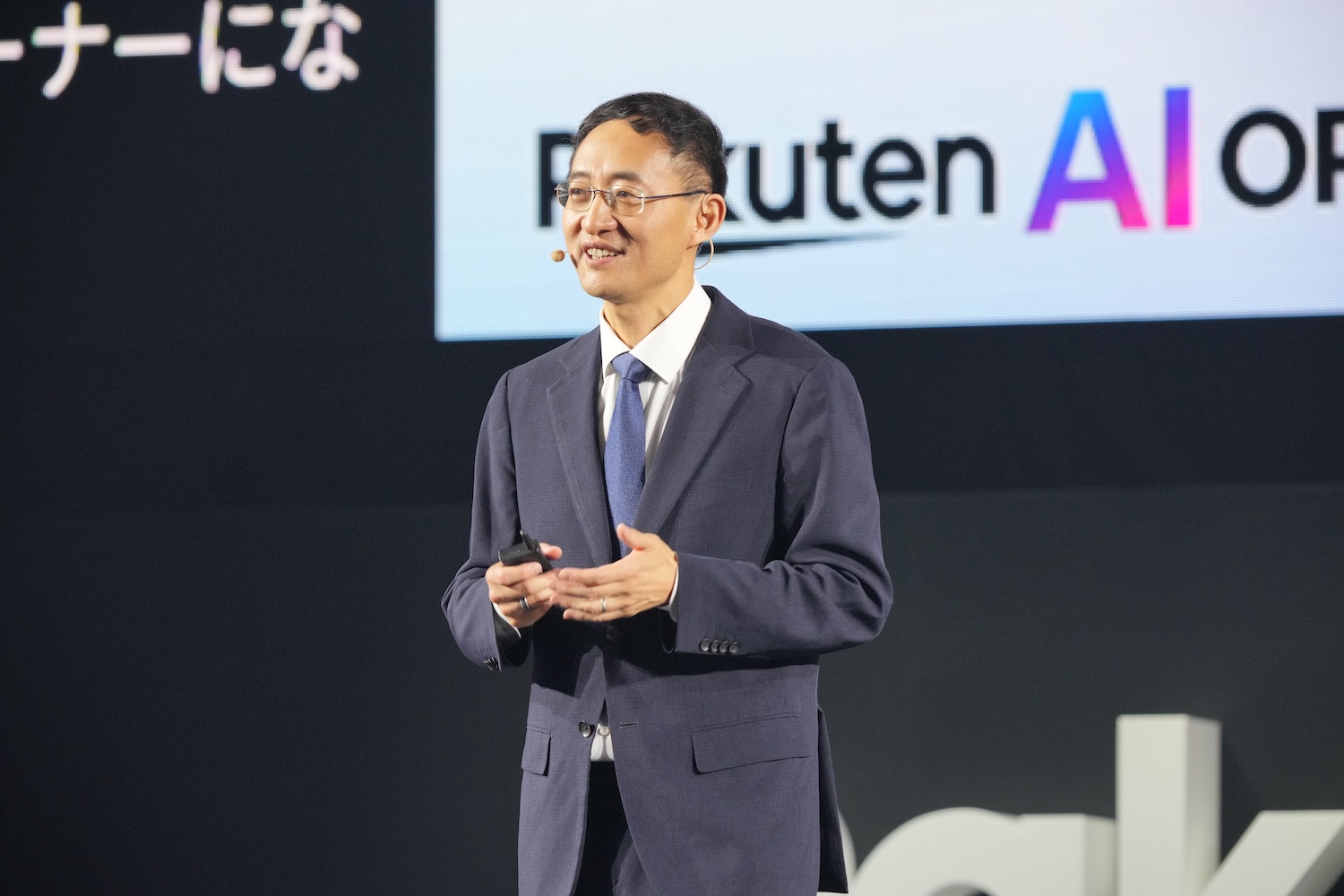
At the 2025 Rakuten AI Optimism conference, Rakuten Group unveiled the full-scale launch of Rakuten AI, an "agentic" platform designed to unify its sprawling ecosystem of 70+ services. This isn't just another chatbot; it’s an attempt to turn the "Everything App" concept into an "Everything Agent."
Verdict at a glance
- What’s genuinely impressive: The deep integration across disparate sectors (fintech, travel, e-commerce) and the focus on a custom Japanese tokenizer provide a localized moat that Western LLMs struggle to match.
- What’s disappointing: For all the talk of "agentic" capabilities, the demos still lean heavily on guided assistance rather than autonomous execution. Technical benchmarks and latency figures are notably absent.
- Who it’s for: Japanese consumers already locked into the Rakuten Ecosystem and merchants on Rakuten Ichiba looking for streamlined business operations.
- Price/Performance: Free for Rakuten Mobile users and beta web users; however, the long-term "price" is deeper data lock-in within the Rakuten ecosystem.
What’s actually new
Strip away the "AI Optimism" branding, and you find a significant structural shift in how a conglomerate handles data. Rakuten is moving away from fragmented service apps toward a centralized intelligent entry point.
The most tangible advancement is the localized Japanese linguistic focus. By building a custom tokenizer and language model specifically for Japanese context and culture, Rakuten is addressing a long-standing pain point: the high "token tax" and cultural tone-deafness of models trained primarily on English datasets.
Furthermore, the integration of multimodal inputs—specifically the "problem solver" feature that can analyze mechanical engineering math problems from an image—suggests a robust OCR-to-reasoning pipeline that goes beyond basic text generation.
The hype check
Rakuten’s Chief Data & AI Officer Ting Cai claims this revolution has "more potential to benefit all of society than any revolution before it." This is textbook hyperbole that distracts from the actual utility of the tool.
The term "Agentic" is also doing heavy lifting here. Cai defines the shift as moving from "research to action." While the demo showed planning a store launch, there is a lack of evidence that the AI can autonomously handle "messy" real-world actions—like resolving a shipping dispute or negotiating a complex hotel booking—without constant human prompting. Until we see the AI handle a multi-step task where it must recover from an error without user intervention, it is more of a "high-end assistant" than a fully autonomous agent.
Real-world implications
The true winners here aren't just casual shoppers, but merchants on Rakuten Ichiba.
- Democratization of Entrepreneurship: If the AI can genuinely handle market research for a new product (like the soy sauce demo) and generate the code for a storefront, it lowers the barrier to entry for small businesses.
- The "Agentic Web" Shift: Rakuten is betting that users will stop "browsing" (manually clicking through lists) and start "instructing." If they succeed, Rakuten becomes the gatekeeper of intent, capturing data at the moment a desire is voiced, rather than when a link is clicked.
Limitations they're not talking about
The source content is silent on several critical fronts:
- The Privacy Trade-off: The agent's power comes from "trillions of interactions across Rakuten’s services." This implies a level of cross-service data sharing that may give privacy-conscious users pause, especially in fintech and wellness sectors.
- Hallucinations in Local Context: While a custom Japanese tokenizer helps with language, LLMs still struggle with factual accuracy in niche local geographies. How does Rakuten AI handle "hallucinated" travel advice or tax information in a Japanese legal context?
- The "Walled Garden" Problem: The agent’s effectiveness is tied to the Rakuten Ecosystem. If you want to book a hotel not on Rakuten Travel, the "agentic" benefits likely vanish, reverting the user back to "human browsing."
How it stacks up
Compared to OpenAI’s GPT-4o or Google’s Gemini, Rakuten AI will likely lose on raw reasoning power and general knowledge. However, in the Japanese market, Rakuten has a "last-mile" advantage. While ChatGPT can tell you how to start a business, it cannot (yet) click the buttons to register your shop on Ichiba or link your Rakuten Bank account to your Rakuten Mobile billing. This vertical integration is something Big Tech cannot easily replicate without local infrastructure.
Constructive suggestions
- Open the API for "Agents-to-Agents": To avoid being a walled garden, Rakuten should allow third-party agents (like an AI assistant from a different company) to interact with Rakuten AI via a standardized protocol.
- Transparency on Data Siloing: Clearly define how sensitive data from "Wellness" or "Fintech" is used to train "Shopping" recommendations. Trust is the currency of agentic AI.
- Latency Benchmarks: For voice-to-text to feel "agentic," response times need to be sub-second. Rakuten should publish their inference speeds for the Japanese-optimized model.
Our verdict
Who should adopt now: Rakuten Mobile subscribers and Ichiba merchants. The free price point and ecosystem integration make it a no-brainer for those already in the loop. Who should wait: Enterprise users outside of Japan or those who require high-stakes autonomous actions. The "agent" is still in its infancy regarding multi-step reliability. Who should skip: Users wary of large-scale data aggregation across their financial, travel, and lifestyle habits.
FAQ
Should we switch from ChatGPT/Claude to Rakuten AI for business tasks?
Only if your business is centered in Japan or operates within the Rakuten marketplace. Rakuten AI’s advantage is its contextual knowledge of the Japanese ecosystem. For general coding or global market research, the established frontier models remain superior.
Is it worth the price premium?
Currently, it’s being offered free of charge for mobile subscribers and beta testers. The "premium" will likely come later in the form of merchant fees or service commissions. For now, the cost of entry is simply your data and loyalty to the ecosystem.
Can it actually "take action" like booking a flight?
The announcement claims it can "proactively act on your behalf." However, based on the current rollout, expect this to be a guided execution (where you confirm the AI's selection) rather than a "set it and forget it" autonomous booking.
Sources
All technical specifications, pricing, and benchmark data in this article are sourced directly from official announcements. Competitor comparisons use publicly available data at time of publication. We update our coverage as new information becomes available.