
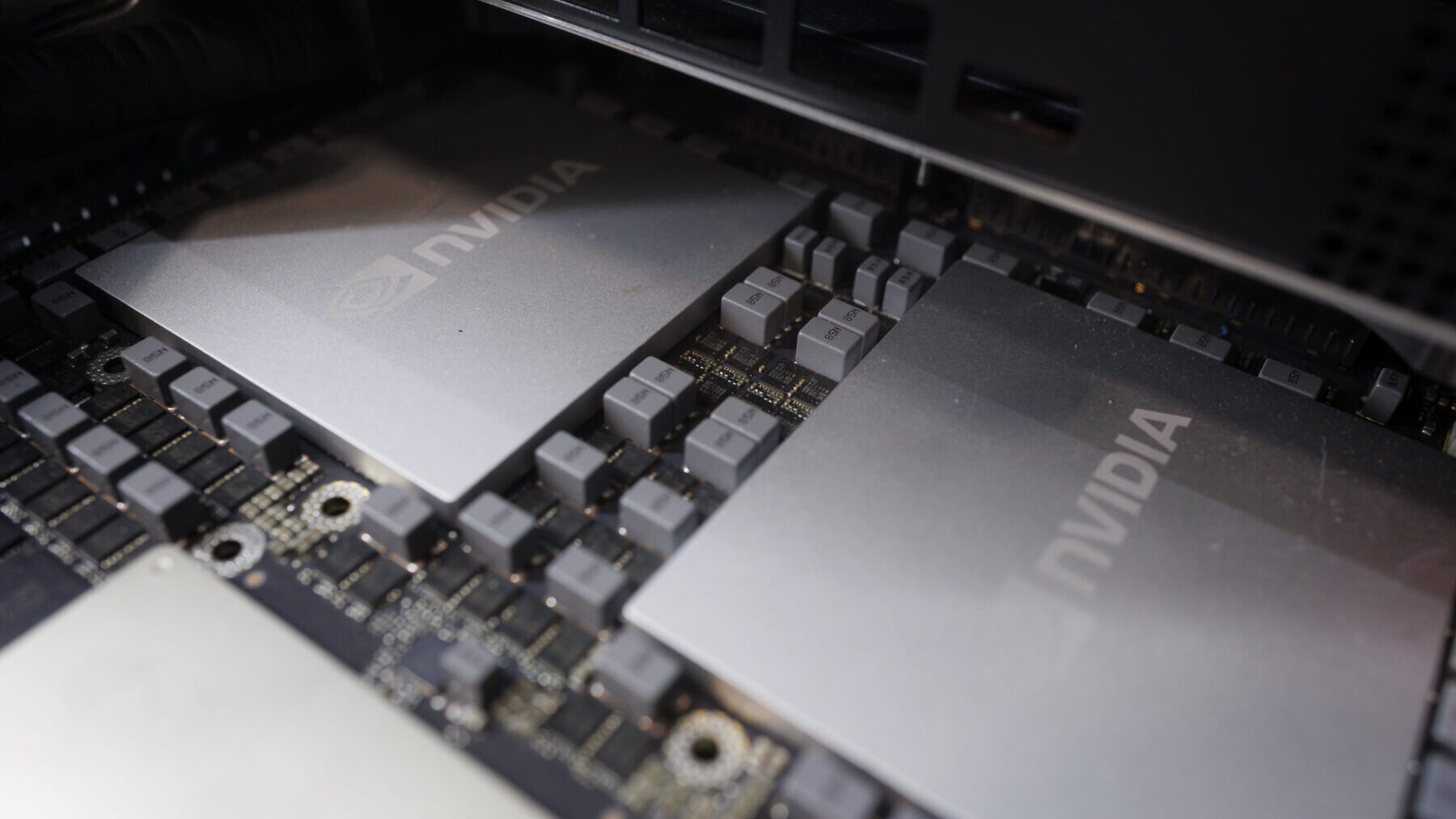
Our Honest Take on NVIDIA’s GPU Consolidation Strategy: A Practical Guide to Reclaiming Wasted Compute
In the high-stakes world of AI infrastructure, the most expensive mistake isn't buying the wrong hardware—it’s buying the right hardware and leaving 90% of it idle. NVIDIA’s latest technical deep dive, “Maximize AI Infrastructure Throughput by Consolidating Underutilized GPU Workloads,” addresses a frustration every CTO and platform engineer knows well: the "fragmentation tax."
While the post serves as a high-quality roadmap for optimizing Kubernetes-based AI deployments, it is less a revelation of new technology and more a long-overdue manual for using features that have been available for several hardware generations.
Verdict at a Glance
- What’s genuinely impressive: The use of a realistic, multimodal "voice-to-voice" pipeline (ASR + LLM + TTS) for benchmarking, providing a blueprint that mirrors actual production environments rather than isolated synthetic tests.
- What’s disappointing: The guide treats Multi-Instance GPU (MIG) and Time-slicing as equivalent choices, downplaying the significant operational overhead and rigid configuration requirements of hardware partitioning.
- Who it’s for: DevOps/MLOps engineers and CTOs struggling with skyrocketing cloud bills who need to justify the move from "one model per GPU" to high-density clusters.
- Price/Performance verdict: Implementing these strategies can theoretically reduce hardware costs by 3x–7x for lightweight models, but the engineering "hours-to-implement" remains high due to the lack of seamless, dynamic reconfiguration tools.
What’s Actually New
The core technologies discussed—Multi-Instance GPU (MIG) and Time-slicing/MPS—are not new. MIG was introduced with the Ampere architecture (A100) years ago. However, this update provides a specific advancement in multimodal orchestration.
Most existing literature focuses on optimizing a single model (e.g., "How to run 7 copies of Llama 3"). NVIDIA’s new contribution is the focus on heterogeneous workloads—running a 1.1B parameter Parakeet (ASR) alongside a bursty Magpie (TTS) and a heavy LLM on the same physical silicon. This acknowledges the reality of modern "Agentic" workflows where a single user request triggers a chain of models with vastly different compute profiles.
The Hype Check
NVIDIA claims that MIG partitioning delivers the "highest request throughput and reliability." While the reliability claim holds up under scrutiny—MIG provides genuine hardware-level fault isolation—the throughput claim is a bit of a marketing stretch.
- The Claim: MIG is the optimal path for production throughput.
- The Reality: In many scenarios, Time-slicing or MPS will actually yield higher aggregate throughput because they allow for "bursting." If Model A is idle, Model B can seize the entire GPU’s compute power. In a MIG configuration, if a partition is idle, that compute power is "dark"—it cannot be used by a neighbor.
- The Verdict: NVIDIA prioritizes deterministic performance (predictable latency) over raw aggregate throughput. For enterprise SLAs, this is the right move, but for a startup looking to squeeze every last drop of juice out of a single H100, software-based partitioning often wins on raw volume.
Real-World Implications
The move toward GPU consolidation is no longer optional for two reasons:
- The Rise of SLMs (Small Language Models): As models like Llama 3 8B or Phi-3 become production standards, the "one model, one GPU" approach is economically ruinous.
- Latency Sensitive Pipelines: In voice-to-voice AI, moving data between two separate physical GPUs adds milliseconds of PCIe overhead. Consolidating the ASR, LLM, and TTS onto a single partitioned GPU keeps the data on-chip (or at least within the same high-speed memory pool), significantly reducing end-to-end latency.
For a business, this means the difference between supporting 100 concurrent voice agents on 100 GPUs (bankrupting levels of spend) versus 100 agents on 15 partitioned GPUs.
Limitations They’re Not Talking About
NVIDIA glosses over the "Day 2" operational headaches of these strategies:
- MIG’s Rigidity: You cannot dynamically resize a MIG partition on the fly based on traffic. If your TTS needs more memory at 2 PM but your ASR is quiet, you’re stuck. Reconfiguring MIG profiles typically requires draining the Kubernetes node and potentially a reboot, which is a nightmare for auto-scaling.
- The "Noisy Neighbor" in Software Slicing: While NVIDIA mentions that a memory overflow (OOM) in one pod can impact others in time-slicing, they understate how catastrophic this is in a Kubernetes environment. One poorly written guardrail model can take down your entire production ASR and TTS pipeline if they share a software-level execution context.
- Cold Start Latency: The guide doesn't deeply address the impact of partitioning on model loading times. Loading three separate models into three partitions takes longer and requires more sophisticated orchestration than a single monolithic model.
How It Stacks Up
Currently, NVIDIA's primary "competitor" in this space isn't another chipmaker, but inefficient architecture.
- Standard Kubernetes (Default): The simplest to set up, but creates "Cluster Bloat." You’ll end up with 10% utilization and a CFO who is very unhappy.
- Software Partitioning (MPS/Time-slicing): Best for development and "best-effort" services. It offers the highest flexibility but zero safety.
- Hardware Partitioning (MIG): The gold standard for production. It is the only way to guarantee that a spike in LLM usage won't cause your TTS audio to stutter or "crack."
Constructive Suggestions
To make this infrastructure genuinely excellent, the industry needs NVIDIA to move beyond static partitioning.
- Dynamic MIG Reconfiguration: We need the ability to re-partition a GPU without a node reboot or pod eviction. If NVIDIA can make MIG as fluid as CPU cgroups, the efficiency gains would be astronomical.
- Unified Memory Management for MPS: While MPS is a software solution, better hardware-assisted memory "fences" would allow us to get the flexibility of time-slicing with the safety of MIG.
- Better Integration with K8s DRA: NVIDIA should focus more on Dynamic Resource Allocation (DRA) in Kubernetes, which allows for more flexible scheduling than the current integer-based device plugin.
Our Verdict
Who should adopt now: Any company running multimodal pipelines (Voice AI, Vision + Language) or companies utilizing Small Language Models (<10B parameters) in production. If your GPU utilization is under 30%, you are effectively burning cash.
Who should wait: Teams running massive, multi-node training jobs or single-model inference (like a standalone Llama 70B) where the model already saturates the VRAM. Partitioning will only add unnecessary complexity here.
Final Recommendation: Start with MPS in your staging environment to see how your models behave when sharing compute. Once you understand your memory footprints, move to MIG for your production tier to ensure that one "noisy neighbor" doesn't trigger a cascading failure across your voice AI stack.
FAQ
Should we switch from Time-slicing to MIG?
If your application has strict SLAs (e.g., a real-time voice assistant), yes. Time-slicing allows one process to "starve" others of compute cycles, leading to unpredictable latency spikes. MIG eliminates this by "hard-wiring" the resources.
Is it worth the price premium?
MIG is a feature of enterprise-grade GPUs (A100, H100, H200). If you are currently using consumer-grade cards (like 4090s) in a "gray-market" server, you don't have access to MIG. In that case, the "price premium" is moving to H100s, which is only worth it if you can successfully consolidate at least 3-4 models per card.
Does this improve LLM performance?
Actually, no. Partitioning a GPU gives an LLM less compute and less memory bandwidth. You use partitioning to fit more models on a card, not to make a single model faster. If your goal is raw speed for one large model, keep it on a dedicated GPU.
Sources
All technical specifications, pricing, and benchmark data in this article are sourced directly from official announcements. Competitor comparisons use publicly available data at time of publication. We update our coverage as new information becomes available.