
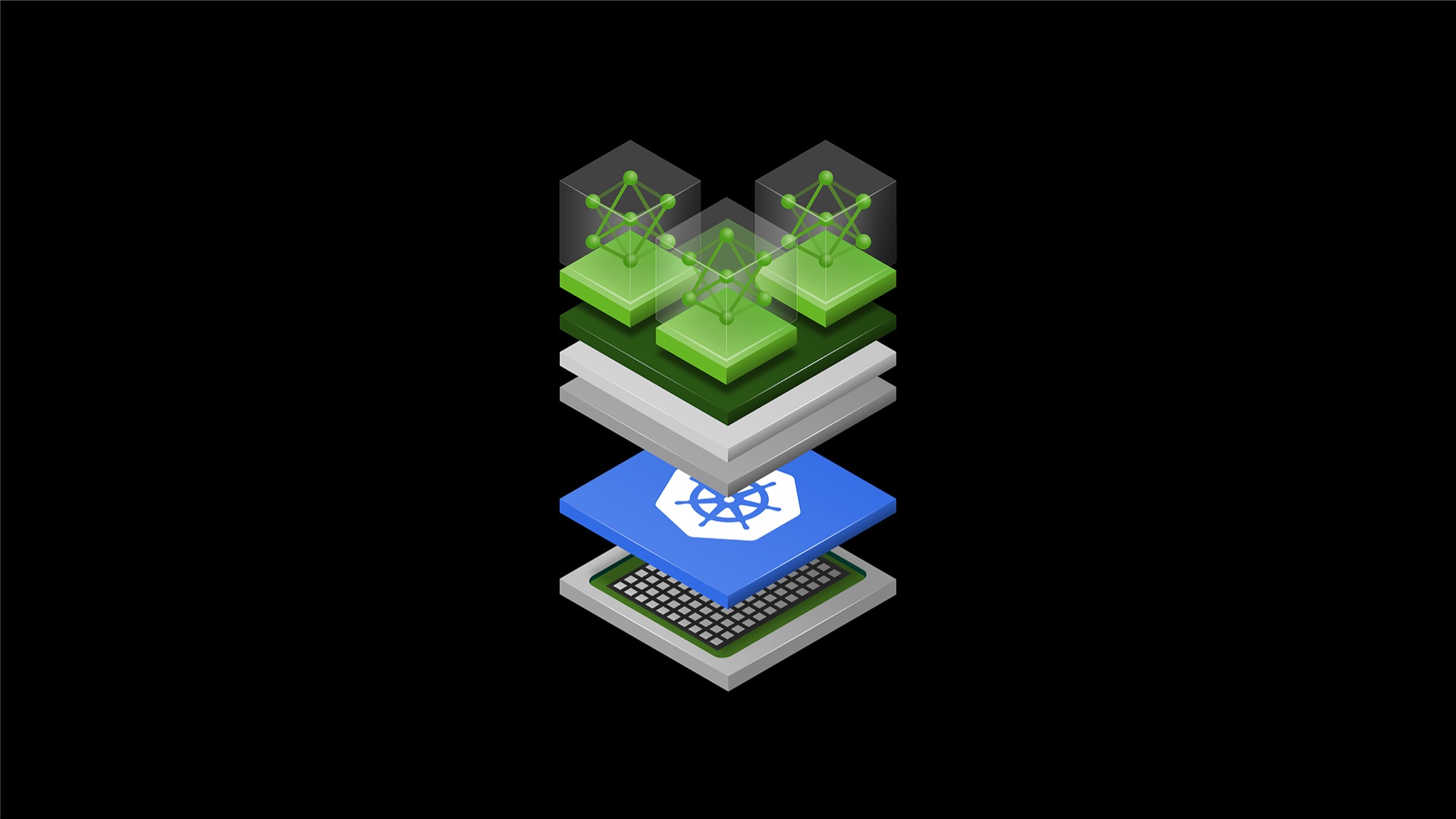
- What: NVIDIA is donating its Dynamic Resource Allocation (DRA) Driver for GPUs to the Cloud Native Computing Foundation (CNCF).
- When: Announced today during KubeCon Europe 2026 in Amsterdam.
- Key Tech: Native support for NVIDIA Multi-Instance GPU (MIG), Multi-Process Service (MPS), and Multi-Node NVLink interconnects.
- Hardware Impact: Optimized for next-generation NVIDIA Grace Blackwell systems and confidential computing via Kata Containers.
In a move that signals a massive shift toward open-source AI infrastructure, NVIDIA today announced it is donating its Dynamic Resource Allocation (DRA) Driver for GPUs to the Cloud Native Computing Foundation (CNCF). Announced at KubeCon Europe 2026 in Amsterdam, the donation moves the driver from vendor-governed software to full community ownership under the Kubernetes project. This transition aims to standardize high-performance GPU orchestration, making it more transparent and accessible for the global developer community.
A Milestone for Open-Source AI Infrastructure
The NVIDIA DRA Driver for GPUs serves as a critical bridge between Kubernetes—the industry-standard platform for container orchestration—and the underlying GPU hardware. By relinquishing control to the CNCF, NVIDIA is inviting a wider circle of industry experts to contribute to the driver’s evolution. According to Chris Aniszczyk, Chief Technology Officer of CNCF, the move marks a "major milestone" for open-source AI, aligning hardware innovation directly with upstream Kubernetes development.
Historically, managing the massive compute power required for modern AI workloads involved complex, vendor-specific configurations. The donation of the DRA driver aims to eliminate these hurdles. The driver allows Kubernetes to handle how compute resources are allocated to containerized workloads with unprecedented granularity, ensuring that the infrastructure remains aligned with the rapidly changing cloud-native landscape.
Technical Specs: Efficiency, Scale, and Precision
The donation includes several high-performance features designed to optimize the use of NVIDIA hardware within Kubernetes clusters. Key technical capabilities detailed in the announcement include:
- Improved Efficiency: The driver provides native support for NVIDIA Multi-Process Service (MPS) and Multi-Instance GPU (MIG) technologies. This allows multiple applications to share a single GPU or a single GPU to be partitioned into multiple isolated instances, maximizing the utilization of expensive hardware.
- Massive Scale: The software includes native support for connecting systems via NVIDIA Multi-Node NVLink interconnect technology. This is a critical requirement for training trillion-parameter LLMs and operating large-scale AI infrastructure, specifically the newly released NVIDIA Grace Blackwell systems.
- Dynamic Flexibility: Developers can now reconfigure hardware resources "on the fly." This dynamic allocation means that as workload demands change, the Kubernetes cluster can adjust resource distribution without requiring a full manual overhaul of the environment.
- Granular Precision: The driver supports fine-tuned resource requests. Users can specify exact requirements for computing power, memory settings, and interconnect arrangements for their specific applications, leading to more predictable performance.
Expanding Confidential Computing for AI
Beyond resource management, NVIDIA is also addressing the growing need for AI security. In collaboration with the CNCF’s Confidential Containers community, NVIDIA has introduced GPU support for Kata Containers.
Kata Containers are lightweight virtual machines that behave like containers but offer the workload isolation of a VM. By extending hardware acceleration to these isolated environments, NVIDIA is enabling "Confidential Computing" for AI. This allows organizations to run sensitive AI workloads with enhanced protection, safeguarding data even while it is being processed by a GPU.
Industry-Wide Collaboration
The move is supported by a "who's who" of cloud and infrastructure giants. NVIDIA confirmed it is working with Amazon Web Services (AWS), Broadcom, Canonical, Google Cloud, Microsoft, Nutanix, Red Hat, and SUSE to advance these features.
"Open source will be at the core of every successful enterprise AI strategy," said Chris Wright, Chief Technology Officer and Senior Vice President of Global Engineering at Red Hat. He noted that the donation "helps to cement the role of open source in AI’s evolution."
Scientific organizations are also signaling the importance of this shift. Ricardo Rocha, lead of platforms infrastructure at CERN, stated that for organizations managing petabytes of data, community-driven innovation is essential. "NVIDIA’s donation of the DRA Driver strengthens the ecosystem researchers rely on to process data across both traditional scientific computing and emerging machine learning workloads," Rocha said.
Impact: What This Means for the Industry
For developers and enterprises, this donation represents the end of an era of opaque, vendor-locked GPU orchestration. By moving the DRA driver to the CNCF, NVIDIA is essentially betting that a "rising tide lifts all boats"—that standardized infrastructure will lead to faster adoption of its Grace Blackwell chips and AI frameworks.
"This changes how developers will scale AI; by putting the driver in community hands, NVIDIA has made high-performance orchestration a public utility rather than a proprietary secret."
For the broader industry, this move places Kubernetes at the absolute center of the AI revolution. As AI workloads become the "most critical workloads in modern computing," the standardization of how those workloads talk to hardware is a necessary step for the next phase of enterprise AI deployment.
What’s Next: A Broader Open Source Horizon
The DRA driver donation is part of a larger push by NVIDIA into the open-source ecosystem. This follows several announcements from GTC 2026, including:
- NVSentinel: A new system designed for GPU fault remediation to improve cluster uptime.
- AI Cluster Runtime: An agentic AI framework aimed at automating data center operations.
- NVIDIA NemoClaw: A reference stack for open-source AI development.
- NVIDIA OpenShell: A runtime for securely running autonomous agents with fine-grained policy controls and native integration with Linux, eBPF, and Kubernetes.
NVIDIA also teased the announcement of its high-performance AI workload scheduler, known as KAI S. While full technical details on KAI S were not immediately exhaustive in the KubeCon briefing, it is expected to further integrate with the newly donated DRA driver to provide a complete, open-source-friendly stack for AI orchestration.
As KubeCon Europe 2026 continues this week, the industry will be watching to see how the community begins to iterate on the newly available source code and what new efficiencies can be wrung from the world’s most powerful GPUs.