
- What: Google launched Lyria 3 Pro, an advanced AI music generation model.
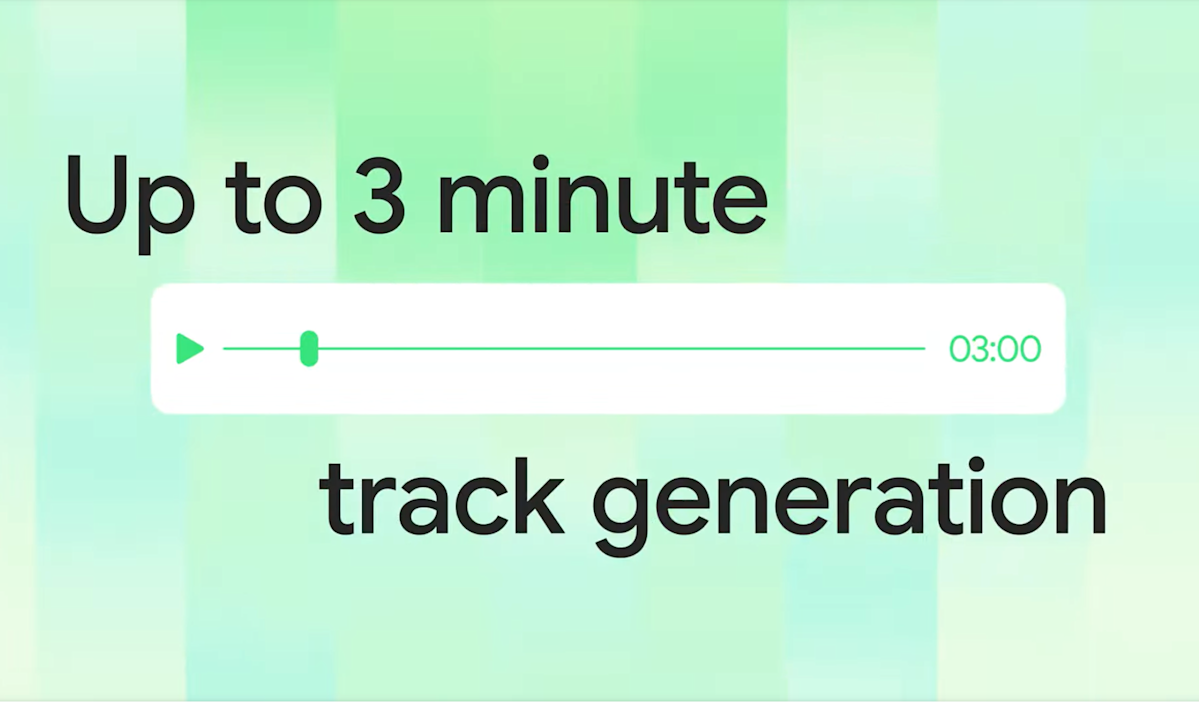
- Key Upgrade: Maximum track length increased from 30 seconds to 3 minutes.
- Control: New structural prompting for specific song elements like intros, verses, and choruses.
- Safety: All outputs include SynthID watermarking and use rights-cleared training data.
- Availability: Accessible via paid Gemini tiers, Vertex AI, Gemini API, and Google AI Studio.
Google has officially released Lyria 3 Pro, a significant update to its AI music generation technology that expands the maximum length of generated tracks from 30 seconds to a full three minutes. The launch represents a 600% increase in duration, moving the tool beyond short-form clips into the realm of full-length musical compositions. Available immediately for enterprise customers and paid Gemini subscribers, the model aims to provide high-fidelity audio with sophisticated structural control for creators and developers.
Advanced Composition and Structural Control
The primary breakthrough in Lyria 3 Pro is its refined understanding of musical arrangement. Unlike its predecessor, which primarily focused on short loops, Lyria 3 Pro allows users to dictate specific song sections. According to Google, the model "better understands musical composition," enabling users to prompt for distinct elements including intros, verses, choruses, bridges, and outros.
This granular control allows for "generating songs with complex transitions," making the tool more viable for professional workflows where specific pacing is required. Google DeepMind, which spearheaded the model's development, noted that Lyria 3 Pro is designed for real-time, interactive music generation, allowing for a more experimental and iterative creative process than previous iterations.
Integration Across the Google Ecosystem
Google is positioning Lyria 3 Pro as a versatile utility across its entire productivity and development suite. Beyond the standalone Gemini app, the company is integrating the music engine into Google Vids, its AI-powered video generation platform. This integration allows users to generate full-length soundtracks that sync with their video presentations and creative projects.
For the technical community, the model is available via the Gemini API and Google AI Studio. Enterprise users can access the model through Vertex AI, Alphabet’s comprehensive machine learning platform. By providing these hooks, Google is encouraging developers to build custom third-party applications that leverage high-quality, long-form AI music generation.
The "Foundational Responsibility" and Ethical Training
In an industry currently embroiled in legal battles over copyright and training data, Google has emphasized a "responsibility-first" approach. The company stated that "responsibility was foundational" during the design and training phases of Lyria 3 Pro. Crucially, Google claims the model was trained exclusively on materials for which the company holds the necessary rights, a move intended to reassure corporate clients wary of potential copyright infringement.
Furthermore, Google is addressing the issue of AI transparency through its proprietary SynthID technology. Every audio output generated by Lyria 3 Pro is embedded with a SynthID watermark. This digital identifier is designed to be imperceptible to the human ear but can be detected by specialized software, allowing platforms to identify content as AI-generated even if it has been compressed or modified.
Industry Impact and the Rise of "AI Slop"
The release of Lyria 3 Pro comes at a time when the music industry is grappling with a massive influx of AI-generated content. Recent industry estimates cited by Engadget suggest that approximately 50,000 AI-generated tracks are uploaded to Spotify every single day. The volume of this content, often referred to by critics as "AI slop" due to its sometimes derivative or low-quality nature, has forced streaming platforms to take drastic measures. Last year, Spotify reportedly deleted 75 million tracks to maintain the integrity of its library and royalty pools.
For developers and creators, Lyria 3 Pro represents a shift in power. By lowering the barrier to entry for full-length song production, Google is challenging the traditional stock music industry. The ability to generate a bespoke, rights-cleared three-minute track for a video or advertisement in seconds could significantly disrupt how small businesses and content creators source their audio.
"This changes how developers will approach audio integration—for the first time, we have a reliable, rights-cleared path to full-length compositions that actually follow musical logic."
What’s Next for Lyria
As Lyria 3 Pro rolls out to paid users and enterprise clients, the industry will be watching closely to see how its output competes with other major players like Suno and Udio. While the three-minute limit matches current industry standards for AI generation, the next frontier will likely involve multi-track separation and even longer-form arrangements.
Google has indicated that it will continue to refine the model's ability to handle complex transitions and stylistic nuances. As more AI-generated music enters the ecosystem, the effectiveness of SynthID will also be a critical benchmark for how the industry manages the balance between human creativity and automated production.