
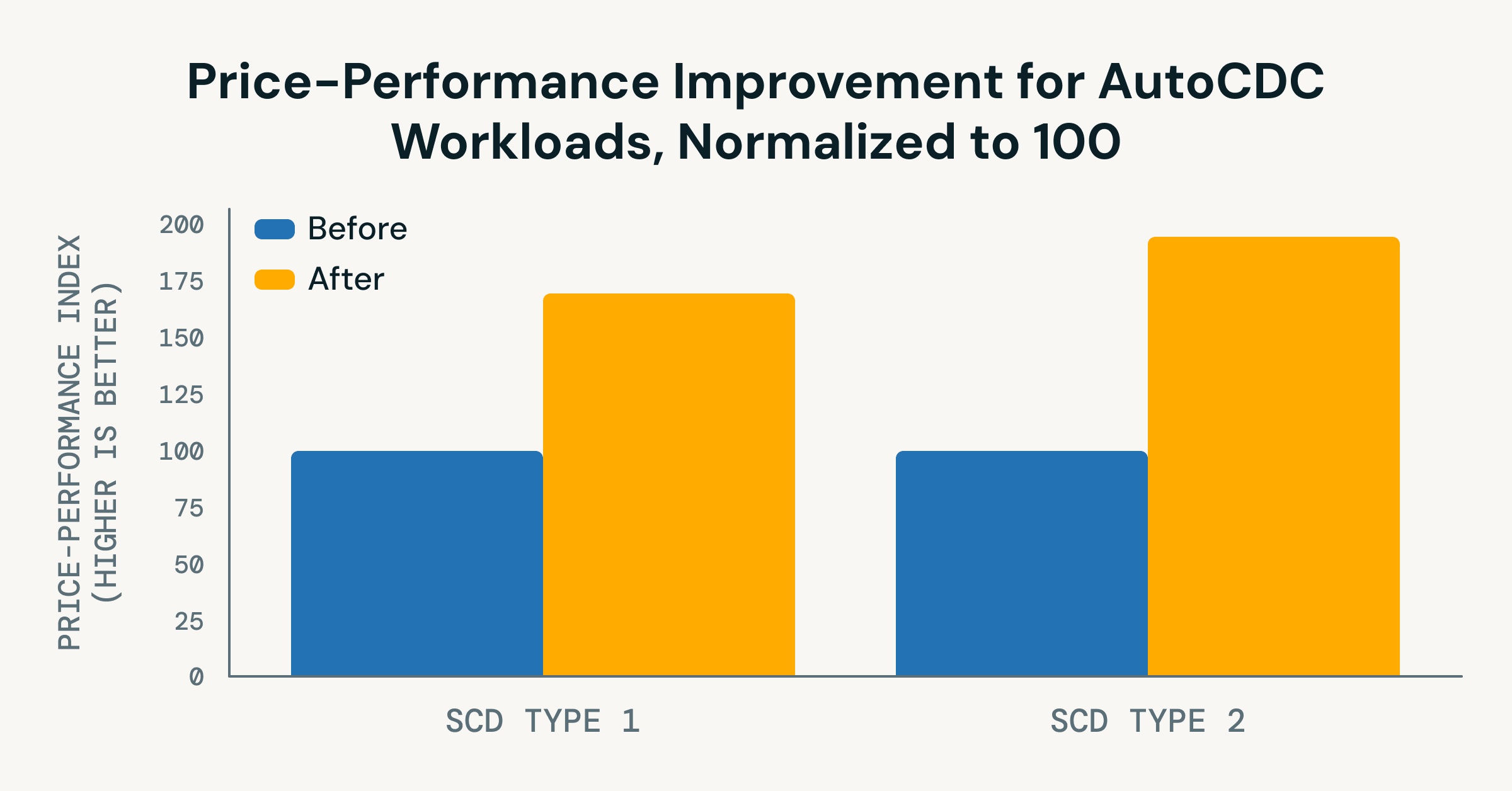
- What: Databricks has launched AutoCDC, a declarative tool within Lakeflow Spark Declarative Pipelines to automate Change Data Capture (CDC).
- Key Efficiency: The feature replaces hundreds of lines of custom manual code with as few as four lines of Python.
- Target Use Case: Real-time retail analytics, master data management, and feeding fresh data into AI models.
- Availability: Integrated into the Databricks Lakeflow ecosystem for Spark-based declarative pipelines.
Databricks has officially launched AutoCDC, a feature designed to eliminate the need for manual, hand-coded Change Data Capture pipelines. By moving to a declarative approach within the Lakeflow Spark Declarative Pipelines (SDP) framework, the company claims developers can now automate complex data synchronization tasks that previously required extensive engineering effort with just four lines of Python code.
The announcement targets a significant bottleneck in the modern AI data stack: the "plumbing" required to move data from operational databases into data lakes for real-time analysis and model training.
Ending the Era of "Hand-Coded" Data Pipelines
Change Data Capture (CDC) is a critical mechanism for ensuring that downstream AI models and analytics dashboards reflect the most current state of a source database. Traditionally, building these pipelines required engineers to write complex logic to handle database transaction logs, manage state, and ensure that row updates or deletions were reflected accurately without overloading the source system.
According to Databricks, the new AutoCDC from Snapshots feature abstracts this complexity. Instead of writing imperative code to manage the "how" of data movement, developers use a declarative approach to define "what" the final data state should look like. This shift reportedly allows a few lines of code to replace what used to be a significant portion of an organization's engineering overhead.
Common alternatives in the industry, such as Debezium or BladePipe, often require reading database transaction logs directly to capture updates within milliseconds. While effective, these setups can be labor-intensive to maintain. Databricks' AutoCDC aims to provide a more streamlined alternative for users already within the Spark ecosystem.
Real-World Impact: Valora Group Case Study
Early adopters are already reporting significant efficiency gains. Valora Group, a leading Swiss-based "foodvenience" provider, has integrated AutoCDC into its Lakeflow Spark Declarative Pipelines to manage master data and real-time retail analytics.
"We gained a lot by doing CDC in SDP, because you don't write any code—it’s all abstracted in the background," said Alexane Rose, Data and AI Architect at Valora Holding. Rose noted that the tool streamlines the capture of master data and facilitates real-time analytics across their retail operations. "AutoCDC minimizes the number of lines... it’s so easy to do."
For companies like Valora, the ability to repeat and scale these pipelines across different teams without needing deep expertise in manual CDC logic represents a major shift in operational efficiency.
The Technical Shift: Declarative vs. Imperative
The core of this update is the transition to "Declarative Pipelines." In a traditional, imperative programming model, a data engineer must explicitly define every step of the data's journey, including error handling, retries, and schema evolution.
In contrast, the declarative approach used by AutoCDC allows the user to specify the source and the target, leaving the Databricks engine to handle:
- Data Consistency: Ensuring that updates and deletes are processed in the correct order.
- Scalability: Automatically adjusting resources to handle varying data loads.
- Maintenance: Reducing the "spaghetti code" that often accumulates in long-standing ETL (Extract, Transform, Load) projects.
This aligns with a broader industry trend toward "inclusive" tools. As noted in documentation from industry peers like Informatica, the goal for modern data tools is to offer open, extendable workflows for coders while providing non-coders the ability to create robust pipelines without hand-coding expertise.
Impact on AI and Industry Competition
For AI developers, the freshness of data is a competitive advantage. As noted by BladePipe, a recommender system must stop suggesting a product the moment it goes out of stock, not the next day. AutoCDC facilitates this "real-time" responsiveness by lowering the barrier to entry for high-frequency data updates.
The move puts Databricks in closer competition with specialized CDC providers and cloud-native ETL services. By integrating these capabilities directly into the Lakeflow Spark environment, Databricks is betting that users will prefer an all-in-one ecosystem over stitching together third-party tools like PostgreSQL logical replication or standalone log-readers.
"This changes how developers will view data synchronization—it is no longer a bespoke engineering project, but a configuration step," one industry context report suggested.
What’s Next
The release of AutoCDC is part of Databricks' broader push into Lakeflow, a unified platform for data engineering. As more organizations move away from batch processing toward real-time "streaming" architectures, the automation of CDC is expected to become a standard requirement rather than a luxury.
Developers can expect further integrations within the Spark Declarative Pipelines framework, potentially expanding the types of source databases supported by AutoCDC. For now, the focus remains on reducing the "ugly load" on primary databases and helping teams stop rebuilding pipelines every time their AI techniques or source schemas change.