
- What: US Senators demand the immediate suspension of Nvidia AI chip export licenses to China and Southeast Asian intermediaries.
- Why: The move follows criminal charges against Supermicro employees for allegedly smuggling $2.5 billion in Nvidia hardware to China.
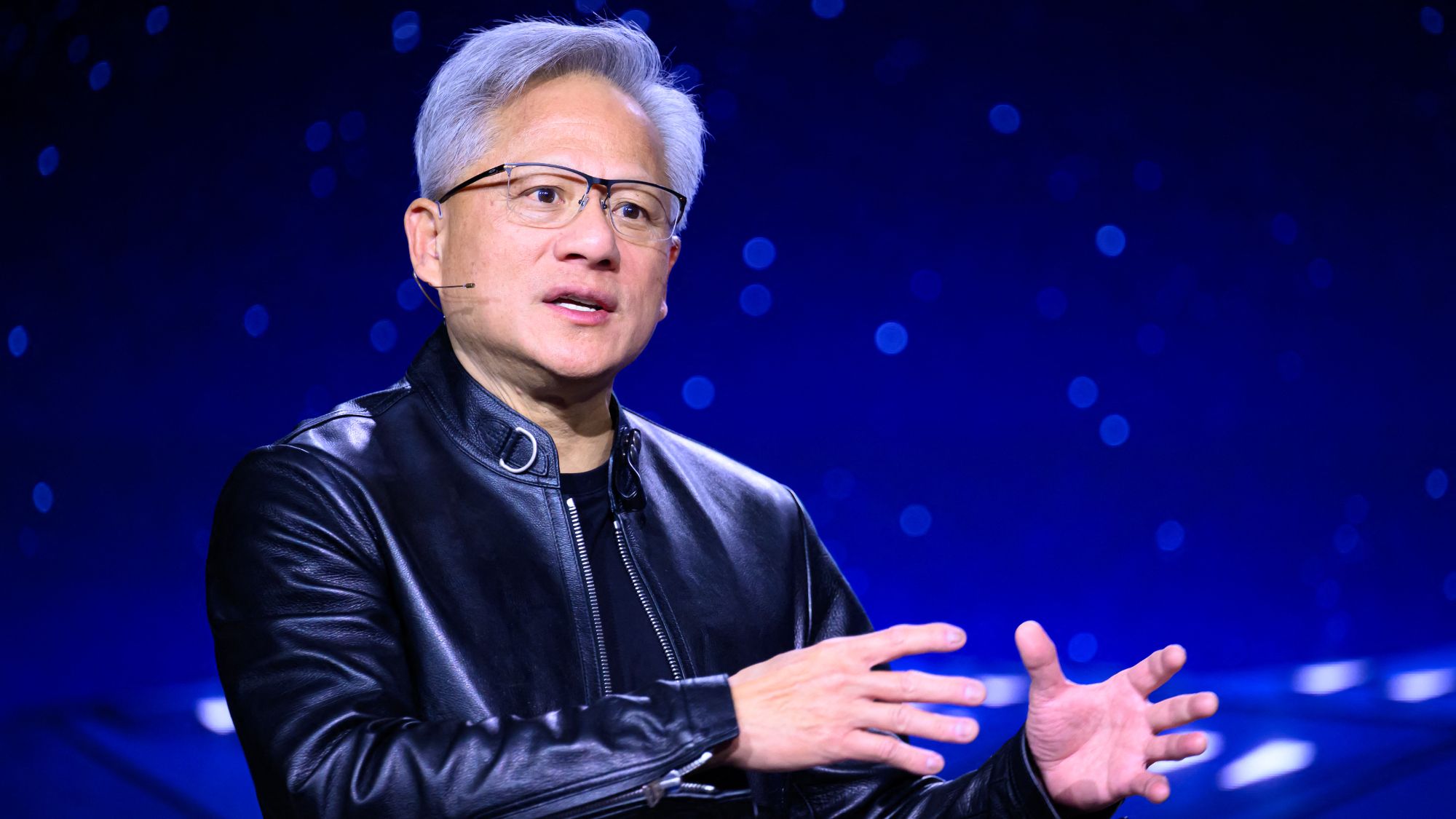
- Key Allegation: Lawmakers claim Nvidia CEO Jensen Huang’s previous assurances regarding chip diversion were “potentially misleading.”
- Targeted Regions: China, Malaysia, Thailand, Vietnam, and Singapore.
In a significant escalation of tech-sector tensions, a bipartisan pair of U.S. Senators has called for the immediate suspension of Nvidia’s export licenses for advanced AI chips destined for China and several Southeast Asian nations. The demand, outlined in a formal letter to Commerce Secretary Howard Lutnick, follows recent criminal charges involving the smuggling of $2.5 billion worth of Nvidia hardware, sparking fears that current safeguards are insufficient to protect American national security interests.
Senators Jim Banks (R-Ind.) and Elizabeth Warren (D-Mass.) authored the correspondence, urging the Department of Commerce to pause, suspend, or reconsider all active export licenses for Nvidia’s high-performance AI systems. The lawmakers specifically highlighted intermediaries in Malaysia, Thailand, Vietnam, and Singapore as high-risk regions for the diversion of restricted technologies to the Chinese military and state agencies.
The $2.5 Billion Smuggling Trigger
The legislative backlash was ignited by reporting from the Financial Times regarding a massive smuggling operation involving Super Micro Computer (Supermicro). Three employees of the server manufacturer, including co-founder Yih-Shyan “Wally” Liaw, have been charged with orchestrating the illicit transfer of $2.5 billion in Nvidia hardware to China.
According to the senators, this breach underscores a systemic failure in the oversight of the AI supply chain. The letter asserts that the scale of the diversion contradicts previous public statements made by Nvidia leadership regarding the security of their distribution networks.
“We urge all necessary and appropriate actions, including the immediate pausing, suspension, or other reconsideration of all active export licenses covering advanced Nvidia AI chips and server systems,” the senators wrote. They argued that the existing regulatory framework has failed to prevent China from acquiring the "most powerful AI hardware on earth."
Lawmakers Challenge Nvidia CEO’s Credibility
A central pillar of the senators’ argument is a direct challenge to the credibility of Nvidia CEO Jensen Huang. The letter explicitly refutes Huang’s earlier claims that there was no evidence of his company’s most powerful products being diverted to restricted entities.
"These statements were not simply wrong in hindsight," the senators stated in their correspondence to Lutnick. "They were contradicted by reporting available at the time and potentially misled U.S. officials."
Huang has been a vocal advocate for maintaining trade relations with China, lobbying for the approval of Nvidia product sales by arguing that it is strategically advantageous for the U.S. to have Chinese firms dependent on American technology. This lobbying appeared successful in December 2025, when the Trump administration shifted policy to allow Chinese tech companies to acquire Nvidia’s H200 chips. Following that decision, Nvidia confirmed substantial orders for the H200 and moved to restart manufacturing for the older AI architecture.
However, the discovery of the Supermicro smuggling operation has cast a shadow over those recent gains, with lawmakers now questioning whether the administration was operating under false pretenses provided by industry leaders.
Nvidia Defends Compliance Protocols
Nvidia has responded to the allegations by emphasizing its commitment to regulatory adherence. In a statement provided to Tom’s Hardware, an Nvidia spokesperson asserted that the company maintains rigorous internal controls.
"Strict compliance is a top priority for Nvidia," the company stated. "We continue to work closely with our customers and the government on compliance programs as export regulations have expanded."
Nvidia further argued that the unlawful diversion of its hardware is a "losing proposition" for any entity involved, noting that the company provides no technical service or support for systems that are moved outside of authorized channels. The company maintains that its enforcement mechanisms are both "rigorous and effective," despite the recent charges brought against its partner’s employees.
Impact on the AI Industry and Global Markets
The proposed freeze on export licenses could have seismic implications for Nvidia’s revenue and the broader AI competitive landscape. While the company has already developed software-based tracking solutions to monitor the location of its latest Blackwell GPUs, many experts argue these measures do not go far enough.
"Amazon can tell you where a package is at any given moment," Ryan Fedasiuk, a technology security expert from the American Enterprise Institute, told the Financial Times. "There is no reason the most powerful AI hardware on earth should have a less sophisticated chain-of-custody system than a pair of sneakers."
For developers and users, a total suspension of licenses in Southeast Asia could disrupt the global AI supply chain, as countries like Malaysia and Singapore have become critical hubs for data center expansion and chip assembly. If these regions are deemed unsafe for high-end exports, the resulting hardware scarcity could slow AI deployment across the continent.
What’s Next: Mandatory Geo-Tracking
The battle over AI exports is moving toward a legislative showdown. The House Foreign Affairs Committee is reportedly preparing to vote on a bill that would force chipmakers to integrate hardware-level geo-tracking technology into high-end gaming and AI GPUs.
While Nvidia has historically opposed such mandates, citing complexity and privacy concerns, the company has already begun developing internal software solutions for its Blackwell architecture. If the bipartisan pressure from Banks and Warren results in a formal license suspension by the Commerce Department, it could set a precedent for even stricter controls on future architectures, including Nvidia’s upcoming Vera Rubin AI GPUs.
As the Commerce Department reviews the letter, the industry awaits a decision that could redefine the boundaries of global tech trade and national security in the age of artificial intelligence.