
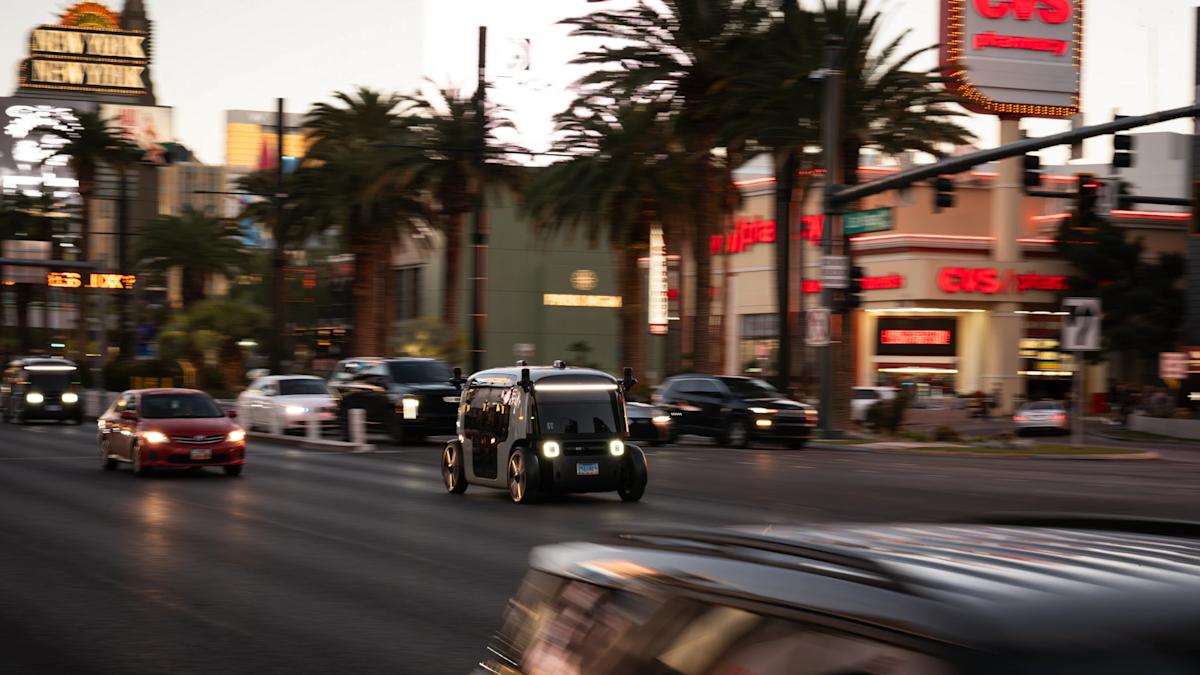
- What: Zoox is expanding its robotaxi operations to Austin and Miami while significantly increasing service areas in San Francisco and Las Vegas.
- Where: New testing in Austin, TX and Miami, FL; expanded coverage in San Francisco’s eastern neighborhoods and the Las Vegas Strip.
- Key Features: Introduction of "Find My Zoox" identification lighting and "Zooxcast" Bluetooth audio integration.
- Availability: Initial rides limited to "Zoox employees, their families and friends" before a broader public rollout.
Amazon-owned autonomous vehicle company Zoox is aggressively scaling its U.S. footprint, announcing plans to bring its purpose-built robotaxis to Austin and Miami while quadrupling its service area in San Francisco. The expansion, which follows earlier testing in Dallas and Phoenix, represents the company’s broadest push yet to compete with Alphabet’s Waymo in the burgeoning autonomous ride-hailing market.
By introducing its carriage-style vehicles to new major metropolitan hubs, Zoox aims to transition from a "retrofitted" testing phase to a fully realized commercial service. While the company has reportedly been operating a fleet of retrofitted test vehicles in Austin and Miami since 2024, the deployment of its custom-built robotaxi—featuring seats that face each other and no steering wheel—marks a critical milestone in its development roadmap.
Expanding the Urban Footprint: From Texas to Florida
The move into Austin and Miami signals Zoox’s intent to master diverse urban environments. In these new markets, the company will initially limit rides to "Zoox employees, their families and friends," a standard protocol for autonomous vehicle companies to ensure safety and system stability before opening platforms to the general public.
In San Francisco, the company is significantly deepening its presence. According to reports from CNBC and Electrek, Zoox is quadrupling its coverage in the city, pushing into the eastern half to include high-traffic neighborhoods such as the Marina, North Beach, Chinatown, and Pacific Heights, as well as the Embarcadero. This expansion places Zoox in direct competition with established players in some of the most complex driving environments in the United States.
Las Vegas will also see a substantial increase in service. Zoox is expanding its pick-up and drop-off options to include the Las Vegas Convention Center and the "majority of the major hotels along the Strip." The company also plans to provide limited service for major events at high-capacity venues like The Sphere and T-Mobile Arena.
New Features for the "Rolling Social Space"
To improve the rider experience, Zoox is reportedly rolling out two new product features, as first reported by Engadget. These features are designed to solve common pain points in ride-hailing:
- Find My Zoox: This feature uses "distinct lighting and sound cues" to help riders identify their specific robotaxi in crowded areas—a common challenge in nightlife districts or near event venues.
- Zooxcast: Aiming to personalize the in-cabin experience, this tool allows riders to sync their own audio via Bluetooth, allowing them to control the soundtrack of their journey.
These updates align with Zoox’s philosophy of treating the robotaxi not just as a vehicle, but as a "rolling social space." Unlike competitors who use traditional SUVs modified with sensors, Zoox’s vehicle is designed from the ground up for passengers, featuring a symmetrical design and a spacious interior that encourages interaction between riders.
Technical Strategy and the Competitive Landscape
The autonomous vehicle industry is currently a race between two distinct philosophies. While Waymo has found success by retrofitting existing Jaguar I-PACE vehicles with its "Waymo Driver" sensor suite, Zoox has bet the company on a bespoke, purpose-built vehicle.
According to industry analysts, this "bespoke" approach is more capital-intensive and slower to scale initially, but it offers a unique user experience that traditional cars cannot match. While Waymo has expanded more quickly across cities like Phoenix, Los Angeles, and San Francisco using its retrofitted fleet, Zoox is positioning itself as the premium, "built-for-riders" alternative.
"Rides with Zoox are a bit more bespoke," noted industry reports, highlighting that while Waymo plans to eventually incorporate Geely-co-developed robotaxis, Zoox is leading with its custom hardware today.
Impact on the Future of Urban Mobility
For developers and urban planners, the expansion of Zoox provides critical data on how purpose-built autonomous vehicles interact with dense, high-traffic corridors like the Las Vegas Strip and San Francisco’s Chinatown. For the general public, it represents the slow but steady arrival of a post-driver era in transportation.
"This expansion changes how residents in these cities view the future of transit; it’s no longer a science experiment, it's a neighborhood utility."
The impact of this expansion is also a clear signal of Amazon’s long-term commitment to the autonomous space. Despite the high costs of development and the regulatory hurdles facing the industry, the backing of a tech giant like Amazon allows Zoox to pursue a more hardware-centric, long-term strategy than many of its competitors.
What’s Next for Zoox
While the current expansion focuses on residential and tourist-heavy neighborhoods, Zoox has its sights set on transportation hubs. The company has confirmed plans to eventually offer trips to Harry Reid International Airport in Las Vegas, a move that would place it at the center of the city’s massive tourism logistics chain.
While reports have suggested the company formally launched its robotaxi service as recently as September 2025, official verification of that specific milestone remains unconfirmed. Regardless of the exact launch date, the trajectory is clear: Zoox is moving out of the laboratory and onto the streets of America’s busiest cities. As testing continues in Austin and Miami, the company says it will gradually expand access to the broader public, mirroring the rollout patterns seen in its more established markets.