
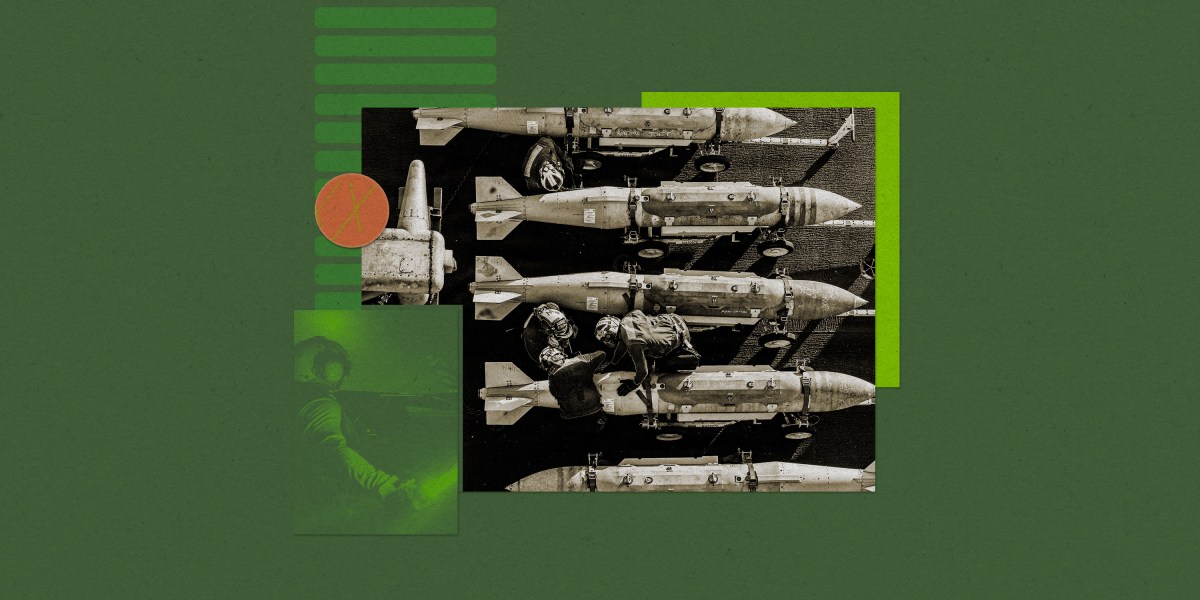
- What: The U.S. Department of Defense is integrating OpenAI and xAI models into classified targeting systems while labeling Anthropic’s Claude a "supply chain risk."
- Conflict: Pentagon leadership claims Anthropic’s safety guardrails "pollute" the military supply chain; Anthropic is reportedly planning to sue the Department of Defense (DoD).
- Technology: Generative AI is being used to rank and prioritize targets for human evaluation in classified environments.
- Context: OpenAI has reached a "compromise" with the DoD, while Anthropic maintains strict refusals regarding autonomous weapons and mass surveillance.
The U.S. Department of Defense is moving to integrate generative AI systems from OpenAI and xAI into high-stakes military targeting decisions while effectively blacklisting Anthropic’s Claude model. According to a Defense Department official, the military plans to use these AI chatbots to rank potential targets and recommend strike priorities in classified settings. This pivot follows a scathing assessment from the Pentagon’s Chief Technology Officer, who claimed that Anthropic’s "policy preferences"—referring to its rigorous safety guardrails—would "pollute" the defense supply chain.
The Targeting Pipeline: AI as a Tactical Advisor
The proposed military application involves a sophisticated data-processing pipeline where a list of possible targets is fed into a generative AI system fielded specifically for classified environments. According to the Pentagon, the AI is tasked with analyzing vast amounts of information to prioritize which targets should be struck first.
While the AI provides the ranking and analysis, defense officials emphasize that humans remain "in the loop." Military personnel are responsible for checking and evaluating the AI’s recommendations before any kinetic action is taken. However, the selection of which models power this analysis has become a fierce ideological and technical battlefield. While OpenAI’s ChatGPT and Elon Musk’s xAI (Grok) are reportedly being positioned at the center of these operations, Anthropic’s Claude has been pointedly excluded from the core supply chain.
The "Pollution" Controversy and Anthropic’s Legal Threat
The divide between the Pentagon and Anthropic stems from the startup’s refusal to relax its safety standards for military applications. Anthropic has reportedly refused to allow the federal government to use Claude for domestic mass surveillance or the development of autonomous weapons systems.
This stance led the Pentagon’s CTO to label the model a risk that could "pollute" military systems with restrictive civilian policy preferences. In response to being designated a "supply chain risk," Anthropic is reportedly reeling from what it views as a "compromise" between OpenAI and the DoD. According to reports from MIT Technology Review and The Guardian, Anthropic is now preparing to challenge this designation in court, signaling a landmark legal battle over the government's power to coerce AI developers into meeting military demands.
The stakes are compounded by the fact that Claude is already embedded in existing systems. Reports indicate that Palantir’s Maven smart system, which is used to determine bombing sites in Iran and provide strike analysis, currently utilizes Claude. The Pentagon's move to label the model a risk suggests a desire to purge these "safety-first" architectures in favor of models that offer more flexibility to military commanders.
OpenAI’s Strategic Shift and xAI’s Entry
The Pentagon’s embrace of OpenAI comes as CEO Sam Altman shifts the company’s narrative toward infrastructure and national utility. During a recent event with BlackRock, Altman described a future where "intelligence is a utility, like electricity or water," sold on a meter. This vision aligns with the DoD’s goal of treating AI as a foundational layer of modern warfare.
OpenAI’s perceived "compromise" with the Department of Defense marks a significant departure from the company’s earlier, more restrictive stances on military use. By positioning ChatGPT as a tool for classified targeting analysis, OpenAI has gained a strategic advantage over Anthropic in securing lucrative government contracts. Simultaneously, xAI's Grok is being considered for these high-stakes roles, likely due to Musk's vocal opposition to "woke" or overly restrictive AI guardrails, which aligns with the Pentagon’s preference for models without baked-in "policy preferences."
Impact on the AI Industry and Global Warfare
This schism represents a turning point for "dual-use" technologies—tools designed for civilian use that are repurposed for combat. For developers, the Pentagon's stance sends a clear message: safety guardrails that interfere with military utility may lead to being locked out of the massive defense market.
"This changes how developers will have to weigh their ethical charters against the reality of government procurement," says a senior analyst tracking the dispute. "For the first time, we are seeing the U.S. government actively penalize an AI company for being too safe."
The implications extend to the battlefield itself. As the U.S. formalizes its AI targeting protocols, other nations are following suit. Ukraine has reportedly begun offering its battlefield data to allies to train drones and other unmanned aerial vehicles (UAVs), creating a feedback loop where real-time war data is used to refine the very AI models the Pentagon is now fielding.
What’s Next: Courtrooms and Combat Data
The immediate future will likely be defined by Anthropic’s legal challenge against the Department of Defense. If Anthropic successfully argues that the "supply chain risk" designation was arbitrary or punitive, it could set a precedent for how AI companies maintain their independence while serving government clients.
Meanwhile, the integration of OpenAI and xAI into classified systems will continue. Observers expect the DoD to push for even deeper integration of battlefield data, such as the data currently being provided by Ukraine, to move beyond simple target ranking and toward real-time predictive modeling. As Meta postpones its own AI launches due to performance issues and Google faces its own pressures, the race to become the "Pentagon's model" has narrowed to a high-stakes duel between OpenAI and xAI, with Anthropic fighting for its survival in the defense sector.