
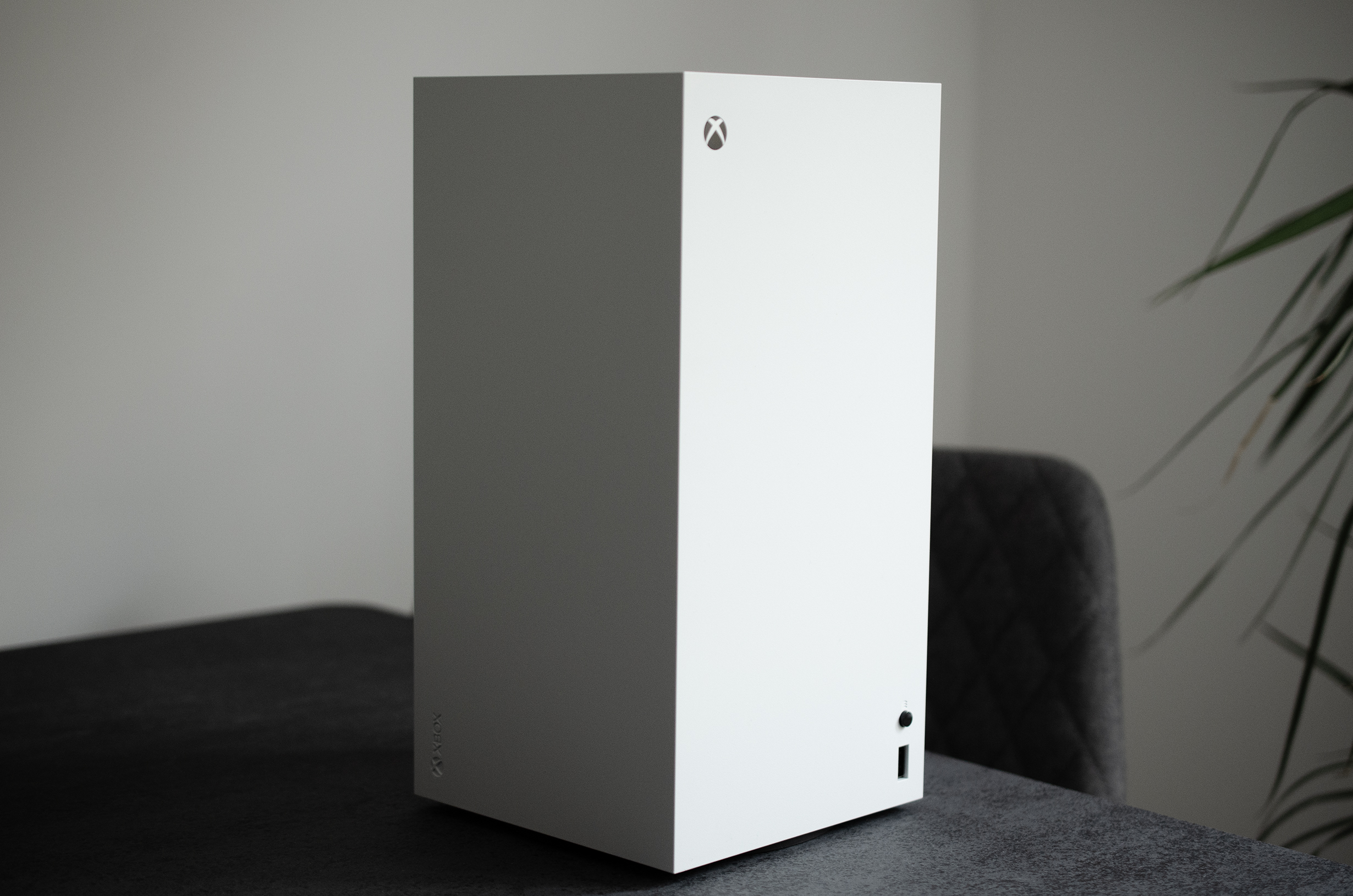
Our Honest Take on Xbox Gaming Copilot: A High-Tech Strategy Guide or a Gilded Gimmick?
Microsoft’s latest move to bring the "Gaming Copilot" to current-gen Xbox consoles (Series X|S) by late 2026 marks a significant, if predictable, expansion of the company’s "AI everywhere" strategy. While the promise of a real-time, voice-activated gaming companion sounds like a leap into the future, a closer look at the GDC 2026 announcement reveals a tool that currently functions more like a hands-free Wikipedia than a revolutionary new way to play.
Verdict at a glance
- What’s genuinely impressive: The deep integration with system-level data—such as a player’s gaming history and real-time game state—allows for contextual advice that standard search engines can't match.
- What’s disappointing: In its current form, it is essentially a voice-activated strategy guide. It risks "solving" games for players, potentially eroding the sense of discovery and trial-and-error that defines core gaming.
- Who it’s for: Casual gamers, completionists stuck on obscure crafting recipes, and players with accessibility needs who benefit from voice-activated system navigation and guidance.
- Price/Performance verdict: Likely bundled into the existing Xbox ecosystem (potentially tied to Game Pass), making it a high-value "free" add-on, provided the latency of cloud-based voice processing doesn't lag behind the action.
What’s actually new
The transition of Gaming Copilot from the Xbox mobile app and Windows 11 to the native console environment is more than a simple port. According to Sonali Yadav, Xbox’s product manager for gaming AI, the assistant is moving into "more services that players are playing."
The specific advance here is contextual awareness. Unlike a generic LLM, Gaming Copilot is designed to ingest specific game data—like the materials required for a sword in Minecraft or the mechanics of a specific boss fight. By calling upon the AI with their voice, players bypass the "second screen" problem—the need to put down the controller and pick up a phone to search for a solution. This is a pivot toward making the console a self-contained, intelligent ecosystem that understands the player's specific progress and history.
The hype check
Microsoft’s marketing suggests a "Gaming Copilot" that can "reply with suggestions about what to do next." We need to be careful with the word suggestions.
- The Claim: "Ask how to beat a particular boss."
- The Reality: Copilot isn't analyzing the boss's frames in real-time to tell you when to dodge. It is likely scanning indexed guides, wikis, and community forums to summarize existing strategies. It is an information aggregator, not a tactical co-pilot.
- The Overstatement: The implication that this is a "partner" in gaming. Until the AI can perceive the screen with low-latency vision (which has not been confirmed for this console rollout), it is reacting to the game state data provided by the API, not the actual visual or mechanical struggle of the player.
Real-world implications
The most profound impact of Gaming Copilot won't be in hardcore competitive gaming, but in accessibility and retention.
- Lowering the Barrier to Entry: For complex RPGs or crafting-heavy survival games (like Minecraft), the Copilot acts as an interactive manual. This keeps players engaged who might otherwise quit out of frustration.
- Accessibility (The True Win): For players with motor impairments or visual challenges, navigating menus or searching for guides via a virtual keyboard is a chore. Voice-activated assistance is a genuine utility that makes gaming more inclusive.
- The "Stay-In-Game" Economy: For Microsoft, every second a player spends looking at their phone is a second they aren't looking at the Xbox dashboard. Copilot keeps the user's attention locked within the Microsoft ecosystem.
Limitations they're not talking about
While the GDC panel focused on the "how," it skipped the "why not."
- The Death of Discovery: Game design often relies on the "Aha!" moment. If Copilot is always one voice command away from telling you where the hidden key is, it risks turning gaming into a series of checklists rather than an exploration.
- Hallucinations in Guides: LLMs are notorious for "hallucinating" facts. In a gaming context, this could mean incorrect crafting recipes or strategies for an older version of a game (patch notes move fast). A "hallucinating" guide is worse than no guide at all.
- Privacy and "Always Listening": Bringing a voice-activated AI assistant into the living room always raises the question of data privacy. How much of the "gaming history" and "voice call-outs" are being stored to train broader Microsoft models? The source is silent on the data-handling specifics.
How it stacks up
Compared to Steam Guides or YouTube, Copilot has the advantage of zero-friction access. You don't have to pause and shift focus. However, compared to the PlayStation 5 "Game Help" cards, which provide curated, developer-approved videos and tips, Copilot is more dynamic but potentially less accurate. PS5’s help is hand-crafted by devs; Microsoft’s is generated by AI. The latter is broader in scope but carries a higher risk of noise.
Constructive suggestions
To make Gaming Copilot a "must-have" rather than a "turn-off," Microsoft should consider the following:
- "Spoiler-Free" Mode: Allow users to set the "helpfulness" level. The AI should offer a nudge (e.g., "Look toward the waterfall") before giving the full answer ("The switch is behind the waterfall").
- In-Character Personas: To preserve immersion, allow the Copilot to adopt the voice or personality of an in-game character (via Azure AI Speech). Getting tips from a generic robotic voice is jarring; getting them from a "helpful ghost" or a "radio operator" maintains the game's atmosphere.
- Local Processing for Privacy: To mitigate privacy concerns, Microsoft should aim to process basic voice triggers and common game-state queries locally on the Series X hardware, rather than sending every "Hey Copilot" to the cloud.
Our verdict
Wait and see.
If you are a casual player who frequently finds yourself lost in menus or crafting trees, Gaming Copilot will be a significant quality-of-life upgrade when it hits consoles in late 2026. However, if you value the "purity" of the gaming experience and the satisfaction of solving puzzles yourself, this may feel like an intrusive layer of hand-holding.
Our recommendation:
- Adopt now (Beta/PC): If you are an accessibility-focused gamer.
- Wait: Until we see how well it handles real-time game state without lag.
- Skip: If you find voice assistants in your living room to be an immersion-killer.
FAQ
Should we switch from PlayStation to Xbox for this?
No. While Copilot is more conversational than PS5’s "Game Help" cards, the core utility remains similar: helping you when you're stuck. Unless you specifically require voice-activated assistance for accessibility, this isn't a "system seller."
Is it worth the potential price premium?
Microsoft has not announced a separate price for Gaming Copilot on consoles. If it remains bundled with the OS or Game Pass, it’s a high-value addition. If it eventually requires a "Copilot Pro" subscription for gaming, the value proposition drops significantly for most players.
Does it work in all games?
The announcement highlights Minecraft, but the assistant is supposed to work across "more services." Expect deep integration in first-party Xbox titles, with more limited "general search" capabilities for third-party games that haven't opened their APIs to Microsoft's AI.
Sources
- Microsoft’s Copilot AI assistant is coming to current-gen Xbox consoles this year - The Verge
- Xbox Gaming Copilot Coming to Consoles This Year - Insider Gaming
- Gaming Copilot AI Assistant Is Coming To Current-Gen Xbox Consoles This Year - GameSpot
All technical specifications, pricing, and benchmark data in this article are sourced directly from official announcements. Competitor comparisons use publicly available data at time of publication. We update our coverage as new information becomes available.