
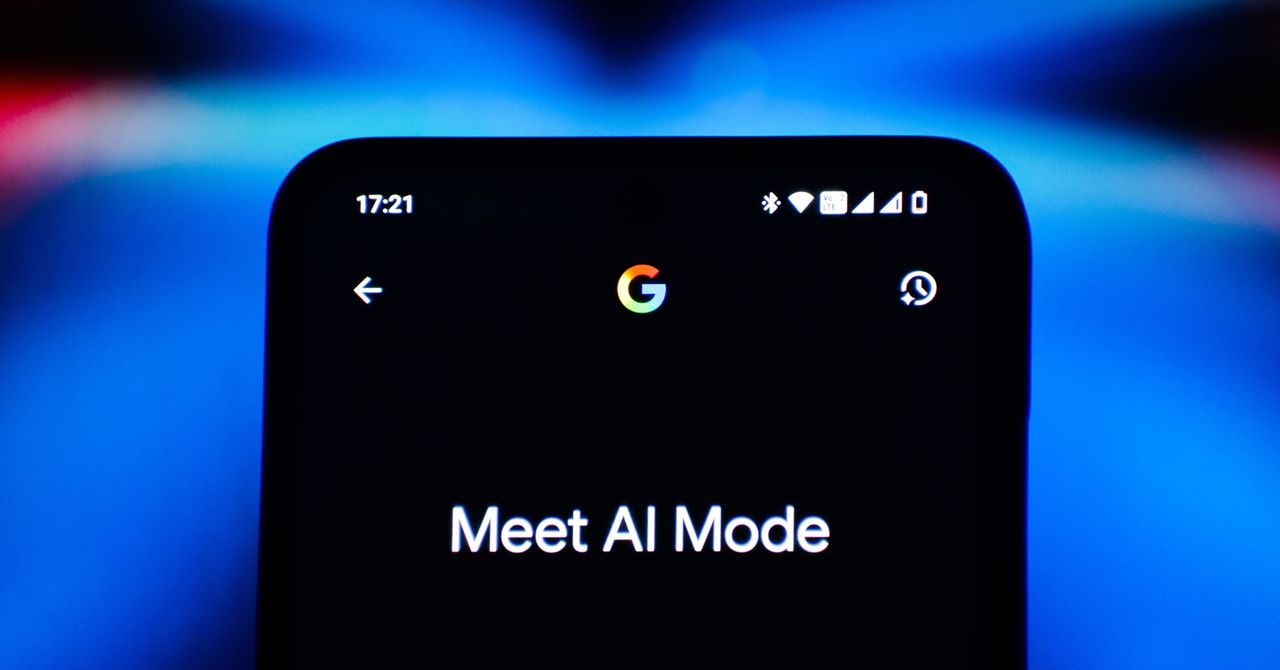
- What: Google's "AI Mode" search feature is reportedly prioritizing links to Google-owned services and internal search results over third-party publishers.
- Evidence: A study by SEO company SE Ranking found that clicking hyperlinks in AI-generated summaries often leads back to additional Google results.
- Example: In a test query regarding the 2026 Oscars, all 17 in-line hyperlinks in Google's AI Mode output directed users back to Google-hosted sidebars.
- Rollout: Google is currently integrating "AI Mode" as a dedicated tab within Search and the Google app globally.
Google's evolution into a generative AI powerhouse is increasingly keeping users within its own "walled garden," as new data shows the company’s AI search tools favor its own services over the open web. Recent analysis of Google’s "AI Mode" suggests that rather than serving as a portal to third-party publishers, the search engine is effectively looping users back into its own ecosystem through internal hyperlinks.
The shift represents a fundamental change in the mechanics of internet traffic. For decades, Google functioned as a gateway, directing users to external websites to find information. However, a study by search engine optimization (SEO) firm SE Ranking indicates that Google’s chatbot-style search tool is now significantly more likely to refer users to other Google services, such as YouTube or secondary Google search result pages, according to reports from WIRED and other industry outlets.
The AI Mode "Loop" Explained
The core of the controversy lies in how Google’s "AI Mode"—its most advanced AI search interface—handles citations. While traditional search results provide a list of external links, AI Mode generates a conversational summary with embedded hyperlinks. According to the SE Ranking study, these links are frequently "looped" back into the Google ecosystem.
In one specific instance reported by WIRED, a query regarding the 2026 Oscars ceremony resulted in an AI-generated summary containing 17 different hyperlinks. Every single one of those 17 links led to further Google results appearing in a sidebar, rather than directing the user to the entertainment news sites or film blogs that originally published the information.
This internal referral system keeps the user on Google’s platform longer, which can be seen as a strategy to maximize user engagement within its own proprietary tools. Google has described AI Mode as a tool with "more advanced reasoning and multimodality" that allows users to "go deeper through follow-up questions." However, for publishers, this "deeper" exploration appears to be happening at the expense of their referral traffic.
Competitive Context and Technical Shift
Google's push toward AI-organized summaries is a response to the rising competition from AI-native search engines like Perplexity and OpenAI’s integration of search features in ChatGPT. In an official blog post, Google stated that AI Mode is designed to go "beyond information to intelligence," providing a new tab in the search bar and the Google app to streamline the user experience.
The technical architecture of these "AI Overviews" and "AI Mode" results focuses on synthesizing information from across the web. While Google claims these features are intended to help users find what they are looking for more quickly, the practical result is a "zero-click" environment. In this model, the AI provides the answer directly on the search page, removing the incentive for the user to visit the source website.
Industry analysts at Loganix note that the future of SEO is no longer just about ranking in the top ten blue links. Instead, the goal for brands and publishers is now "becoming the reference that powers AI responses." However, if those references only lead back to Google’s own sidebars, the value of being a source for Google’s AI is brought into question.
Impact on Publishers and the Open Web
The impact of this "Google addiction" to its own services is causing significant concern among digital publishers and SEO professionals. When Google cites its own services like YouTube or redirects users to internal search sidebars, it effectively cuts off the "oxygen" of the internet: outbound traffic.
For developers and content creators, this shift creates a paradoxical challenge. To appear in AI results, they must provide high-quality, crawlable data, but the reward for doing so is increasingly a summarized snippet that discourages a click-through. This has led some users to seek workarounds; CNET recently reported on methods for users to "get the old Google Search back" to avoid AI-organized summaries entirely.
The industry-wide sentiment is shifting from cautious optimism about AI integration to a realization that Google may be prioritizing its bottom line and user retention over the health of the broader publishing ecosystem.
What’s Next for AI Search
As Google continues to roll out AI Mode globally, the tension between the tech giant and third-party content creators is expected to escalate. The "AI Mode" tab is slated to become a permanent fixture in the Google app and web search interface over the coming weeks, further cementing this new era of AI-driven information retrieval.
The long-term implications could involve a radical restructuring of digital marketing. If Google continues to prioritize internal "loops," publishers may be forced to find new ways to monetize their content outside of traditional search traffic. For now, the AI industry is watching closely to see if regulatory bodies or market pressure will force Google to provide more prominent and direct links to the external sources that fuel its intelligent summaries.