
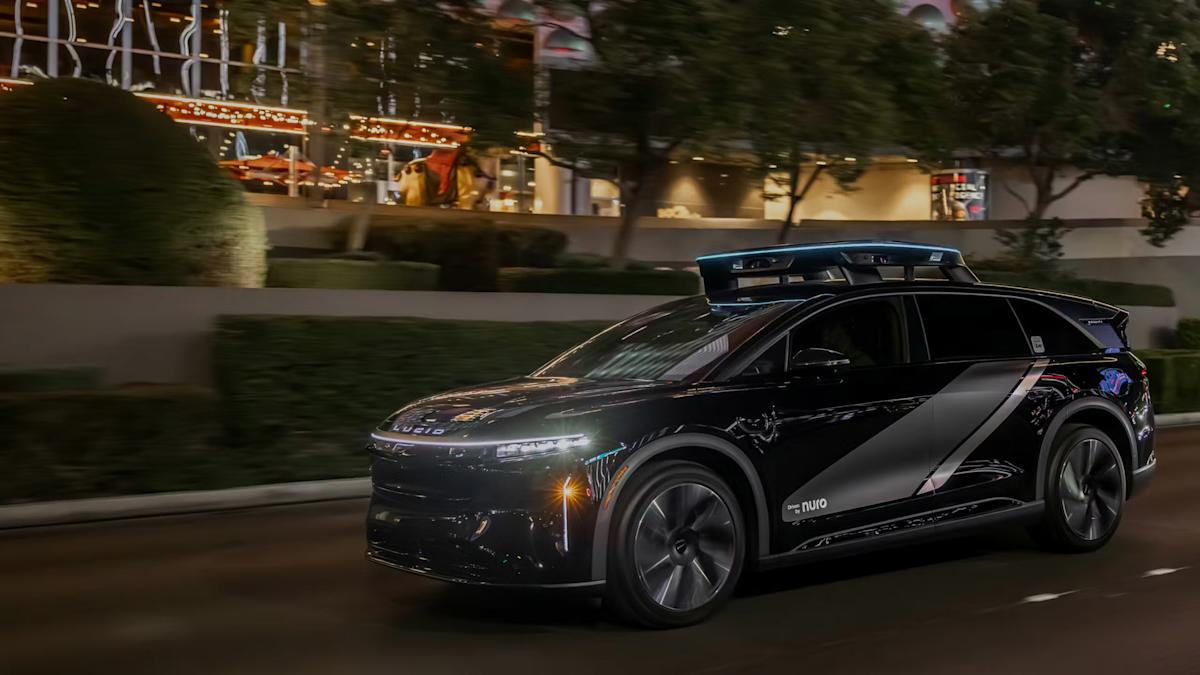
Nuro Begins Autonomous Vehicle Testing in Tokyo
Key Facts
- What: Nuro, backed by NVIDIA, Uber, Toyota and others, has started testing a handful of autonomous vehicles on Tokyo streets with human safety drivers.
- Where: Tokyo, Japan — Nuro’s first international testing location.
- Challenges: Narrow, crowded streets and left-side driving present a significant test for the autonomy system.
- Goal: Achieve Level 4 autonomy; the company emphasizes a “universal autonomy platform” adaptable to multiple applications and form factors.
- Competitor Activity: Waymo has been operating in Japan since April 2025 in collaboration with Toyota, Nihon Kotsu and the Go taxi app.
Lead paragraph
US self-driving startup Nuro has begun testing its autonomous vehicles on the challenging streets of Tokyo, marking the company’s first deployment outside the United States. Backed by NVIDIA, Uber, Toyota and others, Nuro is operating a small number of vehicles with required human safety drivers, according to Bloomberg. The tests aim to pressure-test the company’s autonomy system ahead of its planned robotaxi launch with Uber and Lucid in San Francisco later this year.
Nuro’s Tokyo Deployment
Nuro CEO Andrew Chapin described Tokyo as “an interesting market with some international complexity” that serves as “a good pressure test of what the system is capable of.” The city’s narrow, crowded streets and left-hand traffic differ substantially from the environments where Nuro has previously operated in California.
The company’s technology is designed to learn the underlying structure of safe driving rather than memorizing city-specific rules, enabling real-time adaptation to unfamiliar environments. Before reaching Tokyo’s public roads, the system underwent closed-course testing in Las Vegas, large-scale simulation and “shadow mode” trials in which the AI made decisions without directly controlling the vehicle, according to reports citing Nuro.
Strategic Differences from Rivals
Nuro is pursuing a broader “universal autonomy platform” strategy that it says can extend to many different applications and vehicle types. This approach differs from Waymo’s more focused robotaxi model, Chapin told Bloomberg. The company has previously partnered with 7-Eleven for autonomous deliveries in Mountain View, California.
Nuro has not yet disclosed specific local operators or vehicle manufacturers it will work with in Japan. The startup ultimately aims to reach Level 4 autonomy, which permits full self-driving under limited conditions without a human driver.
Uber’s Ambitious Global Rollout
The Tokyo tests are closely tied to Uber’s larger autonomous vehicle strategy. Uber plans to deploy up to 100,000 autonomous vehicles globally, including 20,000 robotaxis powered by Lucid and Nuro, with an initial rollout targeted for 2027. The company recently unveiled a new vehicle design at CES 2026.
Separately, Uber is collaborating with Nissan and Wayve with the goal of introducing pilot autonomous cars in Tokyo by late 2026. Nuro itself plans to launch a robotaxi service in San Francisco this year in partnership with Uber and Lucid.
Competitive Landscape in Japan
Waymo is currently the other major robotaxi player active in Japan. The Alphabet subsidiary has been operating in the country since April 2025 through collaborations with Japanese taxi operator Nihon Kotsu, the leading taxi app Go, and Toyota.
Nuro’s entry into Tokyo adds to the growing international race to commercialize autonomous driving technology. The startup, based in Mountain View, California, seeks to compete with established players including Waymo and Amazon’s Zoox in the emerging market for fully autonomous commercial vehicles.
Impact on Developers and the Industry
For developers and AI engineers, Nuro’s “zero-shot” approach — the ability to operate effectively in new environments without extensive location-specific training — could influence how autonomy stacks are designed for global deployment. The company’s focus on learning fundamental driving principles rather than rote memorization of road rules may offer advantages in rapidly scaling to new markets.
The tests also highlight the importance of simulation, shadow-mode testing and regulatory compliance when expanding internationally. Japan’s requirement for human safety drivers during testing reflects the cautious regulatory environment in many countries outside the US and China.
What’s Next
Nuro has not announced a timeline for transitioning to driverless operations in Tokyo or revealed details of potential commercial partnerships in Japan. The company’s immediate focus remains on gathering data from the current tests to refine its autonomy system.
Uber’s planned 2027 global rollout of tens of thousands of autonomous vehicles will likely depend on the success of these international test programs. The company’s separate collaboration with Nissan and Wayve targeting late 2026 pilot operations in Tokyo suggests multiple autonomous technology pathways are being explored in the Japanese market.
Success in Tokyo could accelerate Nuro’s global licensing ambitions for its AI system, which the company has positioned as adaptable across different vehicle platforms and use cases beyond robotaxis.
Sources
- Nuro is testing its autonomous vehicle tech on Tokyo's streets | TechCrunch
- US Self-Driving Startup Nuro Begins Testing in Tokyo
- U.S. self-driving startup Nuro begins testing in Tokyo - The Japan Times
- Nuro Launches Zero-Shot Autonomous Vehicles in Tokyo
- NVIDIA- and Uber-backed Nuro is testing autonomous vehicles in Tokyo