
The short version
Meta, the company behind Facebook and Instagram, just revealed four new custom AI chips built with Broadcom that power its AI tools—like recommending posts and generating images or text. These chips, called MTIA 300, 400, 450, and 500, are already running in Meta's data centers or coming soon, with some claiming to beat top commercial chips from companies like Nvidia in speed and efficiency for AI tasks. For you, this could mean faster AI features on your social feeds, like smarter recommendations or quicker AI-generated images, without Meta passing huge costs onto users—though they're still struggling to spot fake AI content.
What happened
Imagine you're running a massive restaurant chain like Meta's apps (Facebook, Instagram, WhatsApp), serving billions of meals (AI responses) every day. Off-the-shelf kitchen tools from big suppliers like Nvidia work fine, but they're pricey and not perfectly tailored. So Meta teamed up with chip expert Broadcom to design their own custom "kitchen gadgets"—specialized AI chips—to cook faster and cheaper.
They unveiled four models in the MTIA (Meta Training Inference Accelerator) series:
-
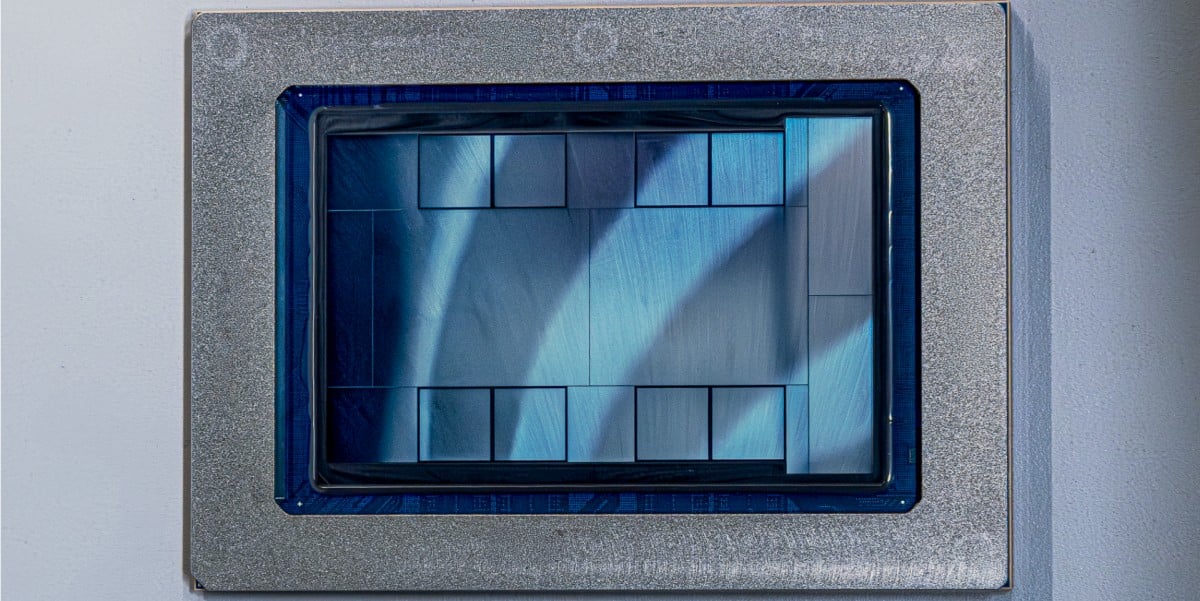
MTIA 300: Already in production. It's a communications chip for "ranking and recommendation" jobs—like deciding which posts show up first in your feed. Picture it as a super-smart sorter: one main compute chiplet (a small processing block), two network chiplets for data flow, and stacks of HBM (high-bandwidth memory, like ultra-fast RAM for AI). Each compute chiplet has a grid of processing elements (PEs), some extras for reliability, and every PE packs two RISC-V vector cores (simple, efficient processors good at math-heavy AI math).
-
MTIA 400: An upgrade from the 300, handling both recommendations and generative AI (like creating text or images). Meta says it's their first chip with "raw performance competitive with leading commercial products." It uses two compute chiplets. Stack 72 of them in a rack with a switched backplane (like a highway connector), and they act as one big team. Testing's done—it's heading to data centers now.
-
MTIA 450: Tuned for generative AI "inference" (using trained AI models to make predictions, like generating a photo from your description). It doubles the HBM bandwidth of the 400, which Meta claims makes performance "much higher than existing leading commercial products." Mass rollout starts early 2027.
-
MTIA 500: Even more efficient for generative AI inference. Boosts HBM bandwidth another 50% over the 450. Uses a 2x2 setup of smaller compute chiplets, surrounded by HBM stacks, two network chiplets, and an SoC chiplet (system-on-chip for connecting to main computers via PCIe and scale-out networks).
Meta shared detailed specs (enlarge the image in their post for charts), emphasizing a "reusable and modular design" like Lego blocks: chiplets, chassis, racks, and networks are interchangeable across the 400, 450, and 500. This lets them ship a new chip every six months. Broadcom plans "multiple gigawatts" of these in Meta's setups by 2027—think power plants' worth of chips humming in data centers.
But there's a catch: Meta's Oversight Board slammed them for failing to flag obvious AI fakes, like a misleading video from the 2025 Israel-Iran conflict. Fact-checkers called it out, users reported it, but Meta didn't mark it "High Risk AI." Their systems aren't keeping up with AI slop (junk content) during crises.
Why should you care?
These chips are Meta's bet on controlling their AI destiny, reducing reliance on pricey suppliers like Nvidia. Everyday, this powers the AI in your apps: Llama models for chat, image generators, feed tweaks. Faster, cheaper chips mean snappier features—no more waiting for AI replies. But the slop issue? It hits your trust—fake videos spread faster in conflicts, fooling you or stirring drama in your groups.
Meta's spending big: $115-135 billion on data centers in 2026, per reports. This diversifies supply, shielding from price hikes. For you, apps stay free (Meta makes bank on ads), but better AI could personalize feeds more (good for discovery, risky for echo chambers). The content moderation fail reminds us: powerful AI needs guardrails, or your timeline fills with lies.
What changes for you
Practically? Not much overnight—MTIA 300 is live, others roll out 2027. But expect:
- Smoother AI experiences: Quicker recommendations (less irrelevant posts), faster generative AI (e.g., Imagine with Meta AI responds in seconds).
- No direct costs: Meta foots the bill; your Instagram stays free. They're dodging taxes cleverly—charging advertisers a "location fee" matching local digital taxes (e.g., +3% for Italy), so ad costs rise indirectly, but not for users.
- More AI everywhere: Meta's velocity (new chip every 6 months) means rapid updates to Llama AI, powering WhatsApp bots, Reels effects.
- Content risks persist: Until fixed, watch for unlabeled AI fakes in feeds, especially news. Report suspicious stuff—Meta's shifting to user reports over pro fact-checkers.
- Broader ripple: Meta's move pressures Nvidia rivals, potentially lowering AI costs industry-wide, making AI tools cheaper/smarter in other apps you use.
No app overhauls needed; it's backend magic.
Frequently Asked Questions
### What are these MTIA chips actually for?
They're custom processors Meta designed with Broadcom to run AI tasks efficiently. The 300 handles feed recommendations, while 400/450/500 tackle generative AI—like creating text, images, or rankings. Think of them as specialized engines making Meta's AI run faster and use less power than buying off-the-shelf chips.
### Do these chips beat Nvidia or other big players?
Meta claims yes for some: MTIA 400 matches "leading commercial products," 450/500 outperform them via doubled/tripled HBM bandwidth. No exact benchmarks shared, but higher bandwidth means quicker AI "inference" (applying models). It's tailored for Meta's needs, not general sales.
### When will I notice these in my apps?
MTIA 300 is already boosting production systems, so subtle improvements now. MTIA 400 deploys soon, 450/500 in 2027. You'll see faster AI chats, better Reels suggestions, without updating apps—it's server-side.
### Are Meta's apps free still, or will this cost users?
Totally free for you. Meta's $115-135B 2026 spend covers it, funded by ads. They pass digital taxes to advertisers via fees, not users. Chips save money long-term, keeping services gratis.
### Why the fuss about AI fakes if chips are the news?
Meta's Oversight Board says their fake-detection lags behind AI speed—e.g., unlabeled conflict video despite reports. Chips power more AI content, amplifying slop. Demand better labels; it protects your feed from misinformation.
### Can other companies buy these chips?
No—these are Meta-only, built for their data centers. But it shows Big Tech making custom silicon, diversifying from Nvidia/Broadcom for everyone else's benefit via competition.
The bottom line
Meta's four Broadcom-built MTIA chips are a power move to supercharge their AI—already live or coming 2027—with some beating commercial rivals on key specs like memory bandwidth. This promises zippy, personalized features across Facebook, Instagram, and WhatsApp without costing you a dime, as Meta invests billions to own their AI stack. Watch for faster tools, but stay vigilant on fakes—their moderation needs work. Ultimately, it's good news: cheaper, custom AI means better everyday experiences, pushing the whole industry forward.
(Word count: 1247)