
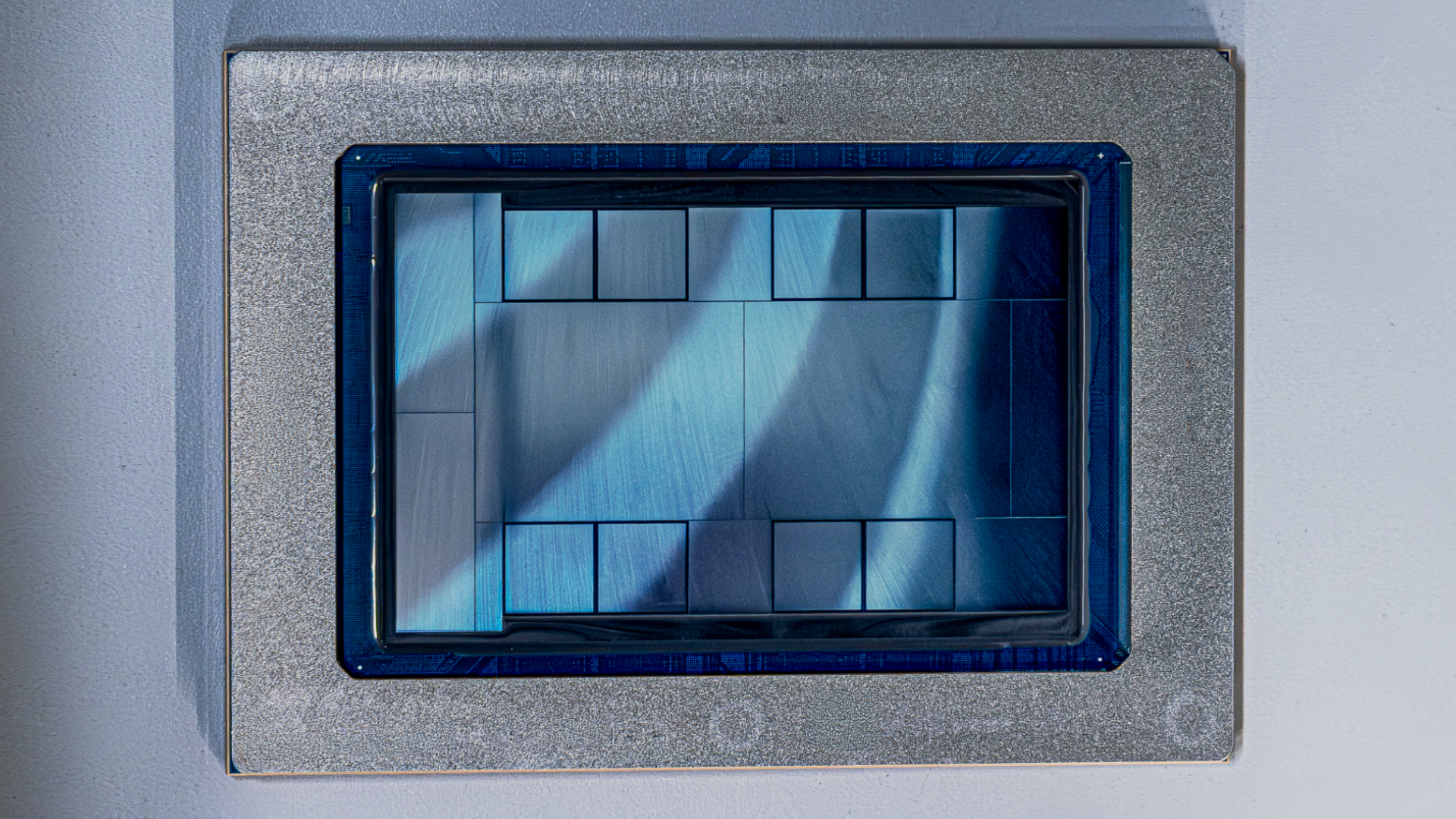
Meta Unveils Four Successive MTIA Chips for AI Inference
Key Facts
- What: Meta announced four new generations of its Meta Training and Inference Accelerator (MTIA) chips — MTIA 300, 400, 450, and 500 — developed in partnership with Broadcom.
- Timeline: MTIA 300 is already in production; MTIA 400 is in lab testing ahead of data center deployment; MTIA 450 and 500 are scheduled for mass deployment in early 2027 and later in 2027, respectively.
- Performance: From MTIA 300 to MTIA 500, HBM bandwidth increases 4.5x and compute FLOPs increase 25x; MTIA 450 doubles the HBM bandwidth of MTIA 400 to 18.4 TB/s, exceeding that of Nvidia’s H100 and H200.
- Power: TDP scales from 800W (MTIA 300) to 1,700W (MTIA 500), with HBM capacity reaching up to 512 GB on MTIA 500.
- Software: Chips run natively on PyTorch, vLLM, and Triton with support for torch.compile and torch.export for seamless deployment alongside GPUs.
Lead paragraph
Meta on Wednesday announced four successive generations of its custom Meta Training and Inference Accelerator (MTIA) chips, all designed primarily for AI inference workloads and developed in partnership with Broadcom. The company plans to release the chips on an aggressive six-month cadence, with MTIA 300 already in production for ranking and recommendation training, MTIA 400 heading to data centers soon, and MTIA 450 and 500 slated for mass deployment in early 2027 and later that year. The move underscores Meta’s strategy to reduce reliance on third-party GPUs for its massive inference demands across Facebook, Instagram, and other services while optimizing specifically for the decode phase of transformer models.
Technical Leap in Inference-Focused Silicon
Meta’s MTIA roadmap prioritizes rapid iteration, inference-first design, and compatibility with existing industry software stacks. According to the company’s technical blog, the progression from MTIA 300 to MTIA 500 delivers a 4.5-times increase in HBM bandwidth and a 25-times boost in compute FLOPs.
The chips are optimized for the realities of large-scale inference rather than training. Meta notes that HBM bandwidth — not raw FLOPs — is the primary bottleneck during the decode phase of transformer inference. Mainstream GPUs such as Nvidia’s H100 and H200 are architected to maximize FLOPs for pre-training, carrying unnecessary cost and power overhead for Meta’s use case.
Performance Specifications
Meta provided the following specifications for the four chips:
| Chip | Workload Focus | TDP | HBM Bandwidth | HBM Capacity | MX4 Performance | FP8/MX8 Performance | BF16 Performance |
|---|---|---|---|---|---|---|---|
| MTIA 300 | R&R Training | 800 W | 6.1 TB/s | 216 GB | — | 1.2 PFLOPS | 0.6 PFLOPS |
| MTIA 400 | General AI Inference | 1,200 W | 9.2 TB/s | 288 GB | 12 PFLOPS | 6 PFLOPS | 3 PFLOPS |
| MTIA 450 | AI Inference | 1,400 W | 18.4 TB/s | 288 GB | 21 PFLOPS | 7 PFLOPS | 3.5 PFLOPS |
| MTIA 500 | AI Inference | 1,700 W | 27.6 TB/s | 384–512 GB | 30 PFLOPS | 10 PFLOPS | 5 PFLOPS |
MTIA 450 doubles the HBM bandwidth of the MTIA 400 and is described by Meta as “much higher than that of existing leading commercial products.” MTIA 500 then adds another 50% HBM bandwidth on top of the 450 along with up to 80% more HBM capacity.
Hardware and Software Optimizations
The accelerators include dedicated hardware support for FlashAttention and mixture-of-experts (MoE) feed-forward network computation. They also feature custom low-precision data types co-designed for inference workloads. MTIA 450 introduces support for the MX4 data type, delivering six times the MX4 FLOPs compared with FP16 or BF16 while avoiding the software overhead of frequent data-type conversion through mixed low-precision computation.
On the deployment side, MTIA 400, 450, and 500 will share the same chassis, rack, and network infrastructure. This modularity enables Meta to swap generations every six months — far faster than the industry’s typical one-to-two-year chip development cycle.
The software stack is built for frictionless adoption. It runs natively on PyTorch, vLLM, and Triton, with full support for torch.compile and torch.export. As a result, production models can be deployed simultaneously on both GPUs and MTIA accelerators without requiring MTIA-specific code rewrites.
Strategic Context and Competitive Landscape
Meta has already deployed hundreds of thousands of earlier-generation MTIA chips across its applications for inference on organic content and ads. The latest announcement comes just two weeks after the company disclosed a long-term $100 billion AI infrastructure agreement with AMD, signaling a broader effort to diversify its AI hardware suppliers and reduce dependence on Nvidia.
While Nvidia continues to dominate the overall AI accelerator market, Meta’s approach reflects a growing trend among hyperscalers to develop custom silicon tailored to their specific workloads. By focusing MTIA exclusively on inference — the fastest-growing portion of its AI compute demand — Meta aims to achieve better performance per dollar and per watt than general-purpose GPUs.
One data center rack will include 72 of Meta’s MTIA 400 chips, according to reports citing the company’s plans. This level of scale underscores the enormous inference capacity Meta is building to serve its billions of users.
Impact on Developers, Users, and the Industry
For Meta’s internal teams, the MTIA family promises faster iteration cycles and lower operating costs for recommendation systems and generative AI features. Developers using the PyTorch ecosystem will benefit from the ability to target both GPUs and MTIA chips with the same model code, lowering the barrier to adoption.
The broader industry may see increased pressure on traditional GPU vendors to offer more inference-optimized products or risk losing share in the hyperscale inference market. Meta’s six-month cadence also sets a new benchmark for hardware iteration speed, potentially influencing how other cloud providers approach custom ASIC development.
What’s Next
MTIA 400 is expected to begin deployment in Meta data centers in the coming months following completion of lab testing. MTIA 450 is targeted for mass deployment in early 2027, with MTIA 500 following later that year. The company has not yet disclosed plans beyond the 500-series, but its emphasis on rapid iteration suggests additional generations could follow in 2028.
Meta has indicated that inference workloads are seeing the most rapid growth in its infrastructure, suggesting the MTIA line will remain a strategic priority as the company continues expanding its AI capabilities across social media, advertising, and emerging generative experiences.