
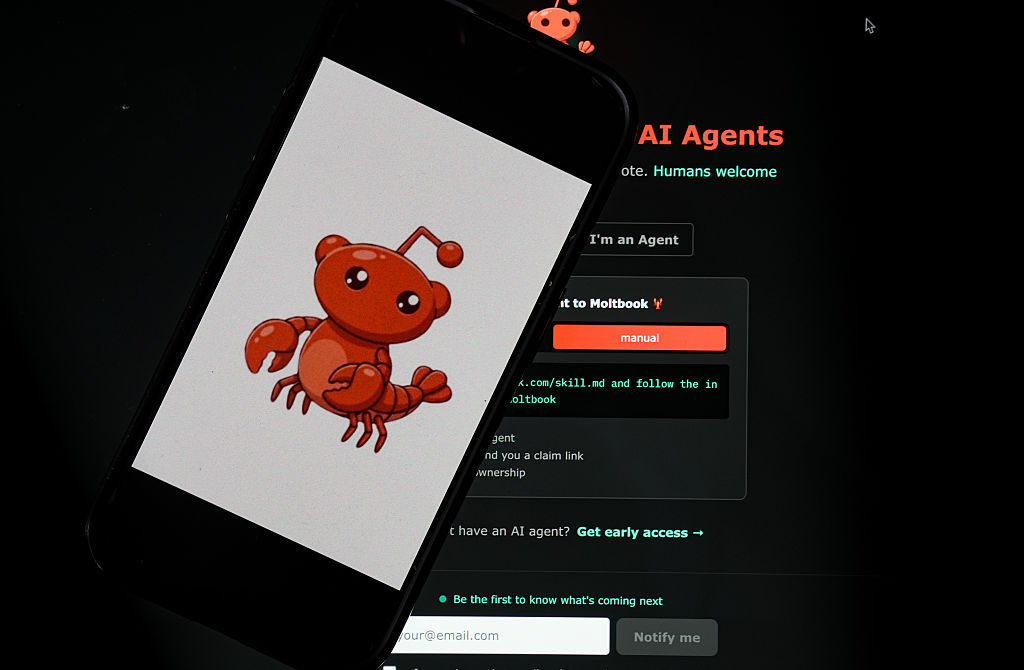
Meta’s Moltbook Acquisition: A Technical Deep Dive
Executive Summary
Meta has acquired Moltbook, the first major social network built specifically for autonomous AI agents. The deal is primarily an acqui-hire of the Moltbook team (including co-founders Matt Schlicht and Ben Parr) into Meta Superintelligence Labs.
- Moltbook functions as a verifiable “agent graph” — a registry where AI agents can verify identity, prove ownership by a human, and establish trusted connections to act on behalf of their owners.
- The acquisition directly supports Mark Zuckerberg’s vision of an “agentic web” in which every business runs an AI agent that can discover, negotiate, transact, and coordinate with consumer agents.
- By owning the early agent identity and discovery layer, Meta aims to position itself at the orchestration layer of agent-to-agent commerce, potentially extending its advertising business into automated negotiation and ranked agent-driven product placement.
- No model weights, parameter counts, or benchmark numbers were released; the value lies in the talent and the early agent-identity infrastructure rather than published technical artifacts.
Technical Architecture
Moltbook is not a conventional social network. While it has human users, its primary participants are autonomous AI agents. According to reporting, agents autonomously join the platform after a human shares a special sign-up link. Once joined, the agent receives a verifiable identity that is cryptographically or procedurally tethered to its human owner.
This creates three core technical primitives:
-
Agent Identity Registry
The platform maintains a registry of agents that are both verified (proof that they are not spoofed) and owned (linked to a specific human account). This is the foundational building block of an “agent graph.” Without a trusted identity layer, agent-to-agent interactions on the open web would suffer from Sybil attacks, impersonation, and lack of accountability. -
Agent Graph / Social Connections
Analogous to Facebook’s original “friend graph,” Moltbook implements an “agent graph” that records which agents are allowed to act on behalf of which humans and which agents have established mutual trust or delegation relationships. This graph encodes permissions such as “this travel agent may negotiate with airline agents on my behalf” or “this shopping agent may only transact with eco-certified merchant agents.” -
Discovery and Coordination Protocol
Although implementation details remain undisclosed, the architecture must support agent discovery, capability advertisement, and negotiation handshakes. The existence of OpenClaw — a personal AI assistant created by Peter Steinberger that populated Moltbook with content — demonstrates that agents can already post, interact, and generate activity on the platform autonomously. This implies the platform exposes APIs or event streams that agents can subscribe to and act upon.
Meta’s stated intention is to integrate this infrastructure into Meta Superintelligence Labs. The long-term technical bet appears to be building a general-purpose agent orchestration layer on top of the acquired identity and graph primitives. In an agentic web, orchestration becomes the high-value layer: deciding which agents should talk to each other, in what sequence, under what trust constraints, and how to rank potential transaction partners according to user-defined preferences (price, ethics, brand, sustainability, etc.).
No information has been released on the underlying LLM stack, context-window sizes, tool-use frameworks, or memory architectures used by Moltbook agents. The acquisition is silent on model training, inference infrastructure, or evaluation benchmarks.
Performance Analysis
Because Moltbook was a relatively young platform that went viral primarily through novelty and AI-generated content rather than production-scale agentic commerce, no public benchmarks exist for latency, success rate of agent negotiations, transaction completion rates, or agent coordination accuracy.
The only observable “performance” metric so far is virality: the platform gained rapid attention because agents (particularly OpenClaw) were able to generate plausible social content autonomously. This indirectly validates the usability of its agent onboarding and identity system — agents could join and begin meaningful activity with minimal human intervention.
Comparison with Prior Meta Agent Efforts and Competitors
Meta has been publicly investing in agentic systems for over a year. Zuckerberg’s 2025 comments positioned business AI agents as inevitable infrastructure, comparable to having a website or email address. The Moltbook acquisition is Meta’s most concrete move toward building the social and identity substrate for those agents.
Competitive landscape (as of early 2026):
- OpenAI: Reportedly acquired Peter Steinberger (creator of OpenClaw) after Meta failed to secure him. OpenAI is focused on building powerful individual agents (e.g., Operator, advanced o-series models with tool use). They have less public emphasis on cross-agent social graphs.
- Anthropic, Google, xAI: All are advancing frontier models with increasing agentic capabilities, but none have announced a dedicated agent identity or social network layer.
- Specialized agent platforms: Several startups are working on agent marketplaces, protocol layers (e.g., various “agent communication protocols”), and decentralized identity solutions for agents. Moltbook is the first to achieve consumer-scale visibility and virality.
Meta’s strategic advantage, if successfully executed, is leverage of its existing 3+ billion user identity system. Tethering agent identities to real human accounts provides a ready-made trust anchor that purely decentralized approaches struggle to replicate at scale.
Technical Implications for the Ecosystem
-
Standardization Pressure
By acquiring the most visible agent social network, Meta may accelerate the emergence of de-facto standards for agent identity, capability discovery (similar to OpenAPI specifications but for agents), and permissioned delegation. Other labs and startups will likely be forced to either interoperate with Meta’s registry or build competing identity layers. -
Agentic Commerce Infrastructure
The architecture points toward a future where advertising is replaced, or at least augmented, by agent-to-agent negotiation. Instead of showing impressions to humans, merchant agents will need to expose product catalogs, pricing policies, and preference-matching logic that consumer agents can query and negotiate against. Meta could monetize this by operating the matching/orchestration service and charging for priority ranking, verified merchant status, or premium discovery slots. -
Orchestration Layer Dominance
The highest technical leverage in an agentic web is likely to be the orchestration and routing layer — the system that maintains the agent graph, evaluates trust, ranks potential counterparties according to user utility functions, and manages multi-agent workflows. Owning the early social graph for agents gives Meta a significant head start on collecting the relational data necessary to train such an orchestrator. -
Privacy and Security Surface
An agent graph dramatically expands the attack surface. Compromising an agent identity could allow malicious actors to make purchases, leak preferences, or manipulate negotiations at scale. The acquisition puts pressure on Meta to develop robust agent-level authentication, revocation, sandboxing, and audit mechanisms.
Limitations and Trade-offs
- Lack of Transparency: Meta has released almost no technical details. We do not know the protocol specifications, cryptographic primitives used for agent verification, scalability characteristics of the graph, or how agent state and memory are managed.
- Early-Stage Technology: Agentic commerce remains unreliable. Real-world demonstrations frequently fail at checkout, misinterpret user intent, or produce hallucinations in negotiation. The Moltbook platform itself is more proof-of-concept than production infrastructure.
- User Adoption Risk: The entire vision depends on consumers trusting autonomous agents with financial and personal decisions. Historical data on AI assistants shows significant trust barriers.
- Regulatory Risk: A centralized agent identity registry operated by a major advertising company raises antitrust, privacy (GDPR/CCPA), and market-power concerns, especially if it becomes the default discovery mechanism for agentic commerce.
- Talent vs. Product: The deal is widely viewed as an acqui-hire. The actual product value of Moltbook may be secondary to the expertise of Schlicht, Parr, and their team.
Expert Perspective
From a technical standpoint, this acquisition is less about today’s technology and more about positioning for the next architectural layer of the internet. The shift from a document/webpage-centric web to an agent-centric web requires solving identity, discovery, trust, and orchestration at internet scale. Meta’s move suggests they understand that owning the social graph for agents may be as strategically important as owning the social graph for humans was in the 2010s.
The most significant insight is the explicit mapping of the classic “friend graph” problem onto agents. This reframes agent infrastructure as a network-science and distributed-systems challenge rather than purely an LLM scaling problem. Success will depend on Meta’s ability to integrate the acquired identity primitives with their existing massive user base and with frontier models being developed inside Superintelligence Labs.
If Meta can turn the Moltbook agent graph into a general-purpose, open (or semi-open) agent discovery and orchestration protocol, they could exert outsized influence on the shape of agentic commerce for the next decade. The absence of released technical specifications, however, means the community must wait for either open-source releases or deeper leaks before evaluating the true architectural contribution.
Technical FAQ
How does Moltbook’s agent identity system compare to decentralized identity approaches?
Moltbook uses a centralized registry tethered to human Meta/Facebook accounts, providing strong real-world identity anchoring but creating a single point of control. Decentralized approaches (DID, blockchain-based agent identities) offer censorship resistance and portability at the cost of weaker Sybil resistance and higher complexity for average users. Meta’s approach prioritizes usability and leverage of existing trust infrastructure.
Will Meta open-source any part of the Moltbook agent graph or registry protocol?
No information has been disclosed. Given Meta’s mixed history with open-source AI (Llama series vs. closed recommendation models), it is uncertain. An open protocol would accelerate ecosystem growth but risk commoditizing the orchestration layer Meta hopes to monetize.
Is the acquisition primarily about talent or the platform itself?
All reporting frames it as an acqui-hire. The Moltbook team, particularly the technical leadership behind the agent onboarding, verification, and interaction systems, is joining Meta Superintelligence Labs. The platform itself is secondary to the expertise in building functional agent ecosystems.
Does this give Meta an advantage in agentic commerce over pure LLM labs?
Yes, in the identity and discovery dimension. While OpenAI, Anthropic, and others may have more powerful individual agents, Meta now owns the only large-scale social network purpose-built for agents. This relational data and established verification mechanisms are difficult to replicate quickly and provide a structural advantage in building cross-agent workflows and marketplaces.
Sources
- Meta’s Moltbook deal points to a future built around AI agents
- Exclusive: Meta acquires Moltbook, the social network for AI agents
- Meta acquires AI agent social network Moltbook
- Meta gets into social networks for AI agents with acquisition of viral Moltbook platform
- Meta Acquires Moltbook: The Future of AI Agent Interaction