
OpenClaw: A Technical Deep Dive into China’s Viral Open-Source AI Agent Phenomenon
Executive summary
OpenClaw is an open-source AI agent framework that enables autonomous control of desktop environments, executing complex multi-step tasks on a user’s local device. The project has triggered an unprecedented grassroots adoption wave in China, spawning a service economy around installation, hardware optimization, and extensions. Major players including Tencent and Zhipu have rapidly released compatible agents and cloud backends, driving measurable stock gains and local government incentive programs. While the core architecture remains partially undisclosed, its combination of local execution, visual grounding, and tool-use capabilities has proven highly compelling to both technical and non-technical users. Security and privacy risks are significant due to the agent’s privileged access to the host system.
Technical architecture
OpenClaw functions as a computer-use agent — a class of systems that can perceive screen content, move the mouse, type, click, and interact with arbitrary GUI applications without requiring APIs from those applications. From available reporting and community behavior, it appears to follow a similar high-level design to projects like Anthropic’s Claude Computer Use, OpenAI’s Operator, or the open-source Adept-era agents, but optimized for the Chinese software ecosystem and consumer hardware.
The agent likely consists of:
- A vision-language model (VLM) that processes screenshots at regular intervals to build a semantic understanding of the current desktop state.
- A reasoning/planning loop (probably powered by a strong Chinese LLM such as those from Zhipu, Moonshot, or DeepSeek) that decomposes high-level user goals into discrete actions.
- An action execution layer that translates planned steps into low-level OS events (mouse movements, clicks, keystrokes, clipboard operations, and application launching).
- Tool-calling extensions that allow the agent to invoke external APIs, cloud services, or user-provided scripts when GUI interaction alone is insufficient.
Because the source content emphasizes the need for non-trivial installation (terminal commands, developer platform navigation, and hardware selection), the project is almost certainly distributed as a GitHub repository or Hugging Face collection containing model weights, inference code, and a local runtime daemon. The requirement for a separate device or strong sandboxing for privacy suggests the default setup involves either:
- Running the agent in a virtual machine or container with limited host access.
- Installing a privileged desktop daemon that captures screen and input streams.
- Using cloud-offloaded inference for the heavy VLM/LLM components while keeping action execution local.
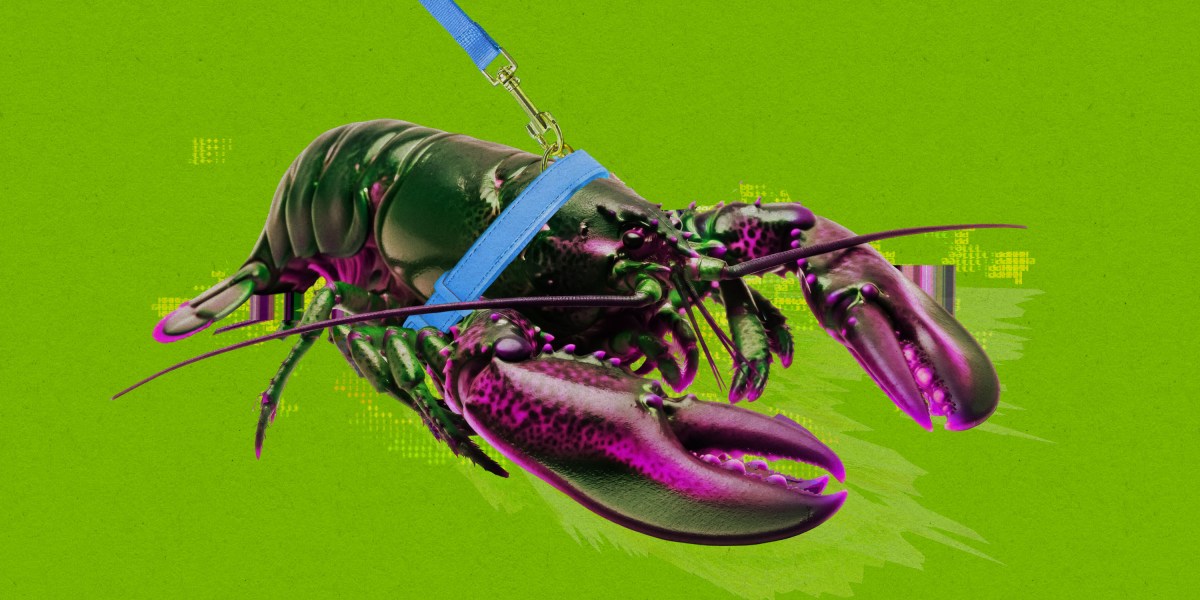
Community extensions described — such as animated progress visualizers and voice-chat interfaces — indicate a well-defined plugin or middleware layer, allowing third-party developers to inject overlays or alternative input/output modalities. The nickname “lobster” and logo reference suggest the project provides a distinctive animated cursor or mascot that visually signals when the agent is active, a clever UX touch that increases approachability for non-technical users.
Performance analysis
Specific benchmark numbers for OpenClaw are not yet publicly disclosed in the provided reporting. However, indirect signals of capability can be inferred from adoption patterns and ecosystem response.
The agent’s ability to successfully serve lawyers, doctors, and even a 77-year-old user implies respectable performance on common productivity workflows: document editing, form filling, web navigation, file organization, and basic data entry. The fact that users are willing to pay 248 RMB ($34) for installation assistance and that some vendors charge up to 700 RMB ($100) for in-person setup indicates the out-of-box experience is still challenging for the average consumer.
Hardware demand provides another performance proxy. Reports of Mac minis briefly selling out in China and users spending over 10,000 CNY (~$1,400) on suitable hardware suggest that smooth real-time operation requires:
- Strong CPU/GPU for local inference or low-latency streaming to cloud endpoints.
- High-quality display and input capture pipelines.
- Sufficient RAM to keep multiple applications and the agent’s context active simultaneously.
Tencent’s rapid release of WorkBuddy — an AI agent “fully compatible with OpenClaw” — and Zhipu’s corresponding agent launch imply that OpenClaw exposes a standardized interface (likely a combination of screenshot API, action primitive library, and state observation format) that major Chinese model providers can target. The resulting 7.3% single-day surge in Tencent stock and broader 20% rise in related Chinese tech shares demonstrate clear market validation of the technical approach.
Technical implications
The OpenClaw phenomenon represents one of the first large-scale consumer deployments of open-source computer-use agents. Its success has several important implications:
- Democratization of agent technology: By lowering the barrier through a service economy (installation gigs, pre-configured laptops, community tutorials), OpenClaw is accelerating the transition of AI agents from developer tools to everyday consumer software.
- Cloud and hardware uplift: The requirement for capable local hardware and low-latency inference is driving demand for both consumer devices (Mac minis, high-end Windows laptops) and Chinese cloud GPU/TPU services. Tencent, Alibaba Cloud, and others are actively positioning their offerings as the recommended backend for OpenClaw workloads.
- Open ecosystem flywheel: The project’s open-source nature has enabled rapid third-party innovation — visualization tools, voice interfaces, custom action primitives — creating a vibrant developer community that larger companies can then productize.
- Policy and regional competition: Local governments in Shenzhen and Wuxi offering free compute credits and cash rewards signals that Chinese policymakers view agent adoption as strategically important for digital transformation and economic activity.
Limitations and trade-offs
Despite the excitement, OpenClaw carries substantial risks and technical limitations:
- Security and privacy: Granting an autonomous agent full control of a desktop is inherently dangerous. A compromised model or malicious extension could exfiltrate data, install malware, or perform unauthorized actions. The reported need for careful partitioning and separate devices highlights that the community is aware of these risks but that many users are accepting them in exchange for convenience.
- Reliability: GUI agents remain brittle. Changes in UI layout, pop-up dialogs, or application updates frequently break agent flows. The high volume of discussion around hardware and cloud setup in power-user groups suggests latency, accuracy, and recovery from failures are still pain points.
- Cost and accessibility: While the agent itself is open-source, running capable models at acceptable speed often requires paid cloud credits or expensive local hardware, creating a barrier that the installation-service industry is currently monetizing.
- Regulatory uncertainty: As agents become more autonomous and widespread, Chinese regulators will eventually need to address liability, data protection, and potential misuse.
Expert perspective
OpenClaw’s viral growth is a fascinating case study in technology diffusion. The project demonstrates that the technical ingredients for useful computer-use agents (strong VLMs, reliable action primitives, and planning loops) have reached a threshold where non-experts find them compelling. The emergence of a service layer around an open-source project mirrors earlier waves such as the home Linux desktop support economy or the initial smartphone jailbreaking/modding communities.
For ML engineers, the most significant aspect may be the rapid ecosystem response from Tencent and Zhipu. Their decision to release first-party agents explicitly compatible with OpenClaw suggests the project has established a de-facto standard interface for desktop agents in the Chinese market. This could accelerate standardization and interoperability in ways that purely proprietary agents cannot.
The story also highlights a key difference between Chinese and Western AI adoption patterns: a greater willingness to accept security trade-offs for immediate utility, combined with strong community-driven support networks. Whether this leads to faster innovation or painful security incidents remains to be seen.
Technical FAQ
What is the likely core model architecture powering OpenClaw?
The exact model sizes and weights are not yet disclosed. However, given performance requirements and the involvement of Zhipu and other Chinese labs, it most likely combines a multimodal VLM (possibly based on InternVL, Qwen-VL, or a Zhipu proprietary vision model) for screen understanding with a strong reasoning LLM (Qwen, DeepSeek, or GLM series) for planning. Action execution is handled by a lightweight local runtime rather than the LLM itself.
How does OpenClaw compare to Anthropic’s Claude Computer Use or OpenAI’s Operator?
Direct benchmark comparisons are unavailable. OpenClaw’s primary differentiators appear to be its fully open-source nature, lower barrier to local experimentation, and deep integration with the Chinese software and cloud ecosystem. It trades some safety guardrails and enterprise controls for accessibility and community extensibility. Reliability on complex tasks is likely lower than the best proprietary agents but improving rapidly due to community iteration.
Is OpenClaw designed for local-only execution or does it require cloud backends?
Both modes appear supported. Community discussions focus heavily on cloud setup and hardware requirements, indicating that many users offload the heavy inference to cloud APIs (Tencent, Zhipu, etc.) for better performance while keeping the action layer local. Pure local execution is possible on high-end hardware but likely slower and more limited in model size.
What are the main technical barriers preventing even wider adoption?
The primary barriers are installation complexity, the need for capable hardware or cloud credits, and the lack of robust sandboxing. Non-technical users struggle with terminal-based setup, dependency management, and configuring safe execution environments. The cottage industry of installation services exists precisely because these barriers remain non-trivial.
Sources
- MIT Technology Review: Hustlers are cashing in on China’s OpenClaw AI craze
- Bloomberg: Tencent, Zhipu Shares Jump on Launches of AI Agents Tapping Into OpenClaw
- Bloomberg: China’s OpenClaw-Tied Stocks Rise on Policy Support, Adoption
- Digitimes: OpenClaw craze sees Mac minis briefly sold out in China
- The News International: OpenClaw craze pushes cloud stock up
(Word count: 872)