
The short version
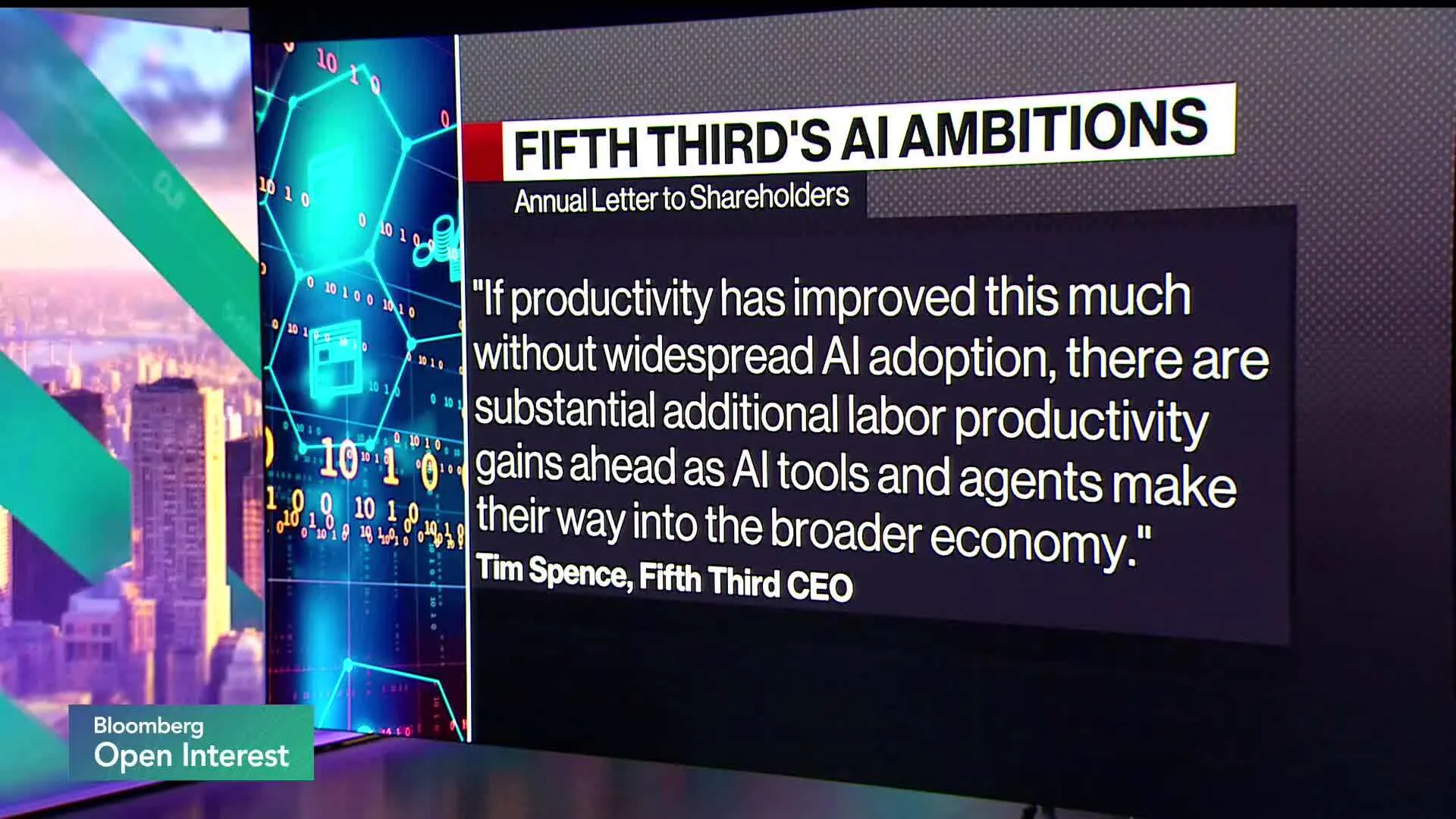
Fifth Third Bank's CEO, Tim Spence, revealed that AI is already writing 40% of the bank's computer code, helping the company grow twice as big while hiring fewer people. This real-world example shows AI delivering big productivity boosts in banking, not just hype. For you, it could mean faster, cheaper banking services and AI handling tasks like payments on your behalf down the road.
What happened
Imagine you're building a Lego castle, but instead of placing every brick yourself, a smart robot assembles 40% of it perfectly while you focus on the fun designs. That's basically what's happening at Fifth Third Bank, a major U.S. bank serving millions of customers. CEO Tim Spence told Bloomberg that artificial intelligence (AI) – those smart computer programs like ChatGPT but tuned for coding – is now generating 40% of all the new software code his team uses to run the bank.
This isn't some sci-fi dream; it's happening right now. The AI acts like a super-fast apprentice programmer, spitting out reliable code that humans check and tweak. As a result, the bank is doubling in size – handling way more business – without needing to hire as many coders. Spence calls this "meaningful, long-term productivity gains," meaning it's not a short-term trick but a game-changer for growth. And he's just getting started: the next step is AI that doesn't just chat with customers but actually does things for them, like automatically transferring money or approving loans.
This story echoes what's brewing at other tech giants. Microsoft's CEO has said AI writes 20-30% of their code, and AI leaders predict it could hit 90% or even 100% in months. But Fifth Third proves it's not just Silicon Valley – everyday banks are jumping in, making this a sign of AI sweeping into finance.
Why should you care?
Banks touch everything in your life: checking accounts, loans, credit cards, apps for paying bills. If AI lets them build and update these systems way faster and cheaper, it directly affects your wallet and convenience. No more waiting weeks for a new app feature because coders are slammed – AI speeds it up. And with banks growing bigger on fewer staff, they might pass savings to you through lower fees or better rates, instead of bloating payrolls.
Think about it like this: When factories got robots decades ago, cars got cheaper and better. Here, AI "robots" for code could make banking smoother and more innovative. But it also means fewer traditional jobs in coding or back-office roles, which ripples to the economy you live in. On the flip side, Spence's vision of AI executing financial tasks means your banking app could soon think ahead – spotting a bill and paying it for you, saving you time and headaches.
What changes for you
For regular folks like you and me, this isn't abstract tech news – it's about practical shifts in daily banking:
-
Faster apps and services: Banks can roll out updates lightning-quick. Want a better mobile app for tracking spending? It could appear in weeks, not months, because AI handles the heavy coding lift.
-
Potentially lower costs: With productivity gains, banks like Fifth Third grow without exploding expenses. That could translate to no-fee accounts, higher interest on savings, or quicker loan approvals – money back in your pocket.
-
Smarter, hands-off help: The "next phase" Spence mentioned? AI doing tasks for you. Picture telling your bank app, "Pay my electric bill if it's over $100," and it just happens safely. No more manual transfers or forgotten payments.
-
Job market shifts: If you're eyeing a career in banking or tech support, coding skills might evolve – you'll need to team up with AI, not replace it. But for customers, it's mostly upside: more efficient services without the red tape.
-
Your data and privacy: Banks already know your finances; AI amps that up. Expect more personalized advice, like "Hey, switch to this credit card for better rewards," but watch for privacy rules to keep it safe.
Nothing changes overnight – humans still oversee the AI – but this is the start of banking feeling more like a helpful buddy than a bureaucratic maze.
Frequently Asked Questions
Is this just hype, or is AI really writing bank code?
No hype – Fifth Third CEO Tim Spence confirmed in a Bloomberg interview that AI generates 40% of their code today, helping the bank double in size with fewer staff. It's verified from the source, and matches trends at Microsoft where AI does 20-30% of coding. This means real productivity, not promises.
Will AI replace human bankers or coders entirely?
Not yet – AI writes code, but people review and improve it. Spence sees it enabling growth with fewer employees overall, but the next phase is AI handling customer tasks like payments. Jobs will change (more oversight, less manual work), but banks still need humans for trust and complex decisions.
Does this make my money safer or riskier?
Safer in many ways: AI speeds up secure updates and fraud detection, helping banks grow responsibly. But it's new, so regulations will ensure oversight. For you, it means reliable apps less prone to glitches from rushed human coding.
When will I see AI doing tasks for me at my bank?
Spence says the "next phase" is coming soon – AI executing financial tasks on your behalf. No exact date from the source, but with 40% code already AI-driven, banks could test features in months. Start noticing personalized automations in apps like auto-payments or smart alerts.
How is Fifth Third different from my bank?
Fifth Third is ahead, with 40% AI code vs. Microsoft's 20-30%. Your bank might be catching up quietly – many use AI tools like GitHub Copilot. If they're not, they risk falling behind on speed and innovation, potentially leading to higher fees or slower service for customers.
The bottom line
Fifth Third's bold use of AI for 40% of its code is proof that AI isn't just for chatbots – it's turbocharging real businesses like your bank, leading to faster growth, fewer staff needs, and exciting automations ahead. For you, this translates to smoother banking: quicker apps, possible savings, and AI handling routine money tasks so you don't have to. Keep an eye on your bank's app updates – the AI revolution in finance is here, making your financial life easier and more efficient without you lifting a finger. Exciting times, as long as privacy stays protected.