
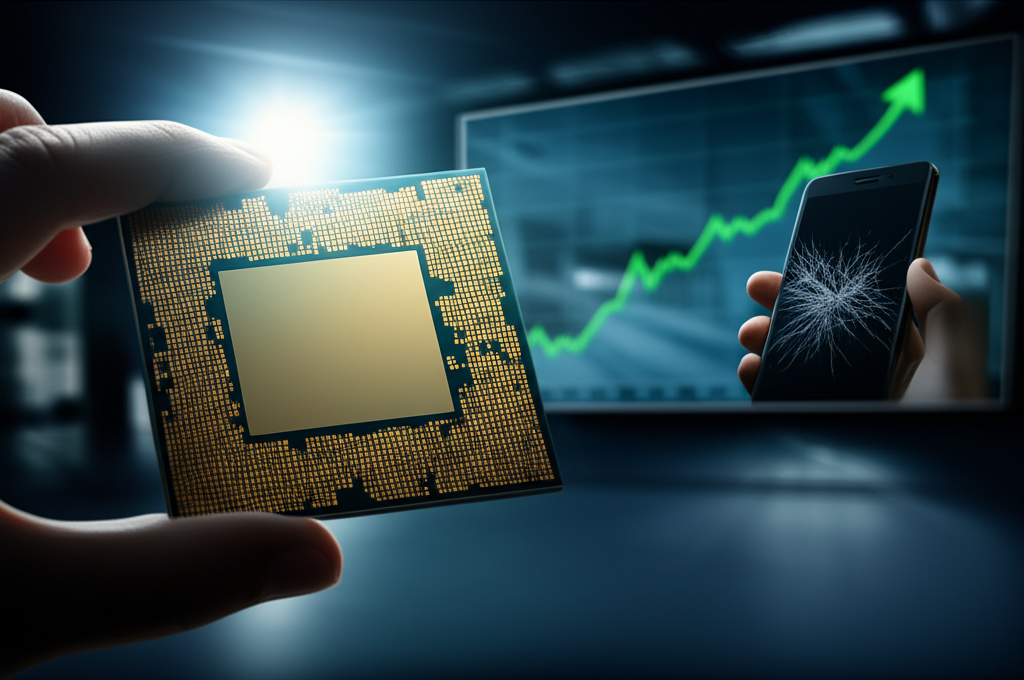
TSMC Sales Grow 30% on Sustained AI Hardware Demand
Key Facts
- TSMC reported 30% sales growth, driven primarily by global demand for AI chips.
- Growth fell short of lofty internal expectations due to a memory chip crunch affecting high-end smartphone and PC demand.
- The company serves as the primary foundry for Nvidia, AMD, Broadcom and other leading AI semiconductor designers.
- TSMC acts as a key barometer for the global AI industry amid geopolitical tensions including recent US and Israeli strikes on Iran.
- Earlier in 2025, TSMC raised its full-year revenue growth forecast to the mid-30% range citing strengthening AI megatrend.
Lead paragraph
Taiwan Semiconductor Manufacturing Co., the world’s largest contract chipmaker and primary manufacturer for Nvidia, AMD and Broadcom, posted 30% sales growth fueled by insatiable demand for AI hardware, according to a Bloomberg report. However, the performance trailed internal forecasts as skyrocketing memory prices appear to be dampening demand even in premium smartphone and personal computer segments. The results underscore both the strength of the AI boom and emerging signs of pressure in other semiconductor markets.
AI Demand Remains Primary Driver
TSMC’s latest figures reinforce its position as the central barometer for the global AI industry. The Taiwanese foundry produces the advanced semiconductors that power data center GPUs, custom AI accelerators and high-performance computing infrastructure. According to the Bloomberg article, sustained global demand for AI hardware continues to propel sales despite broader market headwinds.
Chief executives at TSMC have repeatedly highlighted the structural nature of AI adoption. In comments referenced across multiple reports, TSMC Chairman C.C. Wei noted that “increasing adoption of AI models by consumers has led to more demand for compute, and by extension, semiconductor products. Thus, our conviction in the AI megatrend is strengthening.”
This conviction prompted TSMC to raise its 2025 revenue growth forecast to the mid-30% range earlier in the year, up from previous guidance in the mid-20% range. The company has consistently pointed to “insatiable” demand for semiconductors used in artificial intelligence applications as the key growth engine.
Memory Chip Crunch Creates Headwinds
While AI-related revenue remains robust, the report highlights a notable softness in other segments. Skyrocketing memory prices are reportedly hurting demand for high-end smartphones and PCs. The memory chip crunch appears to be constraining consumer electronics spending even at the premium end of the market, creating a divergence between AI infrastructure demand and traditional semiconductor markets.
This dynamic is particularly significant because TSMC supplies chips across both domains. Advanced nodes used for AI training and inference chips command premium pricing and high margins, while mobile and PC processors — though still important — face more cyclical demand patterns influenced by consumer sentiment and component costs.
Industry observers will be watching whether the memory supply situation eases in coming quarters or whether sustained high prices continue to suppress broader semiconductor demand outside the AI sector.
Geopolitical Context Adds Uncertainty
The Bloomberg report notes that attention is now focused on how recent US and Israeli strikes on Iran may affect appetite to build new data centers and other digital infrastructure. Any disruption to energy markets, supply chains or geopolitical stability could influence the pace of AI infrastructure investment.
TSMC’s foundries are concentrated in Taiwan, making the company sensitive to regional tensions. However, the core AI demand signal remains strong, with major cloud providers and hyperscalers continuing to place large orders for advanced process nodes essential to training and running next-generation AI models.
Competitive Landscape and Market Position
TSMC maintains a dominant position in leading-edge semiconductor manufacturing. Its 3nm and 2nm process technologies are critical for the highest-performance AI chips currently in development and production. Major customers including Nvidia, AMD and Broadcom rely heavily on TSMC’s manufacturing capacity, giving the foundry significant pricing power and visibility into industry trends.
The company has also been increasing capital expenditures to expand capacity for AI-related demand. Earlier forecasts indicated a significant capex surge aligned with expected continued growth in AI infrastructure spending through 2026 and beyond.
Impact on Industry Stakeholders
For AI developers and cloud service providers, TSMC’s strong performance signals that capacity for advanced AI chips remains a priority, though allocation may continue to be tight. The memory chip pressure, however, could translate into higher costs or slower refresh cycles for enterprise hardware that combines AI accelerators with traditional CPUs and memory.
Smartphone and PC makers may face continued margin pressure if memory prices remain elevated. This could delay some premium device launches or shift purchasing patterns toward more mid-range products less affected by expensive memory components.
Investors have closely watched TSMC as a proxy for AI spending trends. The 30% growth figure, while slightly below expectations, still represents robust expansion and validates the “AI megatrend” narrative that has dominated semiconductor markets for the past several years.
What’s Next
TSMC is expected to provide more detailed guidance in upcoming earnings calls, including specific outlooks for the remainder of 2026. Analysts will be looking for commentary on whether the memory chip situation is likely to improve and how the company plans to balance capacity allocation between AI and traditional markets.
Longer term, the industry continues to watch TSMC’s progress on even more advanced process nodes. Success in ramping 2nm and future technologies will determine how quickly AI model sizes and capabilities can continue scaling.
The memory supply situation also bears watching. Should prices moderate, it could unlock pent-up demand in mobile and PC segments, providing a secondary growth tailwind for TSMC. Conversely, prolonged memory inflation could further widen the gap between AI and non-AI semiconductor demand.
Sources
- Bloomberg: TSMC Sales Grow 30% on Sustained Global Demand for AI Hardware
- Yahoo Finance: TSMC Sales Grow 30% on Sustained Global Demand for AI Hardware
- CNBC: TSMC profit surges 39% to beat estimates and hit yet another record on AI chip demand
- Digitimes: TSMC forecasts nearly 30% revenue growth in 2026 as AI drives strong margins and capex surge
- Reuters: TSMC expects Q2 sales to jump on 'insatiable' AI demand
- Bloomberg: TSMC Profit Surges Again After AI Drives Big Jump in Sales
(Word count: 842)