
Oracle and OpenAI Scrap 600MW Abilene Expansion as 4.5GW Stargate Deal Remains on Track
Key Facts
- Oracle and OpenAI have dropped plans for a 600MW expansion of the Abilene, Texas Stargate data center campus after financing negotiations failed and power infrastructure delays made the timeline unviable.
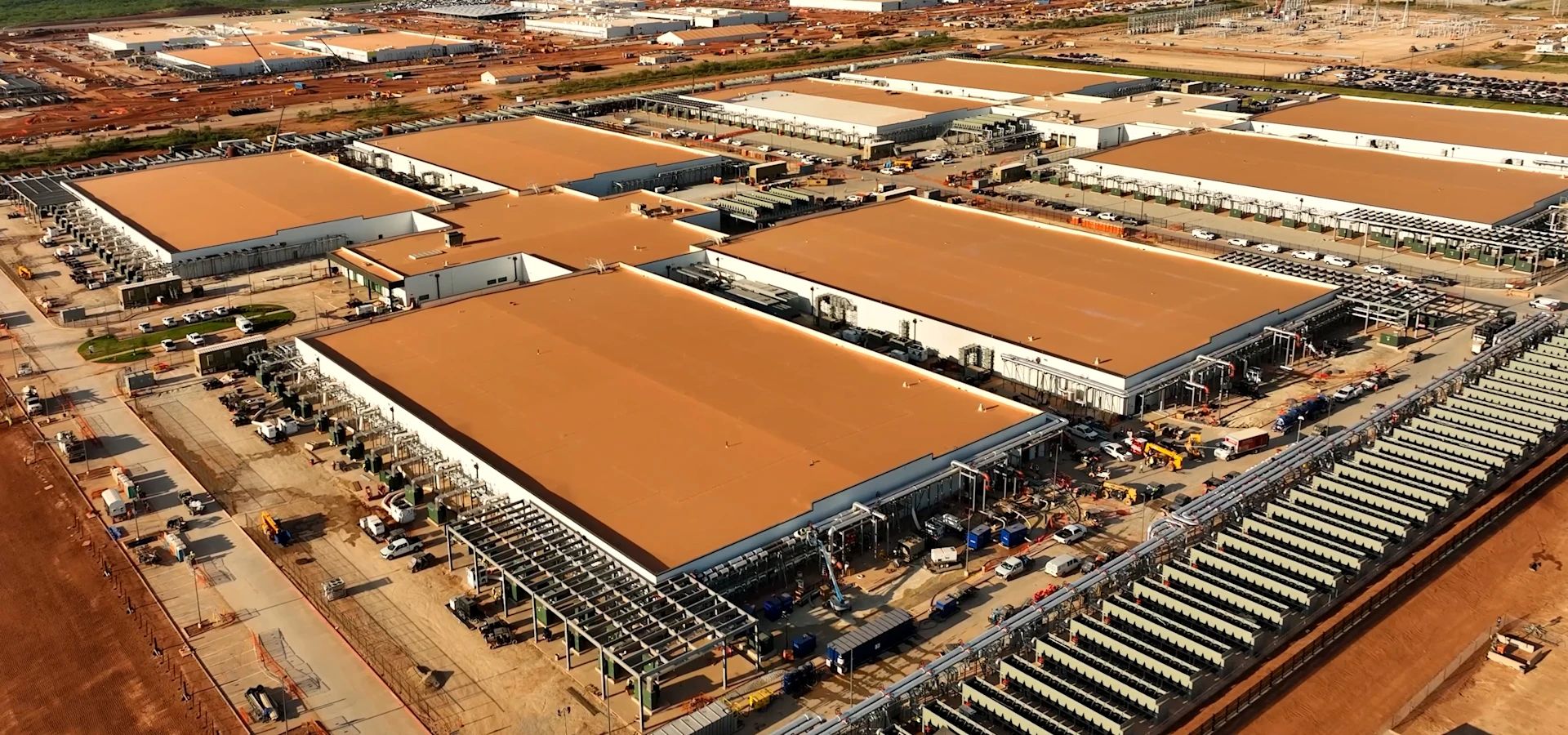
- The existing 1.2GW Abilene facility, developed with Crusoe on Lancium’s Clean Campus, remains unaffected with two buildings already operational using Nvidia GB200 Blackwell racks and six more scheduled for completion by mid-2026.
- The broader 4.5GW agreement between Oracle and OpenAI for multiple U.S. sites continues to progress, with leasing completed and additional projects announced, including a site near Detroit.
- Power availability at the proposed Abilene expansion site is reportedly delayed by roughly one year, pushing readiness past the arrival of Nvidia’s more efficient Rubin architecture expected in the second half of 2026.
- Meta is reportedly considering leasing the shelved expansion site from Crusoe; Nvidia provided Crusoe with a $150 million deposit and supported efforts to attract Meta as a tenant.
Lead paragraph
Oracle and OpenAI have abandoned plans to expand their flagship Stargate AI data center campus in Abilene, Texas, by 600 megawatts, citing failed financing negotiations, winter weather disruptions to liquid-cooling systems, and shifting power infrastructure timelines that no longer align with next-generation GPU availability. The existing 1.2-gigawatt Abilene facility continues to operate normally, with two buildings already running training and inference workloads on Nvidia GB200 Blackwell systems. The companies’ larger commitment to develop 4.5 gigawatts of capacity across multiple U.S. locations remains on track, according to statements from Oracle and reporting by Bloomberg and Reuters.
The decision highlights the growing tension between the breakneck pace of Nvidia’s GPU generational improvements and the slower buildout of power infrastructure needed to support massive AI training clusters. While initial media coverage described the move as a “cancellation,” both Oracle and OpenAI have clarified that only a specific, never-finalized expansion lease for the Abilene site was dropped. The core Stargate partnership and the 1.2GW campus remain intact.
Background on the Abilene Campus
The Abilene site spans 1,000 acres and consists of eight buildings developed by Crusoe on Lancium’s Clean Campus. According to Oracle’s statements, two buildings are already fully operational and hosting workloads on Nvidia’s GB200 Blackwell racks. The remaining six buildings are on schedule for completion by mid-2026, bringing the total capacity of the current campus to approximately 1.2 gigawatts.
This facility forms a key part of the high-profile Stargate project, a multi-gigawatt AI infrastructure initiative involving Oracle, OpenAI, and other partners. The project has drawn significant attention due to its scale and the enormous power demands of modern AI training clusters.
What Was Scrapped and Why
The collapsed element was a separate expansion lease that would have added roughly 600MW, pushing the Abilene site toward 2GW total. OpenAI’s compute scaling executive, Sachin Katti, publicly acknowledged that the company had “considered expanding it further” but ultimately decided to allocate that capacity to other locations.
Multiple factors contributed to the decision. Bloomberg reported that financing negotiations dragged on and that OpenAI’s compute needs had evolved. A multi-day winter weather event disrupted liquid-cooling infrastructure, taking several buildings offline temporarily. Perhaps most critically, The Information reported that power delivery at the expansion site will not be ready for approximately one year. By the time power becomes available, Nvidia’s next-generation Rubin architecture is expected to be shipping.
Nvidia’s Rapid GPU Roadmap Creates Timing Challenges
Nvidia’s GPU release cadence is now significantly faster than the timeline required to build and energize large-scale data centers. Rubin, scheduled for the second half of 2026, is projected to deliver approximately ten times lower cost per token and five times better inference performance compared to Blackwell, while requiring four times fewer GPUs for mixture-of-experts training workloads.
OpenAI and Nvidia signed a letter of intent in September 2025 to deploy at least 10 gigawatts of Rubin-class systems. For OpenAI, committing to 600MW of Blackwell capacity at a site where power would not be available until after Rubin begins shipping would mean deploying a previous-generation architecture that would already be economically obsolete by the time the facility came online.
This mismatch between power infrastructure timelines and GPU innovation cycles is becoming a central challenge for the entire AI industry. Nvidia’s roadmap shows Rubin potentially being followed by an “Ultra” variant in 2027 and the still-secret Feynman architecture in 2028. Additional details on the roadmap are expected at the upcoming GTC 2026 conference.
Oracle’s Financial Position and Public Rebuttals
Oracle has taken on substantial debt to fund its Stargate commitments, reportedly carrying more than $100 billion in debt with free cash flow now in negative territory. The company moved quickly to rebut initial media coverage, posting on X (formerly Twitter) that reports about Abilene were “false and incorrect” and that Crusoe and Oracle were “operating in lockstep.”
Oracle’s statement confirmed that two buildings were operational, that leasing for the broader 4.5-gigawatt commitment had been completed, and that the partnership with OpenAI remained strong. However, the statement did not directly address whether the specific Abilene expansion lease had been dropped.
Bloomberg’s Ed Ludlow later clarified on X that the two companies “are not moving ahead with the planned expansion lease” while the broader 4.5-gigawatt agreement “remains on track, with additional projects announced, including a site near Detroit.” Oracle subsequently posted again, suggesting some media coverage reflected “a fundamental misunderstanding of how AI da[ta centers are developed].”
A screenshot purportedly from an OpenAI employee confirming the cancellation circulated on social media but was later confirmed to be fake.
Meta Emerges as Potential Tenant
According to Bloomberg, the collapsed talks created an opportunity for Meta Platforms to consider leasing the planned expansion site from developer Crusoe. Nvidia reportedly provided Crusoe with a $150 million deposit and assisted efforts to attract Meta, which is not part of the Stargate project, as a prospective tenant for the additional capacity.
Meta has not yet confirmed any expansion at the Abilene campus. The involvement of Meta illustrates how fluid the AI infrastructure market has become, with hyperscalers and AI companies competing aggressively for limited power capacity and ready-to-deploy sites.
Competitive Landscape and Industry Implications
The Abilene situation underscores the intense competition for power, land, and infrastructure in the AI sector. Major players including OpenAI, Meta, Oracle, Microsoft, Google, and others are all racing to secure gigawatts of capacity to train ever-larger models.
Oracle’s partnership with OpenAI on the 4.5GW Stargate project remains one of the most ambitious in the industry. The continuation of that broader agreement, despite the Abilene expansion setback, suggests both companies remain committed to scaling AI infrastructure aggressively across multiple sites.
The technical advantages of upcoming architectures like Rubin further complicate planning. The promise of dramatically lower cost per token and improved performance-per-GPU makes delaying deployment of older hardware increasingly attractive for operators who can afford to wait for better power infrastructure.
Impact on Developers, Users, and the Industry
For AI developers and users, the core takeaway is continuity. The existing Abilene campus will continue delivering Blackwell-based capacity through 2026, and the broader 4.5GW pipeline remains active. However, the episode highlights execution risks in bringing massive AI clusters online at the speed the industry demands.
The situation also puts pressure on utilities, grid operators, and data center developers to accelerate power delivery timelines. As GPU generations turn over every 12-18 months while major power projects can take years, this mismatch is likely to create repeated friction across the industry.
Oracle’s reported debt load and negative free cash flow illustrate the enormous capital requirements of these projects. The company’s public pushback against media coverage also shows how sensitive these multi-billion-dollar infrastructure deals have become to public perception.
What’s Next
The 4.5GW Oracle-OpenAI agreement is expected to advance through additional project announcements and site developments beyond Abilene. Power infrastructure at the Detroit-area site and other locations will be closely watched.
Nvidia is scheduled to provide more details on the Rubin, Ultra, and Feynman roadmap at GTC 2026. The arrival of Rubin in the second half of 2026 will likely accelerate demand for sites that can be energized on that timeline, potentially making locations with delayed power even less attractive for current-generation hardware.
Meta’s potential involvement at Abilene could provide Crusoe and the site’s developers with an alternative path forward for the shelved 600MW expansion. Whether Meta ultimately takes the space remains to be seen.
For the AI industry overall, this episode serves as a case study in the complex interplay between hardware innovation cycles, power infrastructure realities, and commercial negotiations. As the race for artificial general intelligence continues, these infrastructure bottlenecks are likely to remain a defining feature of the sector.
Sources
- Oracle and OpenAI Scrap Planned 600MW Abilene Expansion
- Oracle Hits Back at Stargate Data Center Cancellation Reports
- Oracle and OpenAI End Plans to Expand Flagship Data Center
- Oracle and OpenAI Drop Texas Data Center Expansion Plan
- Additional reporting from The Information and statements posted to X by Oracle and Bloomberg’s Ed Ludlow