
The short version
NVIDIA's RTX PRO Server is a powerful data center computer setup that lets game development teams share high-end graphics processing units (GPUs) remotely, like renting slices of a super-fast pizza instead of everyone buying their own whole pie. Announced at the Game Developers Conference (GDC) in San Francisco, it uses RTX PRO 6000 Blackwell Server Edition GPUs and virtualization software to centralize workflows for artists, coders, AI experts, and testers across studios. This means faster game creation, better team collaboration, and potentially quicker releases of the big-budget games you love – without studios wasting money on unused hardware.
What happened
Imagine a game studio like the ones behind your favorite open-world adventures, such as massive landscapes in games like The Legend of Zelda or Grand Theft Auto. Teams are bigger, spread across cities or even countries, and building games involves crazy complex stuff: artists sculpting detailed characters, programmers coding behaviors, AI researchers training smart bots, and quality assurance (QA) teams testing for bugs. Traditionally, everyone needs their own beefy desktop computer with a top-tier GPU – think of it as a high-performance graphics engine parked at each desk. But these machines often sit idle: an artist's rig gathers dust while QA waits in line, or AI work runs on separate gear overnight.
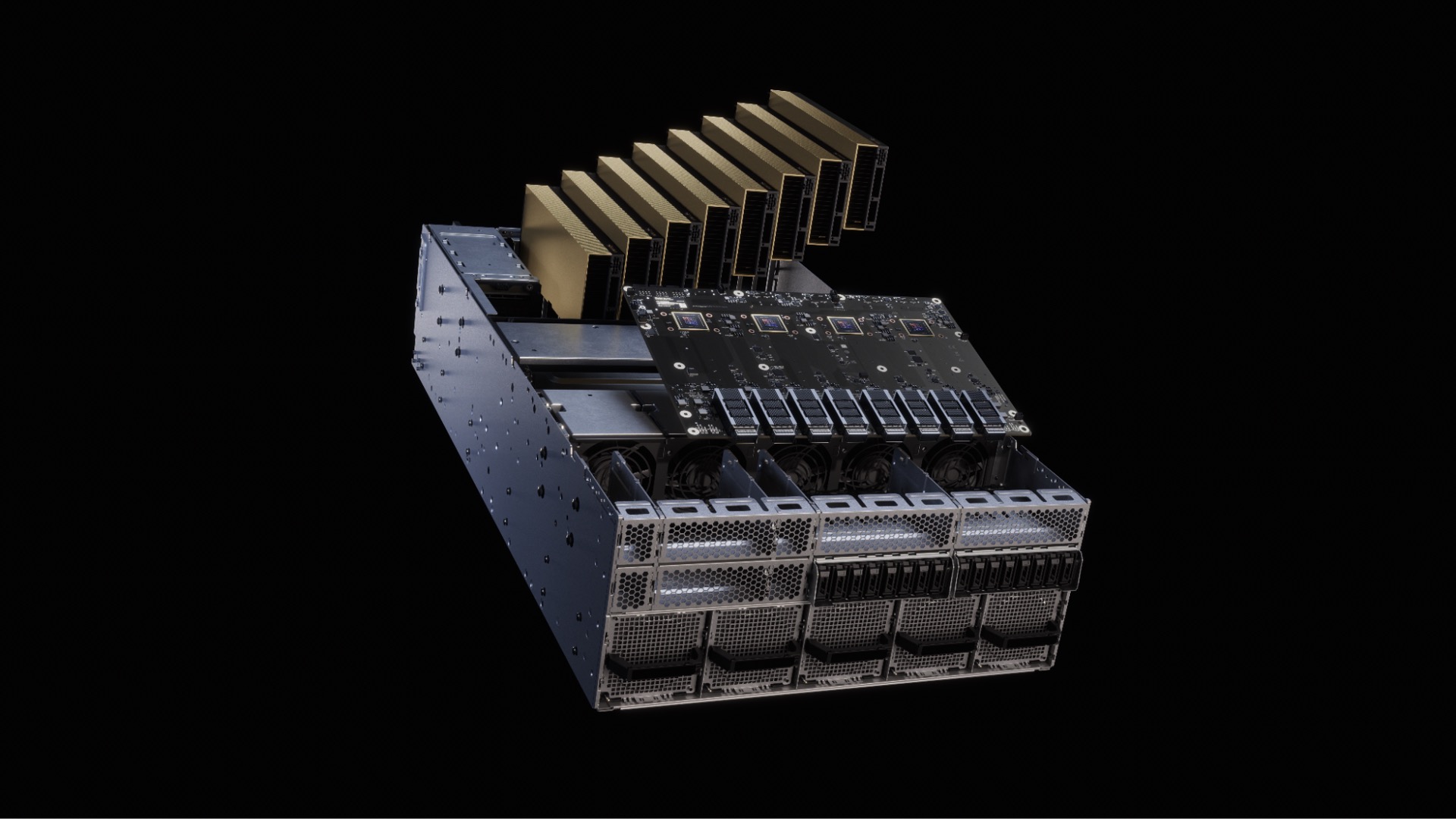
At GDC this week, NVIDIA flipped the script. They unveiled the RTX PRO Server, a centralized "GPU hub" in a data center that virtualizes – or shares – these powerful GPUs across the whole team. It's powered by the NVIDIA RTX PRO 6000 Blackwell Server Edition GPUs, which pack a whopping 96GB of memory (that's like having room for 96 full-length movies stored at once in super-fast access). Using NVIDIA vGPU software and Multi-Instance GPU (MIG) technology, one single GPU can be sliced into up to 48 isolated "virtual workstations" for different users. Each slice gets its own dedicated memory, computing power, and secure space, so an artist rendering textures doesn't slow down a coder debugging physics or an AI team fine-tuning models.
This setup runs on enterprise-ready servers that plug into a studio's existing IT systems, no massive overhaul needed. For example, during the day, developers use it for real-time 3D work with the same snappy feel as a local RTX workstation. Overnight, it switches to heavy AI training or simulations. NVIDIA highlighted how it matches the architecture of consumer GeForce RTX 50 Series GPUs, so tests on this server predict real player performance perfectly. Demos are live at NVIDIA's GDC booth 1426, and more at their GTC event March 16-19 in San Jose.
No pricing, exact benchmarks, or release dates are in the announcement yet – it's not confirmed. But major game publishers already use similar NVIDIA vGPU tech, proving it's battle-tested at scale.
Why should you care?
You're not building games, but this hits your wallet and gaming library directly. Game development costs billions – GTA VI alone might top $2 billion – and studios pass hardware expenses to you via $70 game prices or microtransactions. The RTX PRO Server slashes waste: instead of buying 50 underused GPUs at $10,000+ each, one server supports 48 users. That efficiency could mean lower costs, faster development cycles, and more games released yearly.
Think bigger worlds without delays. Distributed teams collaborate seamlessly – no more "it works on my machine, not yours" bugs from mismatched hardware. AI integration means smarter NPCs (non-player characters), procedural worlds, and automated testing, leading to polished launches. As a player, expect games with stunning visuals (thanks to Blackwell's power), fewer patches post-launch, and innovations like AI-generated levels tailored to your playstyle. It's not just pro tools; Google Cloud just previewed G4 VMs with these GPUs for cloud access, hinting at future game streaming or creator tools you might use.
What changes for you
Faster, better games in your library. Studios scale QA easily – no hardware shortages mean quicker bug hunts, so launches like Starfield avoid rocky starts. Parallel workflows let artists and AI teams work simultaneously, speeding up titles from indie to AAA.
Saves money indirectly. Reduced "workstation sprawl" (fancy talk for too many desks with idle PCs) cuts studio overhead. That could stabilize game prices or fund more single-player epics over live-service cash grabs.
Smarter AI in games. Shared infra runs AI for coding assistants, content gen (e.g., infinite textures), and testing. Your next RPG might have lifelike companions or dynamic stories.
Everyday access potential. While aimed at pros, vGPU tech powers cloud services. Google Cloud's G4 VMs suggest you could rent virtual RTX power for modding, streaming, or AI art – cheaper than buying hardware.
Collaboration boosts creativity. Remote teams (including contractors) use identical setups, reducing debug headaches. More experimental games, less crunch-time delays.
No direct consumer changes yet – this is studio-focused. But as NVIDIA's Blackwell RTX PRO series expands to workstations (per related news), trickle-down to GeForce cards means your next PC upgrade handles AI/game dev side gigs effortlessly.
Frequently Asked Questions
### What exactly is the RTX PRO Server, and how does it work?
It's a data center server with RTX PRO 6000 Blackwell GPUs that virtualizes high-end graphics power for game devs. NVIDIA vGPU software and MIG tech divide one GPU into up to 48 secure slices, each acting like a full workstation. Artists get real-time 3D rendering, AI folks run large models, and QA scales tests – all shared, like a co-working space for supercomputers.
### Does this mean games will come out faster or cheaper for me?
Yes, likely both. Centralizing GPUs improves efficiency, cuts idle hardware costs, and enables overnight AI/sim runs. Studios save money and time, potentially leading to more frequent releases and stable pricing – though no specifics on how much yet.
### Is the RTX PRO Server available now, and what's the price?
It's showcased at GDC with live demos, but no confirmed release date or pricing in the announcement. Major publishers use similar vGPU tech already. Check NVIDIA's site or GTC (March 16-19) for updates.
### How is this different from regular gaming PCs or cloud gaming?
Unlike your home RTX 4090 (local, one-user), this is enterprise servers for teams, supporting 96GB memory and 48 users per GPU. Vs. cloud gaming like GeForce Now (streams finished games), this virtualizes dev tools for creation. Google Cloud's G4 VMs bridge it to accessible cloud power.
### Will this make AI in games better, and when will I see it?
Absolutely – it runs AI training/inference alongside graphics, for smarter agents, auto-content, and testing. Effects in upcoming games using Blackwell arch (like RTX 50 Series matches). No timeline, but it's designed for "everyday" game dev AI now.
The bottom line
NVIDIA's RTX PRO Server is a game-changer for how studios build your favorite titles, turning scattered desktops into a shared, super-efficient GPU cloud with 96GB Blackwell power and 48-user slicing. For you, it promises smoother launches, innovative AI features, cost savings passed on, and fewer delays in epic worlds. Watch for demos at GDC or GTC – this efficiency wave could flood us with higher-quality games sooner. If you're a casual gamer, sit back; if you're creative, dream of affordable cloud access.
Sources
- NVIDIA Blog: GDC 2026 - Virtual Game Development
- NVIDIA: RTX PRO Servers for Building Enterprise AI Factories
- NVIDIA Event: Game Developers Conference (GDC) 2026
- NVIDIA Blog: Accelerating AI Development With NVIDIA RTX PRO Blackwell Series
- NVIDIA Newsroom: NVIDIA Blackwell RTX PRO Comes to Workstations and Servers
- Google Cloud Blog: Introducing G4 VM with NVIDIA RTX PRO 6000
(Word count: 1,248)