
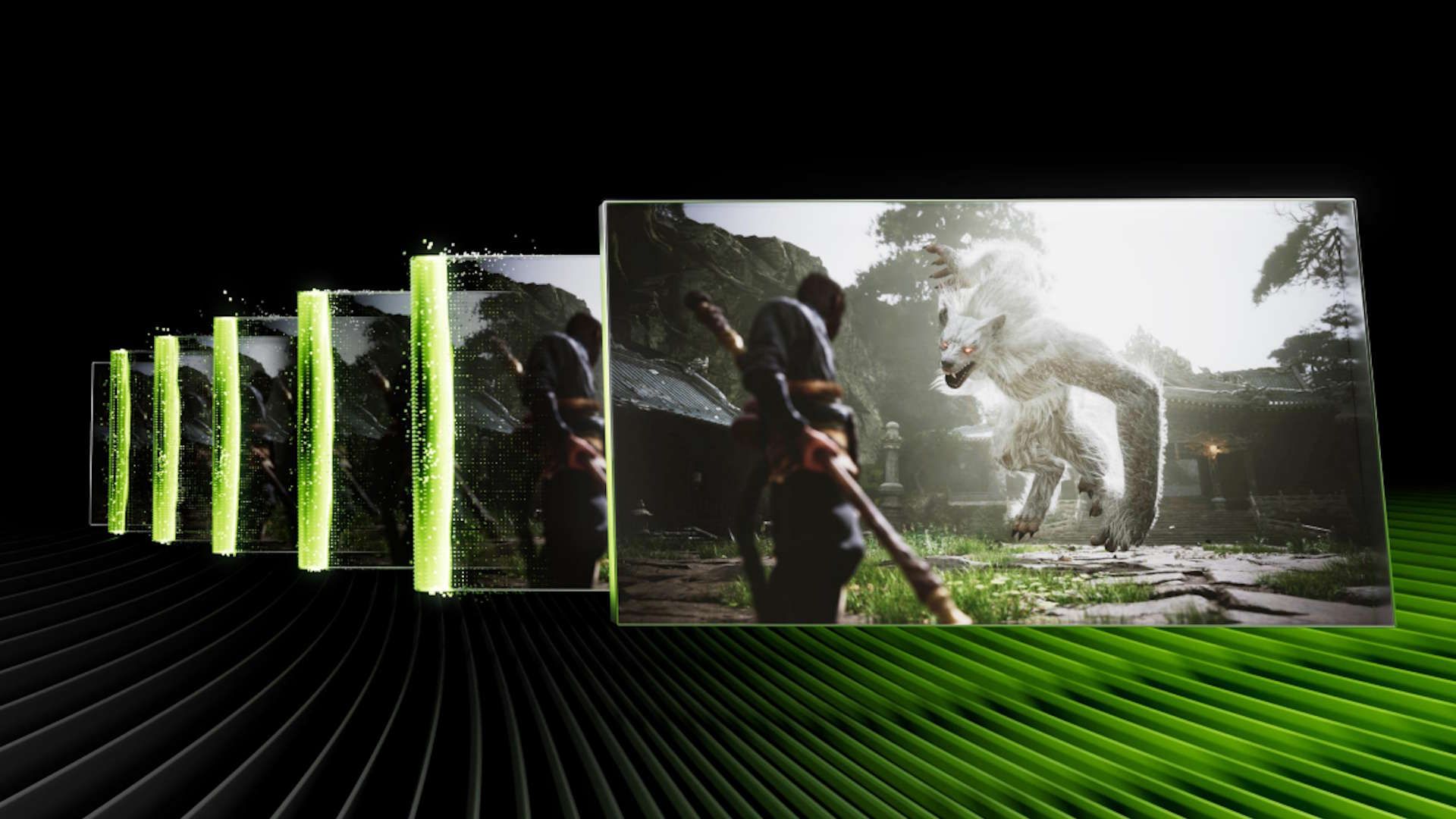
Dynamic MFG Arrives for RTX 50-Series GPUs on March 31 with 5x and 6x Modes
Key Facts
- What: Nvidia is releasing Dynamic Multi Frame Generation (Dynamic MFG) as part of DLSS 4.5, adding flexible on-the-fly frame rate multipliers up to 6x.
- When: Dynamic MFG with 5x and 6x modes arrives March 31 via the Nvidia App beta.
- Who: Exclusive to GeForce RTX 50-series GPUs at launch.
- How it works: Unlike fixed multipliers, Dynamic MFG automatically adjusts between 1x and 6x to maintain target frame rates matching high-refresh-rate monitors.
- Context: Part of broader DLSS 4.5 updates that include an improved frame generation model and second-generation transformer for Super Resolution.
Nvidia will launch Dynamic Multi Frame Generation for its RTX 50-series GPUs on March 31, introducing a more flexible version of its AI frame generation technology that can dynamically adjust multipliers up to 6x to better match high-refresh-rate monitors.
The feature, first announced at CES, forms a key part of the DLSS 4.5 update. It allows the system to shift frame generation multipliers on the fly rather than sticking to a constant rate, helping maintain consistent high frame rates needed for modern gaming displays operating at 240Hz, 360Hz or higher. The update will initially be available to Nvidia App beta users.
According to details shared ahead of the Game Developers Conference (GDC), Dynamic MFG builds on the existing Multi Frame Generation technology by adding greater adaptability. Previously limited to fixed multipliers, the new dynamic mode intelligently adjusts between 1x and 6x depending on the game's rendered performance and the target output needed to saturate the monitor's refresh rate.
This capability is particularly relevant for RTX 50-series owners with high-refresh-rate displays who want to ensure their systems consistently hit the elevated FPS targets required to maximize screen performance. The technology generates multiple AI-created frames for each traditionally rendered frame, with the 6x mode producing five AI-generated frames alongside one rendered frame.
The update arrives alongside continued improvements to DLSS 4.5, which Nvidia says offers noticeably better image quality than previous versions, even when starting from relatively low internal resolutions. The package includes an updated frame generation model and a second-generation transformer model for Super Resolution.
Technical Details and Performance Goals
Dynamic MFG addresses one of the limitations of the original Multi Frame Generation implementation. While the first version provided strong frame rate uplifts through fixed multipliers, it lacked the flexibility to respond to fluctuating in-game demands. The dynamic approach aims to deliver more consistent results by automatically scaling the level of frame generation in real time.
This is expected to be most beneficial in demanding titles, particularly those incorporating path-traced lighting effects. Nvidia highlighted several upcoming games that will leverage advanced rendering techniques, including Control Resonant, 007: First Light, Resident Evil Requiem, and Pragmata. These titles will put heavy demands on GPUs, making efficient frame generation technologies increasingly valuable.
The technology remains exclusive to the RTX 50-series, at least initially, taking advantage of the architectural improvements in the Blackwell GPUs. These include enhancements to the fourth-generation RT Cores that support features like RTX Mega Geometry, which Nvidia is extending to developers such as CD Projekt Red for The Witcher IV. That game, not expected until 2027, will benefit from selective updates to ray-tracing data structures and finer-grained opacity micromaps for complex scenes like dense forests.
Latency Considerations and Reflex 2
Frame generation technologies inherently introduce some input latency as a tradeoff for higher frame rates. Nvidia has yet to provide an update on Reflex 2 with Frame Warp, its anticipated latency-reduction technology that has remained in "Coming Soon" status since the Blackwell launch over a year ago. During briefings, the company simply told media to "stay tuned" regarding the feature.
The absence of a Reflex 2 update alongside Dynamic MFG may temper enthusiasm for some competitive gamers for whom latency remains a primary concern. However, for many users focused on visual smoothness and high refresh rate utilization, the combination of DLSS 4.5's improved image quality and Dynamic MFG's adaptability should still deliver a significantly enhanced experience.
Broader GDC Announcements
While Nvidia is not launching new GeForce hardware at this year's GDC — which takes place against a backdrop of industry challenges including AI hardware supply constraints — the company is emphasizing software and developer tools. This includes improvements to local generative AI workflows through an updated, more user-friendly "app view" interface for ComfyUI and better model quantizations that improve resource utilization across a wider range of hardware.
These AI-focused enhancements reflect Nvidia's dual emphasis on both gaming and content creation capabilities within its RTX ecosystem.
Impact on Gamers and Developers
For RTX 50-series owners, the March 31 update represents a meaningful software enhancement that extends the capabilities of their existing hardware without requiring new purchases. Users with high-end monitors should see better utilization of their displays' refresh rates, particularly in titles that struggle to maintain high native frame rates due to demanding graphics settings.
Developers gain additional tools to deliver smooth gameplay experiences even as they push visual boundaries with path tracing and other advanced techniques. The improved DLSS 4.5 models should also allow for better upscaling quality, potentially enabling higher visual settings while maintaining performance.
The dynamic nature of the new MFG implementation may reduce the need for manual tweaking of frame generation settings, creating a more seamless experience for average users.
What's Next
Nvidia has not detailed exact supported games for the Dynamic MFG launch, though integration is expected to expand over time as developers adopt the latest DLSS 4.5 SDK. The company will likely continue refining the technology based on real-world usage data after the March 31 release.
Longer term, the eventual arrival of Reflex 2 could further improve the responsiveness of high-frame-rate experiences created through aggressive frame generation. In the meantime, the combination of DLSS 4.5 and Dynamic MFG positions RTX 50-series GPUs as even stronger options for enthusiasts prioritizing maximum refresh rate performance.
The spring 2026 timing of this update comes as the broader gaming hardware market continues to navigate supply challenges and shifting industry priorities, making software-driven performance improvements particularly valuable for current GPU owners.
Sources
- Tom's Hardware - Dynamic MFG comes to RTX 50-series GPUs
- PC Gamer - DLSS 4.5 Dynamic Multi Frame Generation is coming to Nvidia App beta users on March 31
- VideoCardz - NVIDIA says DLSS 4.5 Dynamic Multi Frame Generation arrives March 31
- Club386 - Nvidia set to release Dynamic Multi-Frame Generation and 6x MFG mode this spring
- Tom's Hardware - Nvidia introduces DLSS 4.5 and Multi Frame Generation 6X at CES 2026